Discover Together, a co-creation project between Lexus and a group of international designers, brings five installations to Milan exploring space, mobility and human perception

Photography courtesy of Lexus featuring A Moving Sanctuary by Random Studio, which guides visitors into a meditative experience
Words by Jessica-Christin Hametner
At this year’s Milan Design Week 2026, Japanese automaker Lexus returns with a meditation on what space means today. Presented at Superstudio Più in Tortona, the brand – an active participant since 2005 – unveils five installations that draw from its new LS Concept, a chauffeur-driven vehicle first shown at the Japan Mobility Show in 2025.
Entitled Discover Your Space, the presentation is part of the Discover Together 2026 programme, bringing together four international collaborators and Lexus designers to respond to how we inhabit, move through and understand space, each informed by different cultural and material perspectives. Inviting visitors to step inside, the installations prompt direct engagement with the designs.
‘Space is not only what we create,’ says Andre Schmidt, Head of Lexus Europe. ‘It’s also how you, as a consumer, are able to explore. Our new brand vision is called “Discover” and it reflects how space is not only important here in Milan, but will also become a key element in our thinking going forward. When you think about space, it’s really the most intimate connection point between the customer and our product.’

Photography courtesy of Lexus featuring Visible Invisible by Kyotaro Hayashi and Yumi Kurotani. The installation was inspired by Kyoto’s traditional tea rooms
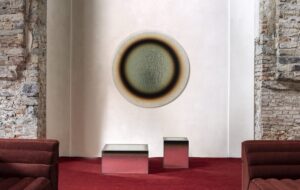
Within the exhibition, Visible Invisible sees filmmaker Kyotaro Hayashi and art director Yumi Kurotani translate traditional Japanese spatial thinking into a spectacular interplay of light and memory. Featuring layered acrylic walls inspired by the concept car’s horizontally striped bamboo windows, the installation evokes the intimacy of Kyoto’s tea rooms, or chashitsu, where thresholds between outside and inside, natural light and seasonal transitions are central to how space is understood.
‘The concept of space is something intimate,’ says Yumi Kurotani. ‘It’s somewhere you are invited to look at yourself and sit with yourself,’ she continues. ‘The Japanese tea room is a tiny space, but that’s what makes it important. It creates a connection not only with the other person beside you, but also a deeper connection with yourself.’
Hayashi explains that, as part of the project, the pair visited Kyoto to experience traditional tea rooms firsthand. With Visible Invisible, they set out to translate the atmosphere and impressions of that visit into their Milan installation, focusing on the passage of time and the changing seasons.

Photography courtesy of Lexus featuring Visible Invisible by Kyotaro Hayashi and Yumi Kurotani
All images for the installation are drawn from photographs and footage captured during their travels across America, Europe and beyond. Hayashi and Kurotani revisited this archive, selecting material marked by specific qualities of light to set the emotional tone of the space. These visual references are carried into the installation, including vessels inspired by those used in traditional tea ceremonies.
‘Originally, I thought of the tea room and tea ceremony as something confined, maybe quite detached from myself,’ explains Hayashi. ‘But once I experienced it, I felt completely different. The tea room became a space where I could not only think, but really feel myself within that limited setting, and in doing so, begin to discover myself.’
‘Nowadays, more people need to have their own time and space in order to heal,’ continues Hayashi. ‘If we think about future applications for Visible Invisible, I hope the concept could be carried into the car itself. We would be very happy if the installation could touch people’s memories or hearts.’

Photography courtesy of Lexus featuring Visible Invisible by Kyotaro Hayashi and Yumi Kurotani, which uses photographs and footage captured during their travels
Building on the idea of space as something personal, Guardini Ciuffreda Studio’s Wearable Space places the body at the heart of the installation. A light-emitting coat turns human movement into an extension of the surrounding environment, projecting presence outward through fibre optics.
Here, fashion becomes part of the architecture, with the Milan-based designers suggesting that space can also be worn. This approach is supposed to invite a more direct connection between the body and the world around us.
The installation uses a technological fabric embedded with optical fibres, while around 500 hours were also dedicated to completing the intricate hand-drawn detailing. ‘One of the most important aspects for us was the balance between craftsmanship and innovation,’ explain Guardini Ciuffreda.

Photography courtesy of Lexus featuring Guardini Ciuffreda Studio’s Wearable Space that uses a unique technological fabric embedded with optical fibres
‘We are about consciousness,’ the designers reflect. ‘The most important thing is that we are alive. Wearable Space is about being connected with [all these elements shown here in the drawing] – the warm light that reveals the sun, a mother, a hummingbird, a child – so, connected with life not only on this planet, but also in the cosmos.’
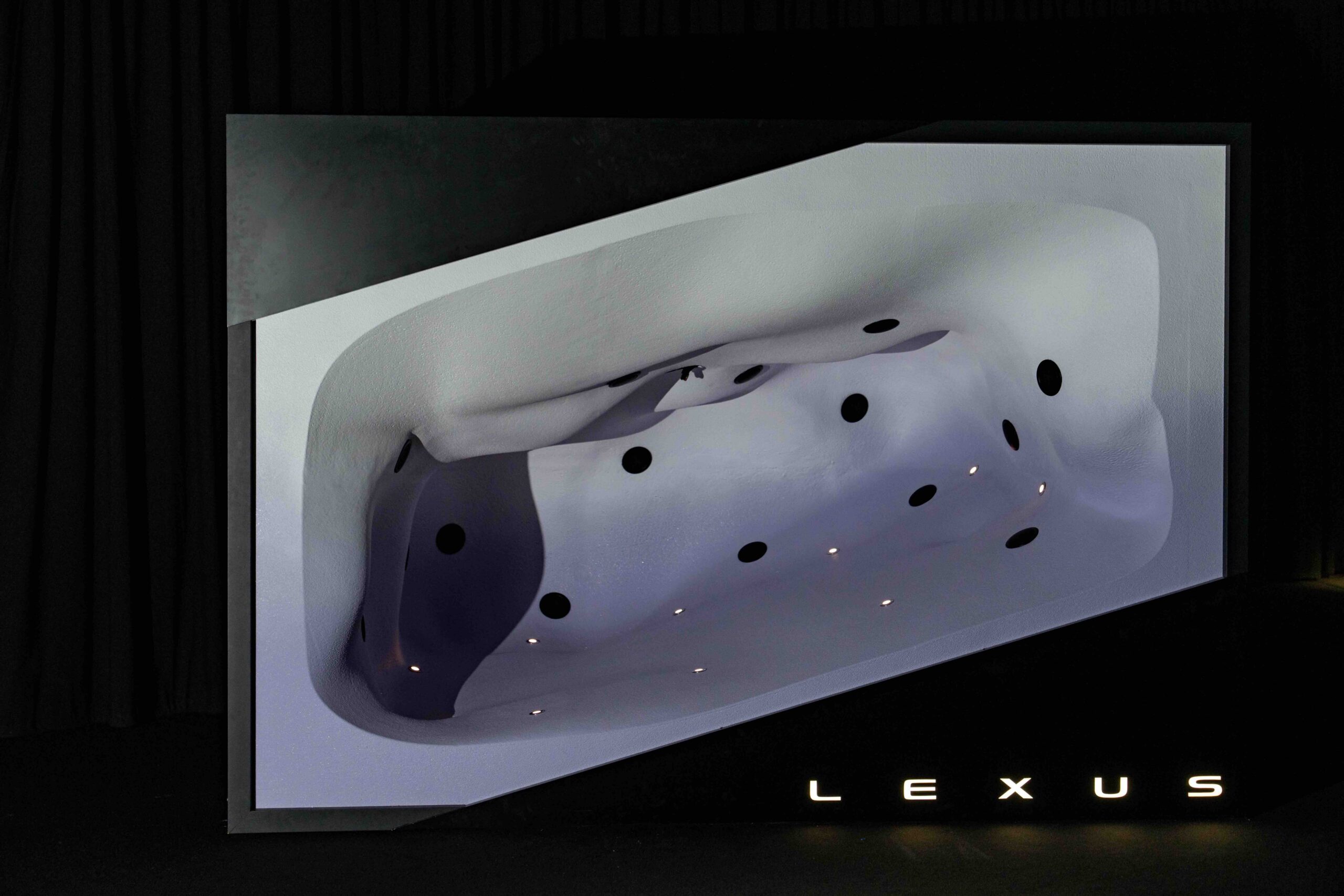
This focus on awareness continues in A Moving Sanctuary, as Paris- and Amsterdam-based design agency Random Studio rethinks the interior of a car as a space for slowing down, as visitors lie within a cocoon-like cave.
‘The whole idea is that at the back of the LS Concept Car is what Lexus calls a “moving sanctuary”,’ explains Daan Lucas of Random Studio. ‘You’re somewhat disconnected from the outside world and that inspired us. Milan Design Week is such an intense, highly sensory week, so we asked: could we create a space that allows visitors to check out from that energy for a few minutes?’
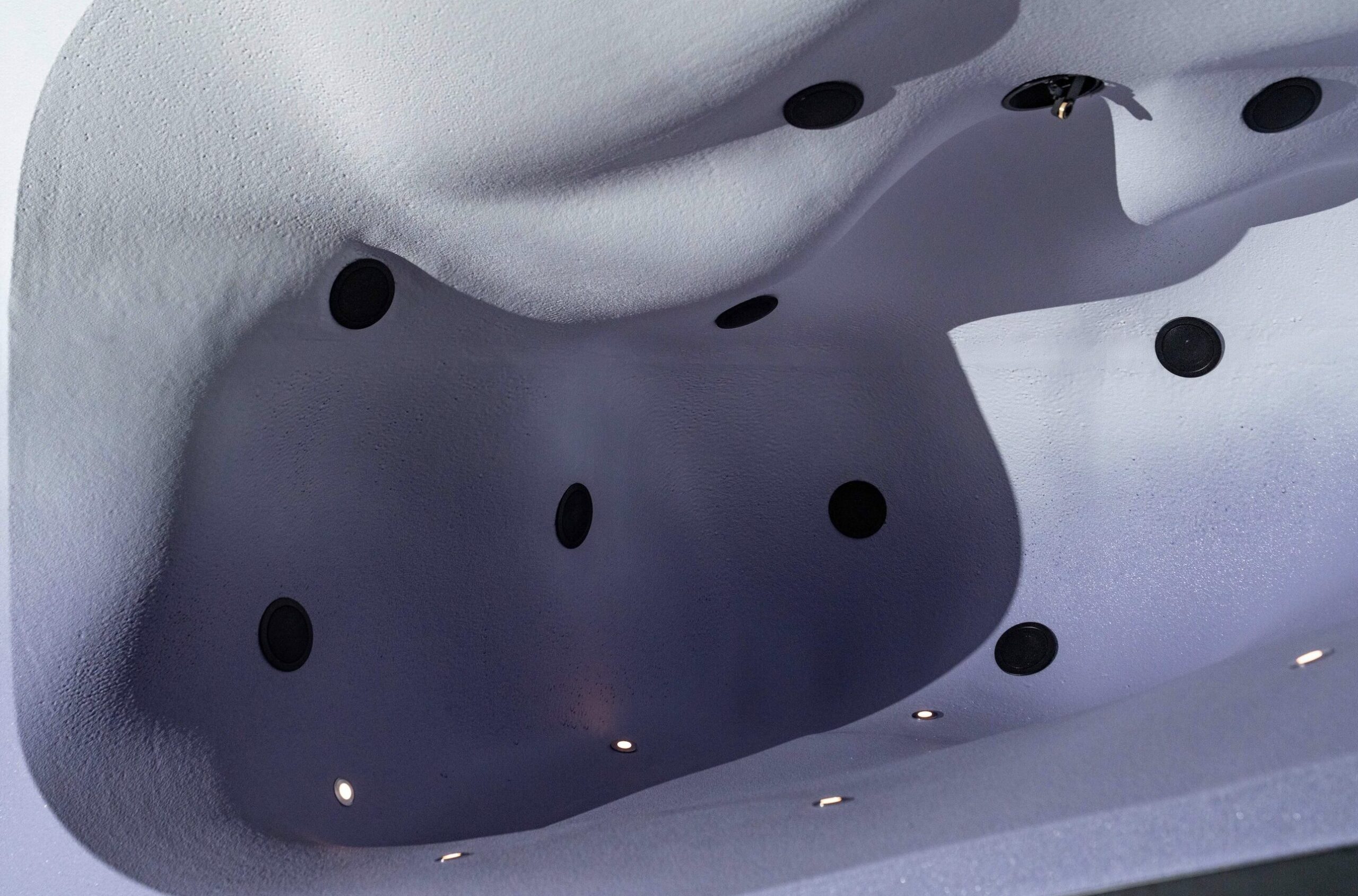
Photography courtesy of Lexus featuring A Moving Sanctuary by Random Studio, made of a soft foam to create a feeling of safety
The designers describe the installation as womb-like, defined by soft, organic forms that create a sense of enclosure and calm. It guides visitors into a meditative experience that unfolds over 3 minutes, while an AI-trained camera tracks a person’s breathing patterns, allowing the space to respond in real time through light and sound feedback.
‘We were invited to come to Japan and get to know the brand better,’ says Dominique Rokebrand of Random Studio. ‘We visited the factory, saw the concept cars and from that process the idea began to take shape. As a studio, we always try to bring a layer of technology and interaction, while keeping the human feeling central.’
With natural shapes, light and sound working together, the aim was to create something that feels instinctive. ‘The interaction with your breath as the guiding vehicle is such a natural way of interacting,’ Rokebrand adds. ‘From this idea it evolved into material sampling, training an AI over months and thousands of interactions with people breathing.’
Photography courtesy of Lexus featuring A Moving Sanctuary by Random Studio and its ‘little beacons of light’
One of the key design challenges was ensuring a relatively confined space felt welcoming, without making users feel observed. ‘Because you’re invited in without much guidance, it becomes very intuitive to discover your own space within this larger one,’ she reflects. ‘There’s no instruction of how to enter, but once inside the box, many people automatically take their shoes off. I love that. It’s the first thing you do when you come home, right?’
Lighting is kept deliberately subdued, with visitors never placed in a spotlight. Instead, the space remains dark, punctuated by what Rokebrand describes as ‘little beacons of light.’ To achieve its cocooning effect, Random Studio used a specially developed foam that allows the structure to take on soft contours to emphasise a feeling of safety. The intention was to offer a pause from the intensity of design week.
As a B Corp-certified company, Random Studio also places emphasis on material responsibility. ‘We always try to work with materials that have a second life, are donated or part of circular systems. We work with local production companies in Japan and Italy to ensure we’re using materials that don’t harm the world.’
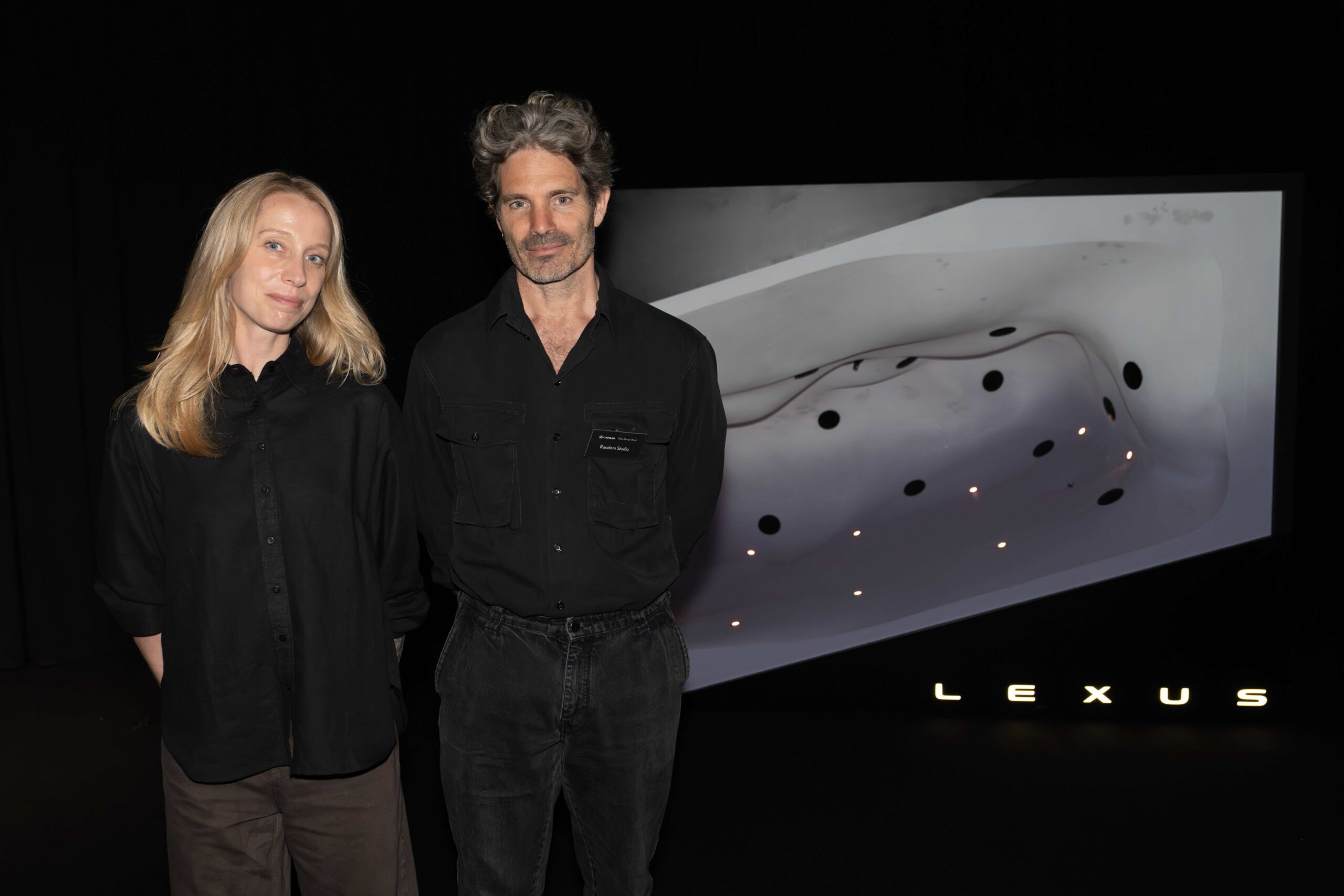
Photography courtesy of Lexus featuring Dominique Rokebrand (left) and Daan Lucas of Random Studio
‘Hopefully, we can make people feel calmer and invite them into a journey within themselves,’ adds Lucas, reflecting on how he hopes visitors might experience A Moving Sanctuary. ‘And maybe we can bring this thinking into the car too.’
Finally, The Crafted Cosmos unites Lexus designers and Japanese artisans to display material skill in practice. From precision woodwork to stone and bentwood techniques, the installation showcases typical Japanese craftsmanship with a modern twist. Fine detail is expanded into larger spatial concepts, paying tribute to handmade craft in a fast-paced, digital world.
‘With this artwork, we wanted to express Lexus’ vision of the cosmos through Japanese craftsmanship,’ says Yuri Tamura, a Lexus in-house designer. ‘At the same time, we wanted to pass these traditions on to the next generation, so each artisan in this project was encouraged to push their practice in new and innovative ways.’

Photography courtesy of Lexus featuring The Crafted Cosmos by Japanese craftsmen with LEXUS in-house designers
Several contributors stepped beyond their usual disciplines. Yuji Kuroda, who typically works on Japanese paper screens, or shoji, and sliding doors, reinterpreted his craft by removing the conventional frame and devising a structural system for the installation’s walls and ceiling.
Similarly, Ryota Inagaki, known for his work with tombstones, experimented with a new expression using ukiganeishi stone, sourced from Kushima, in southern Miyazaki Prefecture. Characterised by fine gold particles that catch and reflect light, the stone introduces a subtle luminosity that complements the installation’s cosmic theme.
These works are presented alongside intricate Kumiko woodwork by Shikan Tategu Kogei, a technique refined over generations. Together, they create a beautiful space that celebrates tradition and experimentation, pushing craftsmanship into novel forms and ideas.

Photography courtesy of Lexus featuring The Crafted Cosmos by Japanese craftsmen with LEXUS in-house designers, including Kumiko woodwork and ukiganeishi
The installation also features a chair by WorldSkills champion wooden model craftsman Shingo Yamashita, whose expertise has long supported Toyota’s car making. Working from Tamura’s sketch, he crafted the piece in Japanese cypress, demonstrating both structural precision and meticulous attention to detail.
Realised in around a month, the main challenge, Yamashita explains, was balancing strength with lightness – a problem he solved by carefully layering the wood to create a durable yet refined chair. The final piece exudes elegance with soft curves and timeless appeal, characteristic of Japanese design.
Elsewhere, Kazuhiro Nakata crafted the highly complex plywood seat using advanced 3D modelling and layered bentwood techniques. By crossing thin panels to create a distinctive herringbone pattern, each piece became unique and made by hand. In total, 50 iterations were required to perfect the final design.
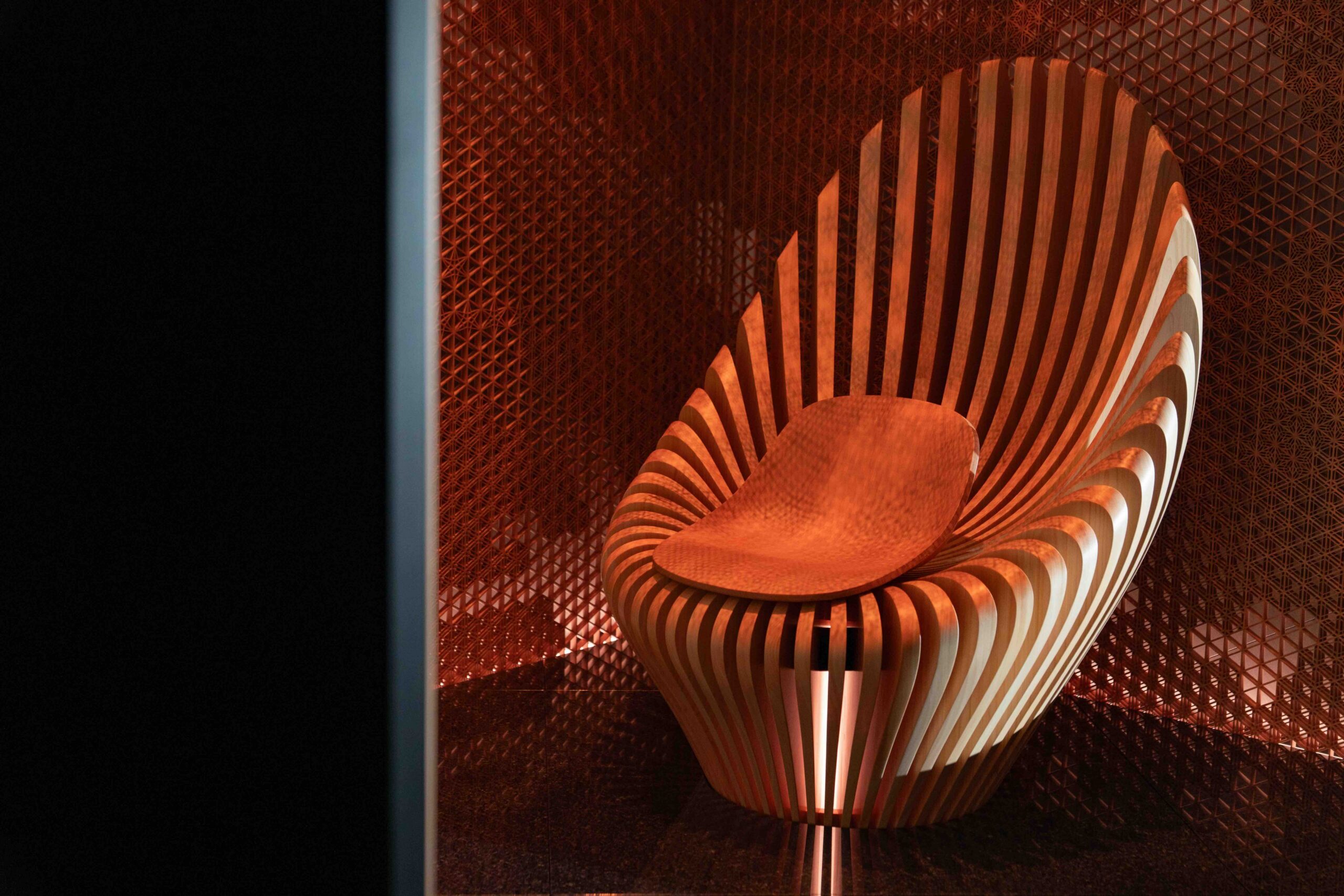
Photography courtesy of Lexus featuring The Crafted Cosmos by Japanese craftsmen with LEXUS in-house designers, including Yamashita’s chair and Nakata’s seat
‘In modern life, we rely increasingly on technology,’ says Tamura. ‘As a result, opportunities to use real handcraft, especially with materials like wood, are becoming rarer. Passing these skills on to the next generation is difficult, so this was an important opportunity to show how these traditions work and how things are made.’
Demonstrating that Lexus is more than a mobility brand, projects such as Discover Together connect advanced technology with fragile craft traditions, providing designers with a global stage at one of the world’s most influential design weeks.
The result is a striking exhibition that nurtures experimentation, preserves disappearing practices and reasserts the value of material intelligence in a digital world. It speaks to how we experience space today and how it is defined as much by feeling as by form.
Get a curated collection of design and architecture news in your inbox by signing up to our ICON Weekly newsletter