Overlooking Taichung’s verdant Central Park, this cultural hub unites museum and library across multiple volumes

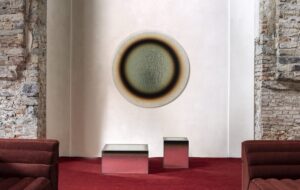
Photography by Chen Wan Ning. Courtesy of the artist, commissioned by Taichung Art Museum, featuring installation view of Haegue Yang, Liquid Votive – Tree Shade Triad, 2025
Set along the northern edge of Taiwan’s Central Park, the Taichung Green Museumbrary is the latest project by Japanese architecture practice SANAA, challenging conventional models of museums and libraries as single-purpose venues.
Conceived as a hybrid typology, the project brings together a municipal art museum and public library within a single architectural whole. Blurring the line between cultural programme and public life, SANAA positions the building as a shared civic space.
Nicole Yi-Hsin Lai, director of the museum, explains: ‘By integrating an art museum and a library within a single complex, the Taichung Green Museumbrary moves beyond the idea of a single-function cultural institution and instead becomes a highly diverse public space.’
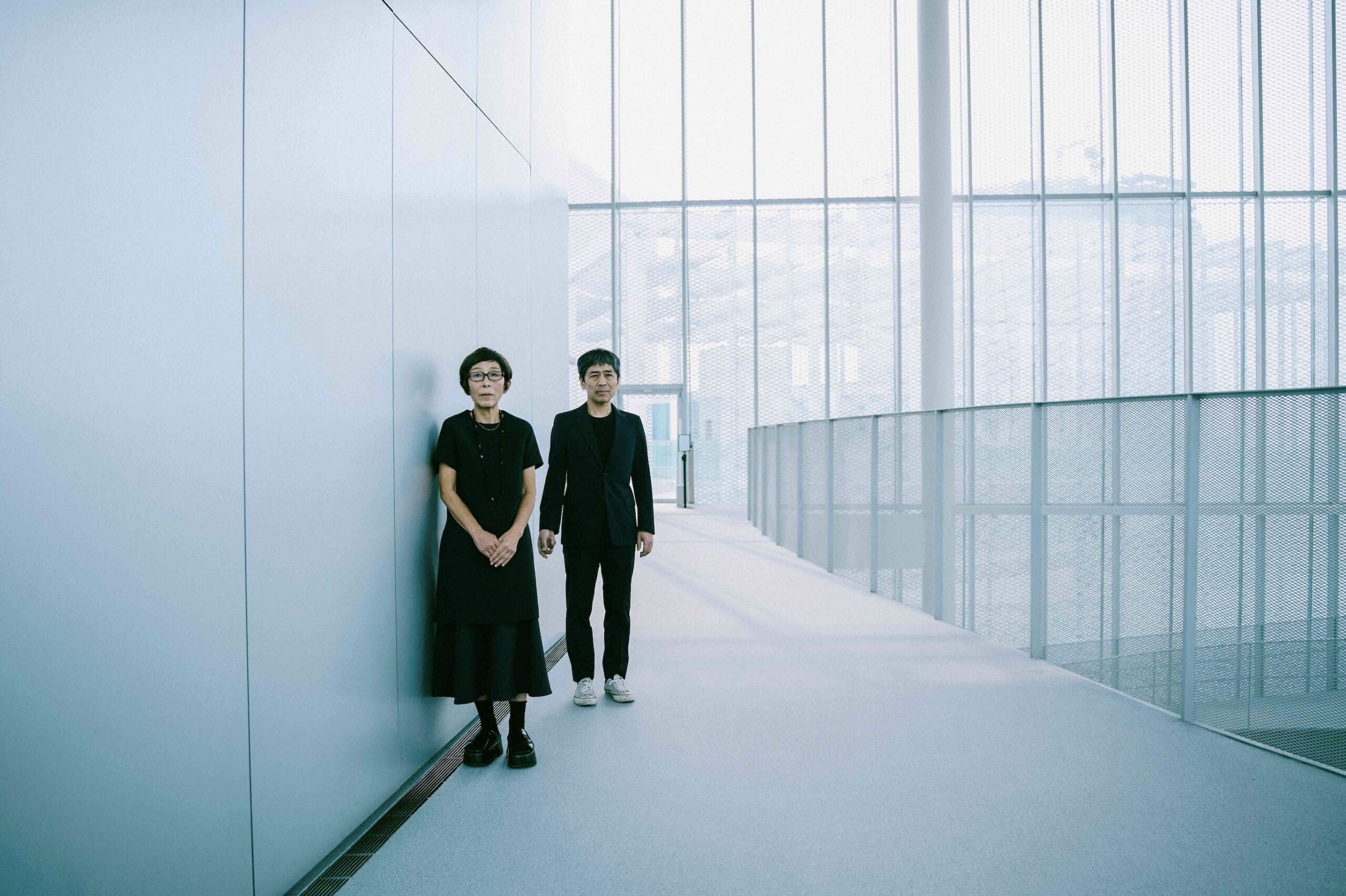
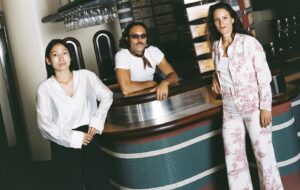
Photography by Lily Chen, courtesy of SANAA featuring Ryue Nishizawa and Kazuyo Sejima
The building is organised as eight distinct volumes, each housing galleries, reading rooms or civic programmes. Scaled to encourage more direct engagement with the spaces, they form what the architects describe as a ‘cultural forest’, extending the surrounding park into a network of interconnected spaces. For Lai, the defining feature is the project’s relationship to its landscape.
‘The most significant part about this configuration is the “green” which represents the essential role of Taichung Central Park,’ she continues. ‘For the community, the Museumbrary functions not only as a cultural infrastructure, but also as a place that integrates daily life, leisure and learning. So, responding to contemporary needs for relaxation, pause and cultural participation beyond working life.’
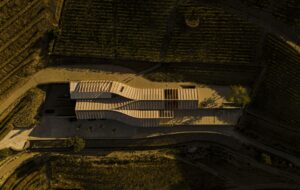
The emphasis on everyday use is reflected in the building’s spatial organisation. Several volumes are lifted above the ground, creating shaded pilotis that temper Taiwain’s climate while opening up views and light across the site. These breezeways establish a public realm between city and park.
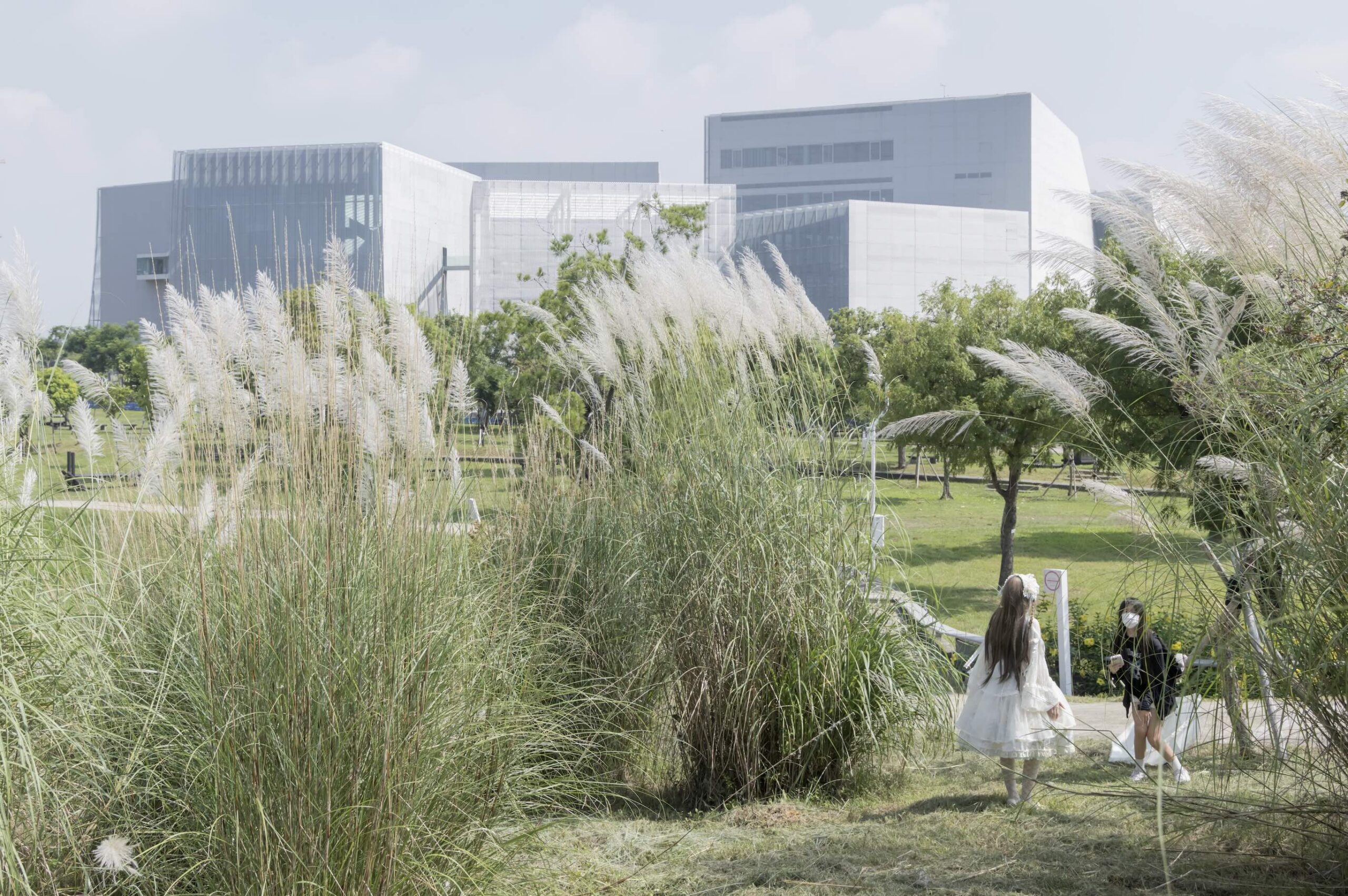
Photography by Iwan Baan. Image courtesy of Taichung Art Museum, featuring exterior of Taichung Green Museumbrary. Designed by SANAA Architects
‘From the early stages, we decided to elevate the building volumes to avoid obstructing existing circulation and activities,’ explain Kazuyo Sejima and Ryue Nishizawa, founder of SANAA. ‘Our goal was to create a “park-like” space where the Museumbrary becomes a three-dimensional extension of the landscape, inviting the public to roam and explore at their own pace.’
A silver-white facade reinforces this sense of lightness. Composed of low emissivity glazing and expanded aluminium mesh, it filters sunlight while also softening the building’s presence, lending the architecture an almost atmospheric quality.
‘To address Taiwan’s intense sunlight and humid subtropical climate, we selected expanded aluminium mesh as the primary facade material,’ SANAA notes. ‘This mesh provides effective shading and thermal insulation while maintaining visual and spatial transparency. Its unique properties allow the massive architectural volumes to appear weightless.’

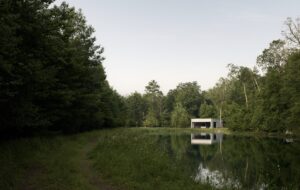
Photography by Iwan Baan. Image courtesy of Taichung Art Museum, featuring main entrance of Taichung Green Museumbrary, connecting Taichung Art Museum and Taichung Public Library. Designed by SANAA Architects
At ground level, an expansive pond by the main entrance further moderates the microclimate, subtly cooling the threshold as visitors move from park into a light-filled, contemporary interior of galleries and public spaces.
Inside, the relationship between museum and library is articulated through variation in scale and atmosphere. Exhibition spaces range from expansive halls to smaller rooms, linked by a gently sloping route through a central atrium that offers a range of routes and views.
The library adopts a similar approach, with a variety of reading spaces that encourage movement and informal use, while maintaining constant visual connections to the park. As Lai describes, ‘the experience of engaging with art and absorbing knowledge through books is inherently dynamic and fluid.’

Photography by ANPIS FOTO featuring installation view of ‘Folds and flows’, in the exhibition A Call of All Beings/ See You Tomorrow, Same Time, Same Place at Taichung Art Museum, 2025
‘Visitors do not simply come to view exhibitions; rather, as they move through the galleries and the building, they can carry their impressions and reflections into the library, where books may respond to or deepen what they have just encountered. In this way, visitors actively construct connections between art and knowledge.’
This interplay is further supported by SANAA’s “fusion spaces”, described as non-hierarchical, which integrate art and literature into shared settings, encouraging a more informal engagement with culture. The strategy recalls the practice’s earlier work, including the 21st Century Museum of Contemporary Art, Kanazawa, where circulation and openness underpin the visitor experience.
‘In terms of exhibitions, we seek to place works not only within galleries but also throughout the shared public spaces that connect the two institutions,’ explains Lai. ‘Some works are intentionally conceived to enter the library environment itself, rather than remaining confined to museum galleries.’

Photography by Iwan Baan, image courtesy of Taichung Art Museum, featuring exterior view of Taichung Green Museumbrary. Designed by SANAA Architects
‘We have also curated works that resonate strongly with the nature of a library,’ she continues. ‘This includes those centred on text, archives and manuscripts, such as Antoine de Saint-Exupéry’s The Little Prince manuscripts and Helen Keller Archive in the inaugural exhibition, so that reading becomes an integral part of the exhibition experience.’
The integration of reading and exhibition extends into the building’s spatial organisation. Circulation extends beyond the interior through elevated walkways that connect the volumes and frame oblique views across the park and city.
Environmental performance is embedded in this system, from natural ventilation enabled by raised volumes to layered façades and permeable landscaping that help mitigate heat and support water management.

Photography by Lily Chen, image courtesy of TcAM, featuring Yi-Hsin Lai, Director of Taichung Art Museum
Together, these elements form a network of spaces that interweaves architecture, landscape and programme. With its emphasis on openness and adaptability, the Taichung Green Museumbrary proposes a more integrated model for the contemporary cultural institution, one that sits easily within everyday urban life.
This integration is reflected in its curatorial approach. ‘The close connection and co-construction of the museum and library mean that the library is fundamentally embedded within curatorial thinking,’ says Lai. ‘We explore how “library indexing” and “knowledge” can permeate the viewing experience.’
She points, for example, to the art book shelves installed on the museum’s fifth floor, as well as the ways in which the idea of “books” is woven into different spatial contexts throughout an exhibition. This approach extends beyond the inaugural presentation and will continue in future installations, as the curators explore more possibilities for connecting art and reading.

Photography by Iwan Baan, image courtesy of Taichung Art Museum, featuring exterior view of Taichung Green Museumbrary. Designed by SANAA Architects
Alongside this, the team has introduced educational programming such as Play Space Plug-in and the collection-based education exhibition, Illuminating the Storeroom. Through hands-on and interactive stations placed in various corners of the Museumbrary, visitors are encouraged to engage with the architecture, the museum’s collections and its exhibition content.
As Lai explains, the Taichung Green Museumbrary aspires to join a small group of cultural infrastructures that do more than add a new venue to the city, with the capacity to change how people engage with culture and with one another.
‘How a cultural infrastructure can encourage – or even transform – the ways in which city residents consider cultural institutions is, in itself, something rare and groundbreaking,’ she ponders. ‘Internationally, there are many such cases, whether deeply community-rooted public libraries or landmark art institutions such as the Guggenheim Museum Bilbao. These projects open up more diverse possibilities for how people live, gather and engage with culture.’

Photography courtesy of Taichung Art Museum featuring Seunghyun Moon, On Thin and Transparent Things, 2025. Commissioned by Taichung Art Museum
While such transformation requires time and sustained use, she believes the Museumbrary ‘holds this potential.’ She points in particular to the project’s integration with Central Park and its response to changing contemporary lifestyles, suggesting it reflects a growing demand for new forms of space and leisure.
In this context, ‘the emergence of the Museumbrary responds precisely to these needs, offering a new model for cultural facilities at this particular moment,’ Lai adds. This vision also underpins Museumbrary’s strong commitment to accessibility, cultural equity and the inclusion of diverse communities.
‘It also shapes how we think about the content and direction of both the art museum and the Museumbrary as a whole – not only in terms of what is presented, but also in how art can be translated into forms that are more accessible, participatory and relatable,’ Lai says.
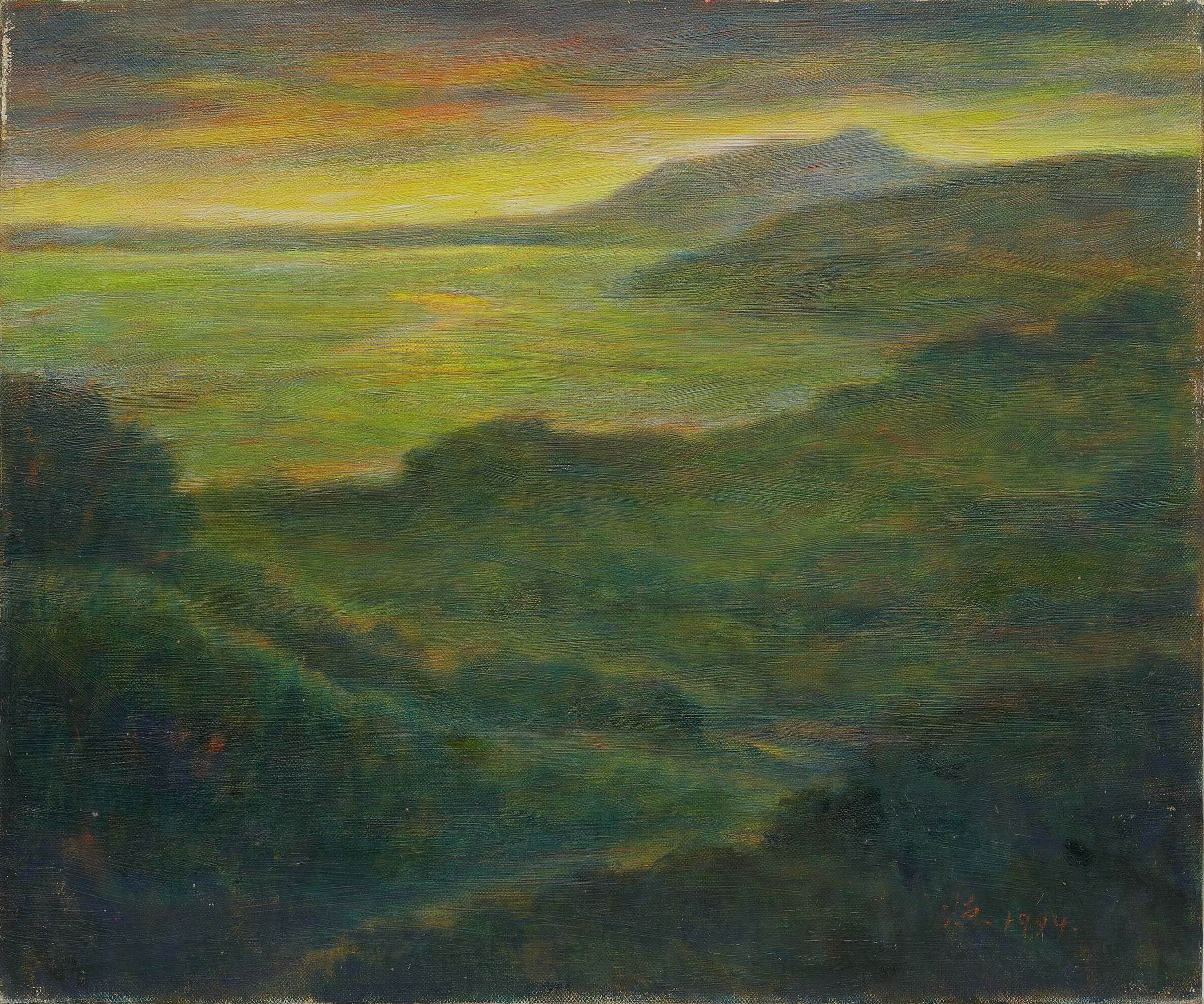
Photography courtesy of Taichung Art Museum featuring LIAO Te-Cheng, Afterglow (Guanyin Mountain at Dusk), 1992
‘It aligns closely with our ongoing commitment to cultural equity: how different groups can enter this space, how a welcoming and inclusive environment can be created, and how each visitor can find their own way of understanding and using the institution. This is a long-term and fundamental consideration for the Taichung Art Museum.’
Ultimately, she frames the ambition of the project as extending beyond conventional institutional roles. ‘What the Green Museumbrary – and the Taichung Art Museum – seeks to transcend is not only the traditional role of museums in art education and community outreach, but also to cultivate a force capable of generating meaningful change in the cultural life of the city itself,’ she concludes.
Get a curated collection of design and architecture news in your inbox by signing up to our ICON Weekly newsletter