Designed by Flawk in collaboration with London-based studio NIKJOO, Runda is a joyful, low-carbon home born from whimsical design features and an educational, community-focused approach to sustainable residential architecture

Photography by Jasper Fry
Words by Jessica-Christin Hametner
Just a short drive from London’s sprawling Hampstead Heath, this new build timber residence forms part of a Flawk development and sits alongside a 1960s Powell & Moya terrace within the Lamble Street Estate.
Completed in just ten months, Runda was designed and fabricated in-house by Flawk, renowned for its small-scale, high-craft approach, with London-based architecture and interiors practice NIKJOO acting as architect.
Established in 2017 by Alex Nikjoo, the firm is driven by the belief that architecture can have a positive impact on the world. With a focus on sustainability, technology and craftsmanship, NIKJOO has completed projects including the Cherry Trees School and Boiler Room in Soho.
Photography by Lorenzo Zandri
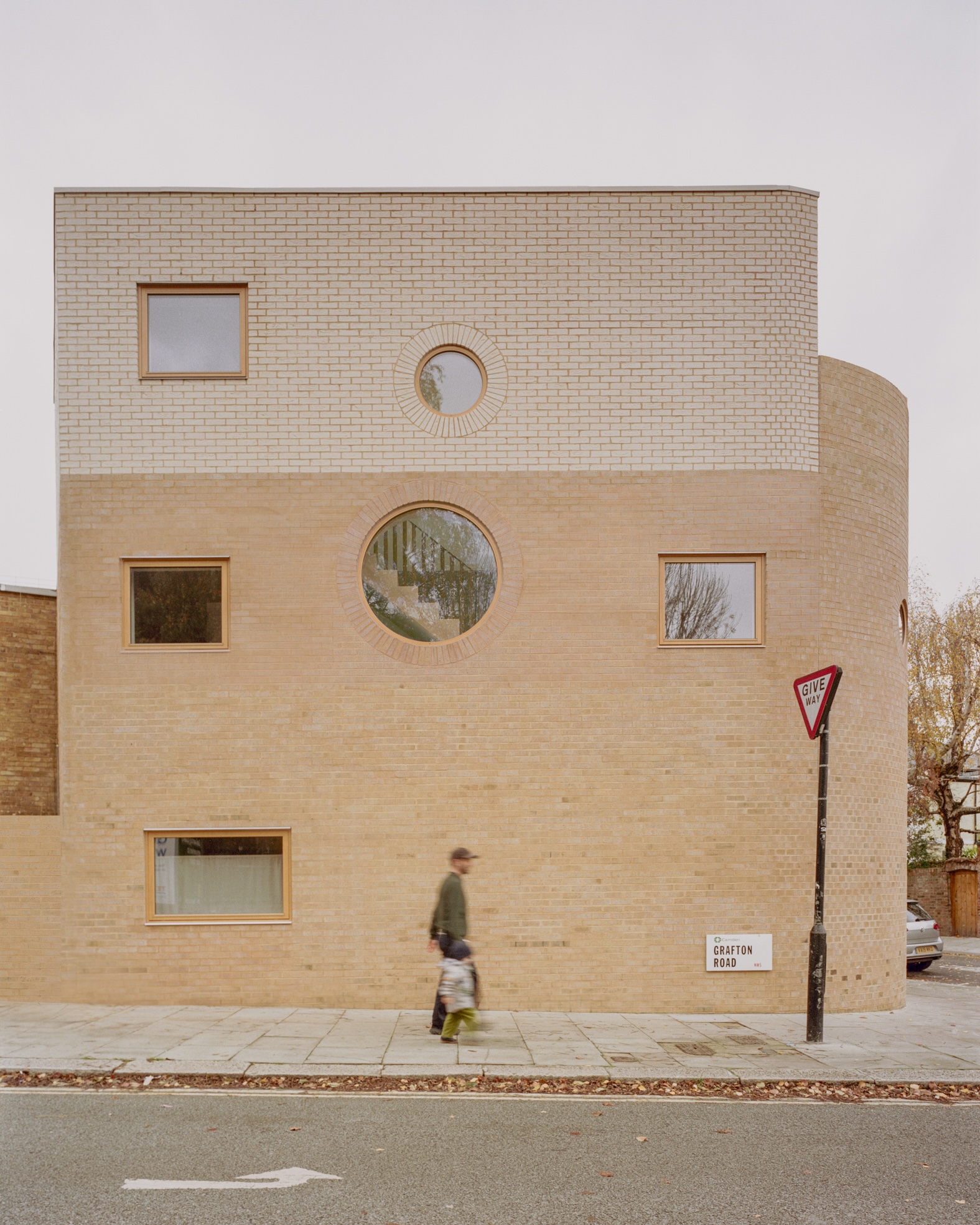
Responding to an overgrown corner plot enclosed by fencing and defined by a distinctive curved boundary, the house draws on this geometry to inform both its footprint and design, the architects explain.
‘Curves were an influence from the very first site visit,’ says Alex Nikjoo, founder of NIKJOO. ‘An existing curved boundary was the defining feature of the plot and this has been extended throughout the building. The curve also gives the house a PoMo hint, nodding to the surrounding Modernist estate in which the project sits.’
With a timber frame and brick cladding, the 128 sq m house references the site’s industrial past and the nearby brick buildings, while its curves and circular windows introduce a playful, geometric character to the three-storey, three-bedroom new build.
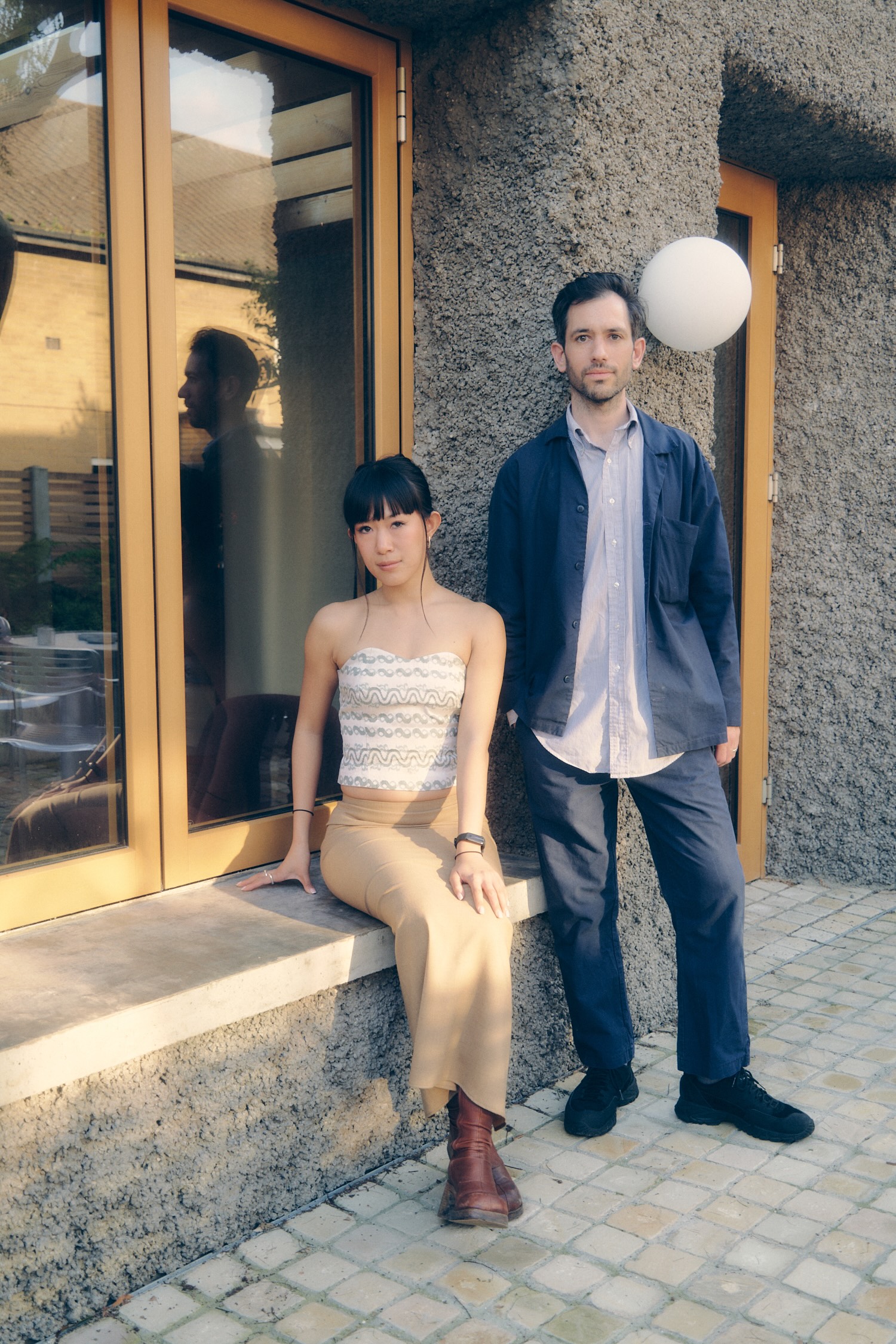
Photography by Jasper Fry featuring NIKJOO’s Alex Nikjoo and Flawk’s Ashley Law
‘Runda is a stone’s throw from Hampstead Heath and the variety of wood finishes injects playfulness into the typical idea of “a cottage in the woods”,’ adds Ashley Law, founder of Flawk. ‘We wanted to celebrate the species of wood that grow in the UK, as a subtle reference to the home’s context.’
The facade’s double-toned brickwork mirrors the height of the neighbouring terraces, with semi-elliptical openings introducing daylight and perfectly capturing Flawk’s whimsical spirit. Through its material choices and energy strategy, Runda is projected to reduce CO₂ emissions by 62% compared with current Part L1 standards.
A green roof and air-source heat pump support the low-energy build, while the timber frame cuts embodied carbon compared with conventional masonry. The result is a low-impact, design-led home that feels both contemporary and connected to its surroundings.

Photography by Jasper Fry
Inside, timber brings warmth to cooler materials like concrete and off-cut marble, but it also underscores the craftsmanship behind the home. Every element, down to the smallest detail, from the structure to the door handles, was thoughtfully considered and shaped the distinctive character of Runda.
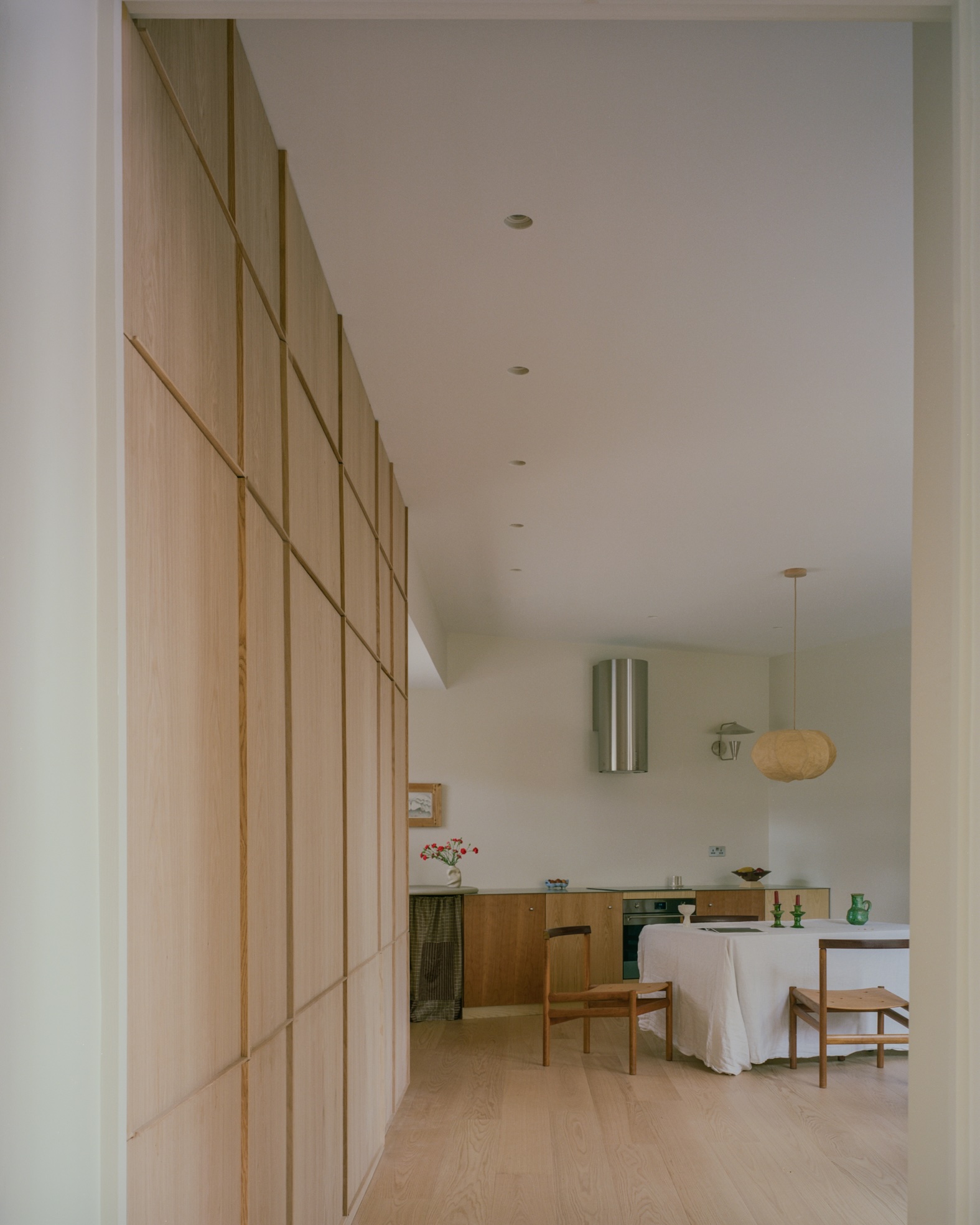
The entrance leads to an open-plan kitchen and living area, where oversized glazing overlooks a planted courtyard garden. A wall of timber panelling anchors the space, concealing under-stair storage and folding out to create a discreetly separate room.
In the kitchen, NIKJOO paired pine, oak and cherry cabinetry with a fingerprint-resistant stainless-steel worktop, while a bespoke concrete bean-shaped corner counter takes its design cues from the site’s angular geometry.
Photography by Lorenzo Zandri
‘Because of the plot’s shape, the corner of the kitchen is at quite an awkward angle, so the curved form of the bean softens it while turning the junction into a fun statement,’ explains Law. ‘We at Flawk actually stood on top of the kitchen countertop and drew the bean template freehand!’
A curved stainless steel and oak staircase links all three floors of the property, highlighting the home’s sculptural lines and sleek finishes. Skylights flood the stairwell with natural light and a circular porthole on the mid-landing frames views of the surrounding neighbourhood.
On the next level, two bedrooms and a family bathroom feature smooth polished plaster, pale timber and brushed-metal fittings, creating a calm backdrop for daily life. Travertine mosaic tiles cover the floors, with darker accents marking thresholds and wet areas.

Photography by Jasper Fry
Bathroom vanities and ledges are crafted in Sapele wood, bringing warmth, and marble surfaces are made from off-cuts, reflecting the project’s commitment to a resourceful approach to materials.
Bright and airy, the top-floor master suite opens onto a private terrace and is furnished with pieces from Six Dots, a multidisciplinary studio that designs and makes furniture and homeware from its workshop in East London.
Fitted with custom mirrors and fixtures, the ensuite bathroom is flooded with natural light, while a desk chair by London-based architectural designer Freddy Tuppen completes the bedroom.

Photography by Jasper Fry
‘A big part of what I enjoy about working with Flawk is their commitment to elevating local designers, craft makers and galleries,’ shares Nikjoo. ‘It gives each project a sense of diverse, considered design, which tests norms and shifts expectations, resulting in better quality architecture that benefits a wide group of people.’
This ethos extends to a collaboration with STORE Projects, a collective of artists, architects and designers based in London and Rotterdam. Supporting young students from underrepresented backgrounds applying to creative courses, the organisation addresses social imbalances in art, design and architecture education.
‘Community is really important to us at Flawk and within our projects we always try to support and champion the work of local artists, makers and galleries,’ says Law. ‘It was super exciting to collaborate with STORE Projects and sponsor a series of after-school clubs for young people from under-represented backgrounds pursuing creative courses.’

Photography by Lorenzo Zandri
Students learned physical modelling, 3D scanning and ceramic casting to produce Runda’s handmade ceramic knobs and handles. Like much of the house, these smaller features also reference the site’s history as a former brickworks.
‘It is so important to nurture and inspire the creativity of the next generation of designers,’ continues Law. ‘The afterschool club programme introduced students to various making “tools” that we use in our practice at Flawk and the results were so beautiful.’
Elsewhere, a hand-sewn semicircular café curtain, made using fabric from Law’s collection, adorns the ground-floor WC’s circular window. Artworks are curated with Miłość Gallery, showcasing pieces by London-dwelling creatives like Douglas Cantor, Sophie Vallance Cantor and Katie Hackett, while vintage furniture is sourced from Mya.Kin, Cornwall’s Disjecta Membra and 311 Ltd.

Photography by Jasper Fry
Despite being a new build, NIKJOO and Flawk have created a home brimming with personality and life. By selecting pieces that each tell a story and connect to the wider local community, Runda avoids any sense of generic uniformity, instead radiating a warm, homely atmosphere.
‘Architecture can transform underused or overlooked urban sites into meaningful places by prioritising liveability, social connection and a strong relationship with the neighbourhood,’ says Nikjoo, reflecting on how architecture can create more valuable spaces for the community.
‘Thoughtful residential design can deliver housing that responds to its local context while activating the ground plane with shared amenities, green spaces and transitional zones that encourage interaction among residents.’

Photography by Lorenzo Zandri
Through its timber frame, low-energy systems and reduction in CO₂ emissions, this home demonstrates how considered design choices can form the heart of a project. Every detail – from handmade ceramic knobs created by young students, to locally sourced furniture and curated artworks – speaks to the wider locale and gives the house a palpable personality.
‘With adaptive reuse, infill development and flexible unit typologies, overlooked sites can support diverse living arrangements,’ concludes Nikjoo. ‘By integrating sustainability, daylight and a domestic scale, residential architecture can turn neglected plots into welcoming spaces that strengthen community identity and everyday urban life.’
Get a curated collection of design and architecture news in your inbox by signing up to our ICON Weekly newsletter