Designed by the Mexico City–based studio founded by Isabel Abascal and Alessandro Arienzo, the 2026 Serpentine Pavilion references England’s serpentine walls and the surrounding garden landscape through a porous brick structure

Photography by © Pia Riverola featuring Isabel Abascal and Alessandro Arienzo of LANZA atelier
Serpentine Galleries has announced Mexican architecture studio LANZA atelier as the designer of the Serpentine Pavilion 2026, marking the 25th edition of one of the world’s most influential architectural commissions.
Founded in 2015 by Isabel Abascal and Alessandro Arienzo, the Mexico City-based practice will unveil its Pavilion, titled a serpentine, on 6 June 2026 at Serpentine South, with Goldman Sachs supporting the project for the 12th consecutive year. The 2026 edition holds particular significance, as it coincides with the Pavilion’s 25th anniversary, which will be celebrated through a special partnership with the Zaha Hadid Foundation.
The Serpentine Pavilion has long served as a platform for emerging and established voices in contemporary architecture, evolving into a participatory public structure that hosts Serpentine’s interdisciplinary programmes across art, performance, education and community engagement.
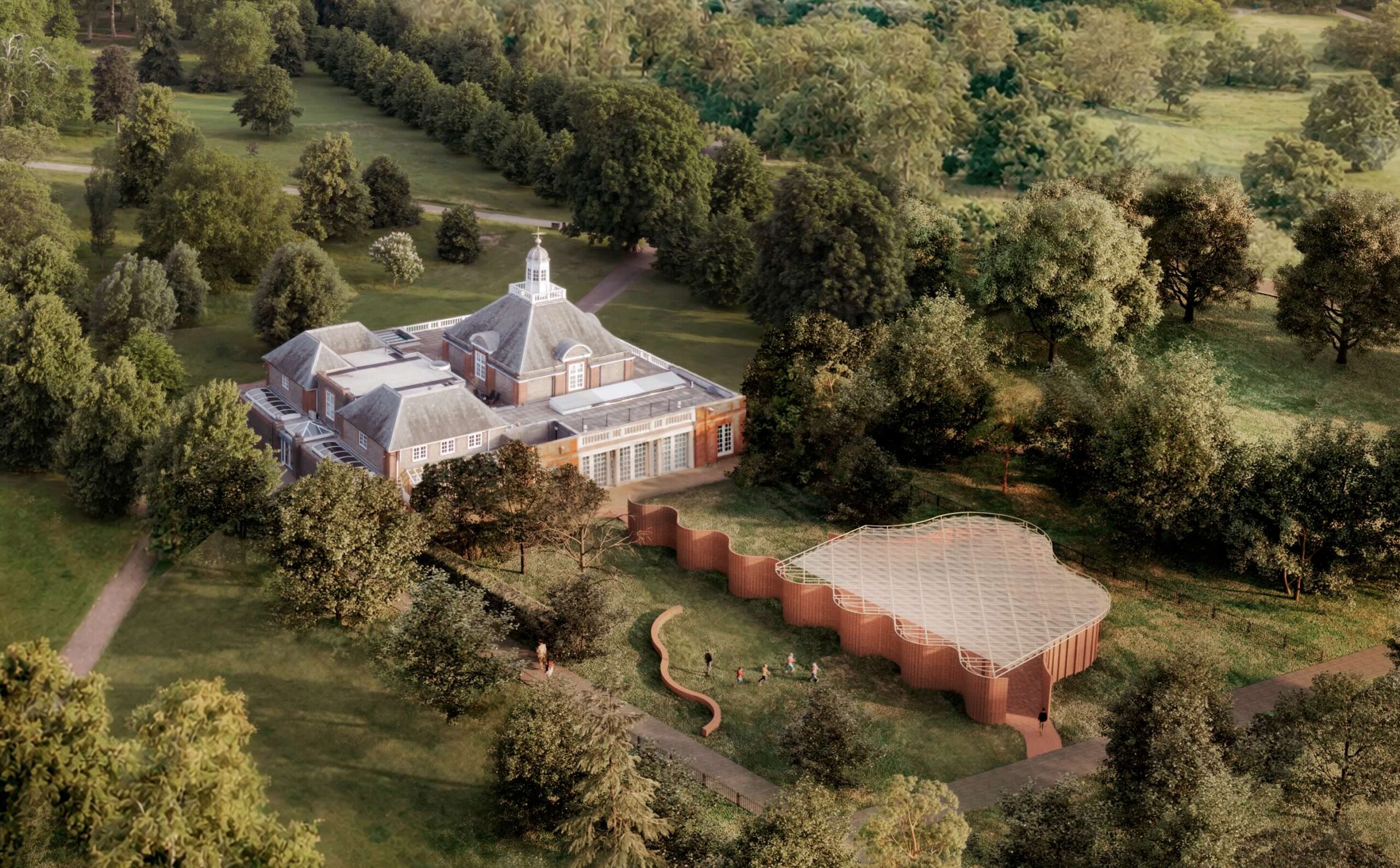
Photography courtesy of Serpentine Galleries featuring LANZA atelier’s a serpentine
LANZA atelier’s proposal draws inspiration from the serpentine or crinkle-crankle wall, a historic English architectural feature composed of alternating curves. With an efficient design, bricks are laid in a zig-zag pattern to create a unique snake-like shape.
Originating in ancient Egypt and later introduced to England by Dutch engineers, the serpentine wall achieves structural stability through curvature, allowing a one-brick-wide wall to use fewer materials than a straight equivalent. The form also nods subtly to the nearby Serpentine lake, named for its sinuous outline.
Set within Kensington Gardens, the pavilion is conceived in close dialogue with its landscape. One curving brick wall defines the primary spatial gesture, while a second wall responds to the existing tree canopy without disrupting it. Positioned on the northern side of the site, the structure is topped by a translucent roof that rests lightly on brick columns, evoking the feeling of moving through a grove of trees.
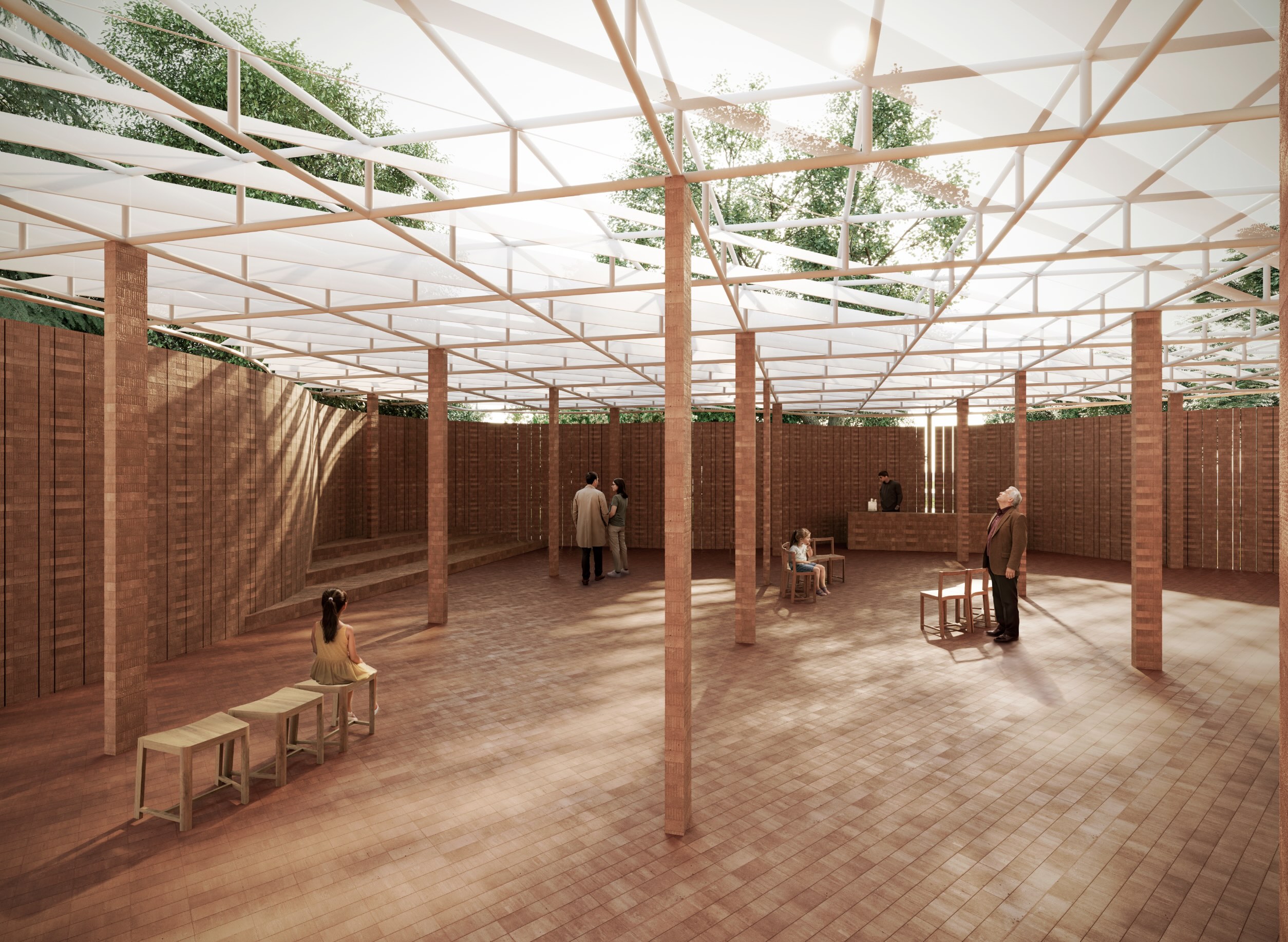
Photography courtesy of Serpentine Galleries featuring LANZA atelier’s a serpentine
Allowing light and air to permeate the pavilion, this porous configuration blurs the boundaries between enclosure and openness. Brick was chosen as the primary material both as a reference to the English garden tradition and as a way of establishing a material conversation with the existing brick facade of the Serpentine South Gallery, which was originally built as a tea pavilion.
Drawing on the symbolic figure of the serpent as a generative and protective force, the pavilion also references England’s historic fruit walls dating back to the 18th and 19th centuries. These were high-walled structures, usually brick, designed to temper climate, create shelter and enable growth by creating a warm micro-climate for plants.
Throughout the summer and until October 2026, the Serpentine Pavilion will host a programme of live events spanning music, film, theatre, dance, literature, philosophy, fashion and technology, with each commission responding to the pavilion’s unique architectural conditions.
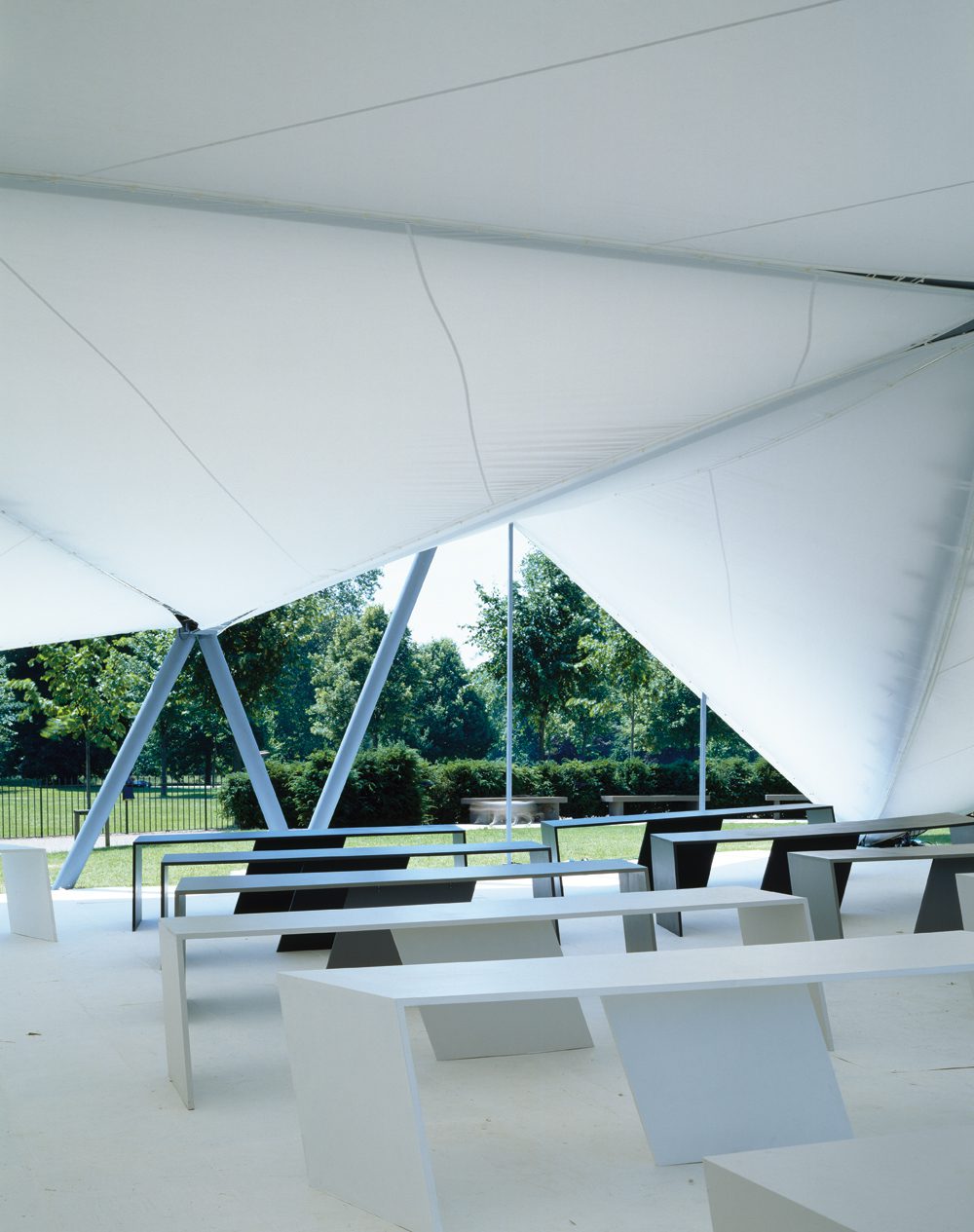
Photography by © 2000 Hélène Binet featuring Serpentine Gallery Pavilion 2000 designed by Zaha Hadid
What’s more, Serpentine’s collaboration with the Zaha Hadid Foundation will commemorate the late architect’s legacy. As the designer of the inaugural Serpentine Pavilion in 2000, Hadid set the tone for the commission’s spirit of experimentation and innovation.
A dedicated architecture programme at Serpentine South will bring together leading architects, thinkers, and former pavilion designers to reflect on Hadid’s work, the history of the pavilion and the future of architectural practice.
Get a curated collection of design and architecture news in your inbox by signing up to our ICON Weekly newsletter