The emerging London-based studio has reworked a modernist house set within the South Downs National Park, delivering a sensitive renovation that honours the building’s original spirit
Photography by Jake Balston
Words by Jessica-Christin Hametner
As midcentury houses continue to be at risk from demolition, the renovation of TH House, a modernist home in the South Downs by young architecture studio DEDRAFT, makes a compelling case for thoughtful adaptation rather than a complete rebuild.
The property, built between 1964 and 1965, follows the timeless forms and architectural simplicity that have come to define Modernism, one of the most influential architecture and design movements of the 20th century.
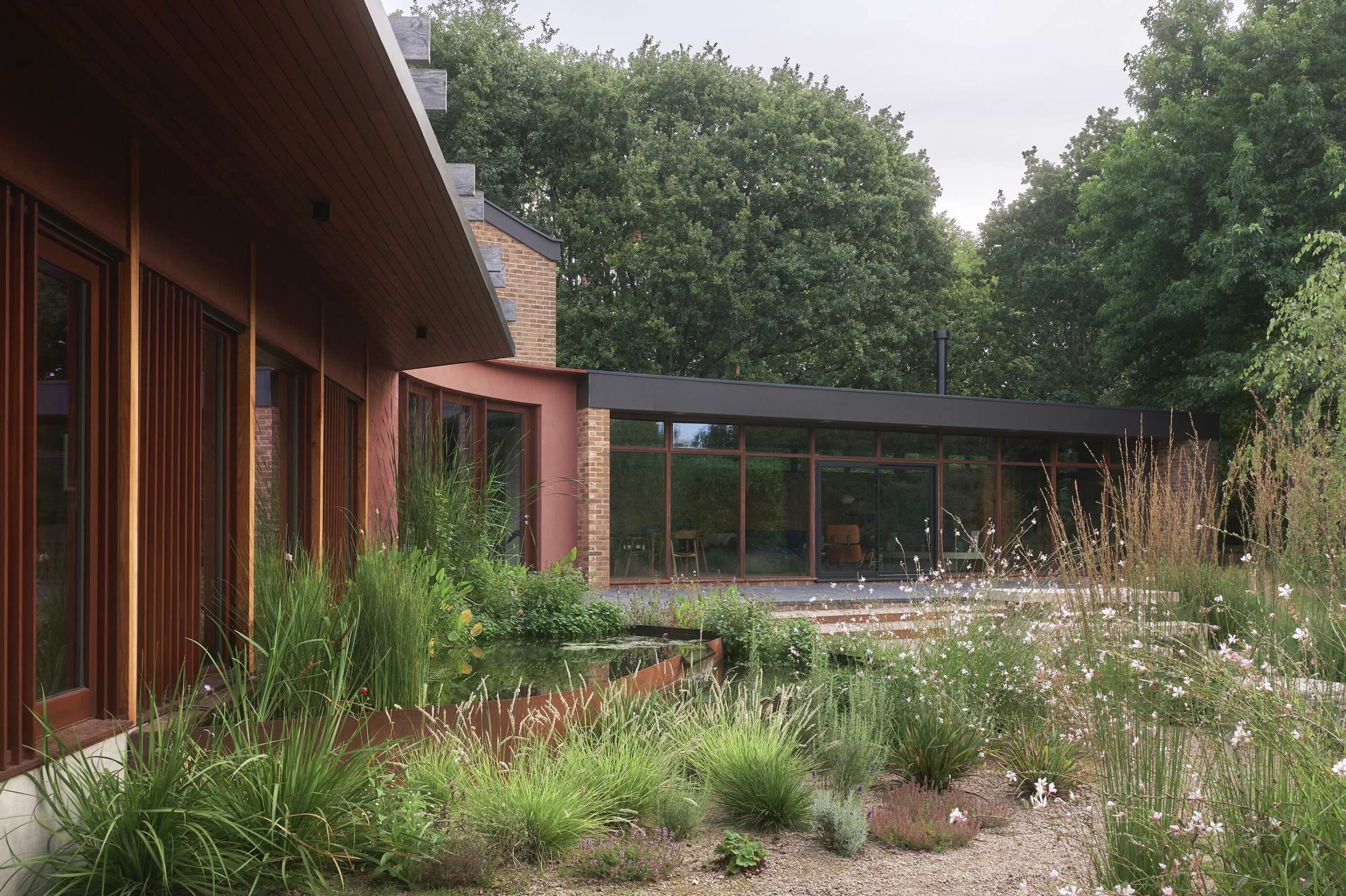
Nestled in the picturesque village of Ditchling, the house is characterised by its low-slung horizontal planes and generous glazing, the latter bathing the interior in natural light and typical of modernist domestic architecture.

Photography by Jake Balston
‘As the house is unique in its design compared with others in the immediate area, it sits independently and tucked away at the head of a cul-de-sac within a generous, expansive garden,’ says Grant Straghan, Director ARB at DEDRAFT.
‘It has a sense of freedom,’ continues Straghan, ‘enabling us to respond more to the house itself than to the local vernacular, which tends to be hotchpotch of brick bungalows, quaint cottages and much older timber framed, clay tile-clad buildings.’
The owners, who moved from London when they purchased the house, enlisted DEDRAFT to revamp and extend the property, updating it for contemporary living while preserving the original aesthetic. Featuring curved forms and strong monolithic elements, the reworked design stays largely true to the original footprint.

Photography by Jake Balston
‘The modernist design fits perfectly with both the client’s and my own design tastes, in its aesthetic as well as its humanistic approach to scale and function, the material warmth and the close relationship between house and garden, both visual and physical,’ adds Straghan.
A sweeping infill extension now links the two wings, replacing the former low-slung garage and sitting just below the main house. Low, overhanging roofs – another hallmark of mid-century design – guide visitors through the front porch, while on the south-facing side they provide shelter from the summer sun and give the building a more pavilion-like, open quality.
‘The client was very keen for any reconfigured spaces and the replacement wing to be true to the original design in appearance, scale and aesthetic, rather than jar with the existing proportions and materials,’ explains Straghan. ‘With Aalto never far from my mind, we drew inspiration from Säynätsalo Town Hall, as well as a host of other modernist houses closer to home.’
Photography by Jake Balston
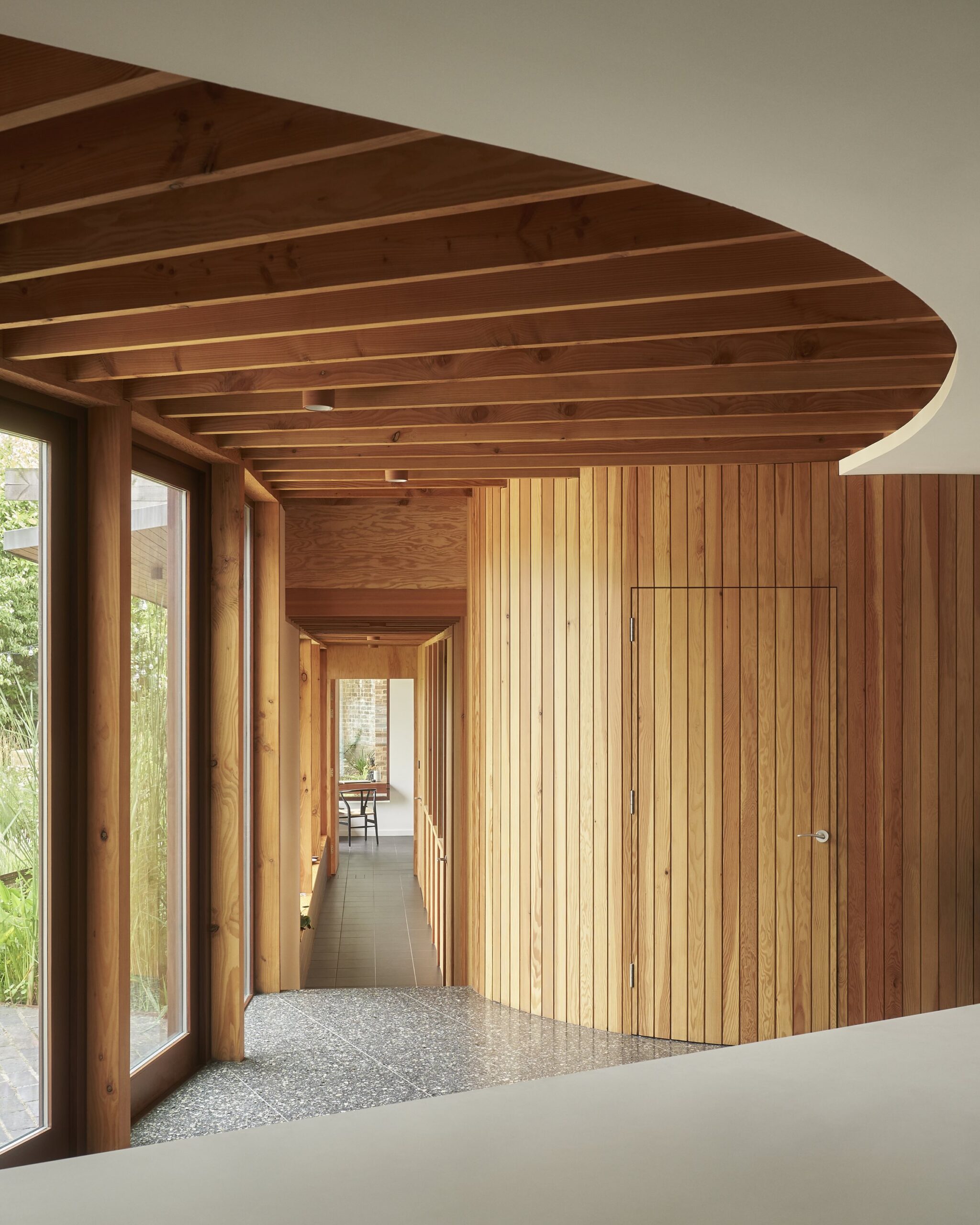
Inside, TH House has been modernised to accommodate evolving needs and provide flexibility. A central kitchen and dining space form the heart of the home, with interiors opening onto expansive views of the garden and lake. Eschewing embellishment, the design favours restraint and simplicity, using form and proportion to create an inviting, light-filled house.
Bespoke ceramic tiles made in Spain by Ceramica Cumella, who are currently adding the finishing touches to the exterior of Gaudí’s Sagrada Familia in Barcelona, were introduced alongside the existing Doussié windows and exposed brickwork. Together, these elements create a cohesive palette that subtly distinguishes between old and new without jarring, while creating a textured interior that honours the home’s modernist roots.
‘Materials were chosen carefully to complement the existing building, with the client heavily involved in the sampling process and the final palette selection,’ states Straghan. ‘Timber dominates throughout, both structurally and as a finish, with Douglas fir extensively in the new addition as framing and as wall and ceiling cladding.’
Photography by Jake Balston
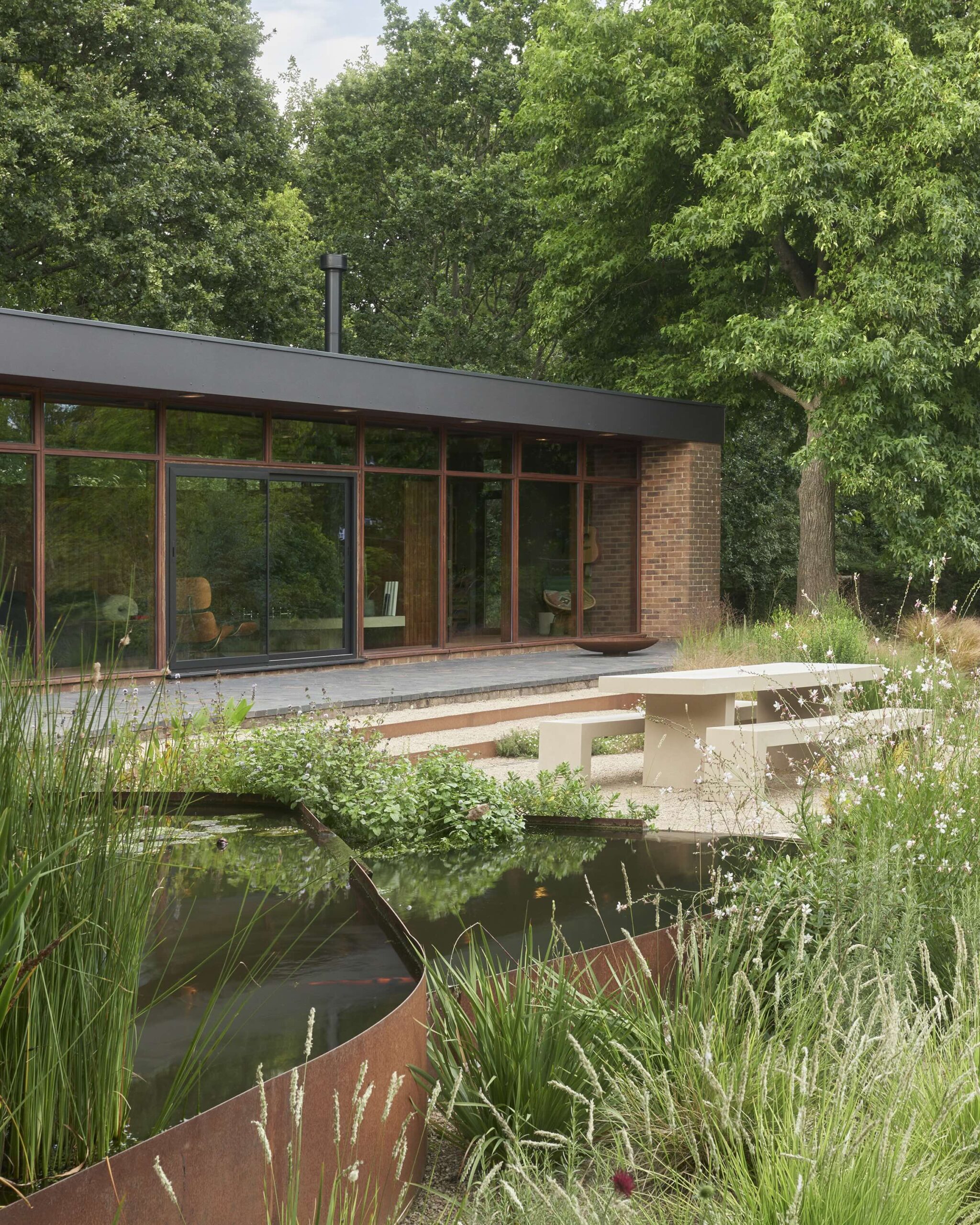
Working with Nick Dexter Studio, the original garden by British landscape designer John Brookes, widely credited as the “man who made the modern garden”, has been adapted to complement the house’s expanded footprint.
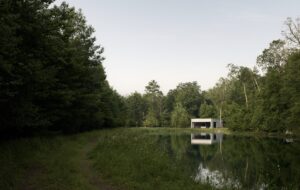
Secluded pockets of planting lead to a private lake and tiered Corten ponds that extend to the guest and home office wing. From within, views stretch across the garden, giving the house a sense of privacy, while also keeping an open connection through its floor-to-ceiling windows.
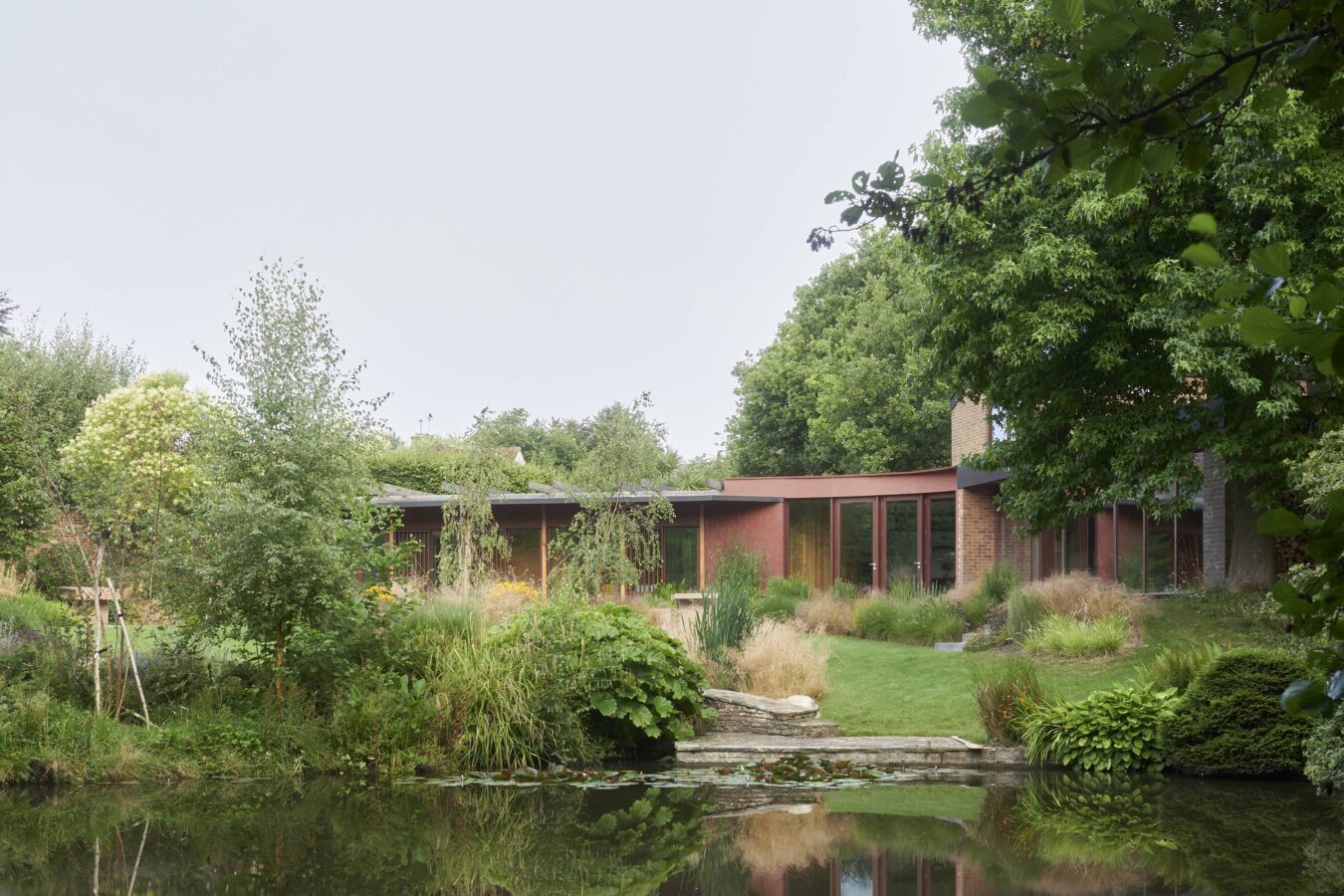
‘The modernist ideal of expressing the link between interior and exterior is evident in the overpowering views throughout the house, present in around 80 per cent of the rooms,’ says Straghan. ‘Oriented to embrace and overlook the main garden, creek and lake, the new internal corridor provides a series of framed views across the raised ponds.’
Photography by Jake Balston
An architectural time capsule, TH House has been sensitively restored by DEDRAFT using a rich material palette that complements the original features, all while honouring the building’s heritage. The house remains a rare and remarkably preserved example of mid-century architecture.
‘The pièce de résistance, for me, is the view back to the house at dusk, when the warm internal glow exemplifies its expressive, low-slung horizontality and the vertical window framing defines the internal spaces, revealing the open-plan living in all its glory.’
Get a curated collection of design and architecture news in your inbox by signing up to our ICON Weekly newsletter