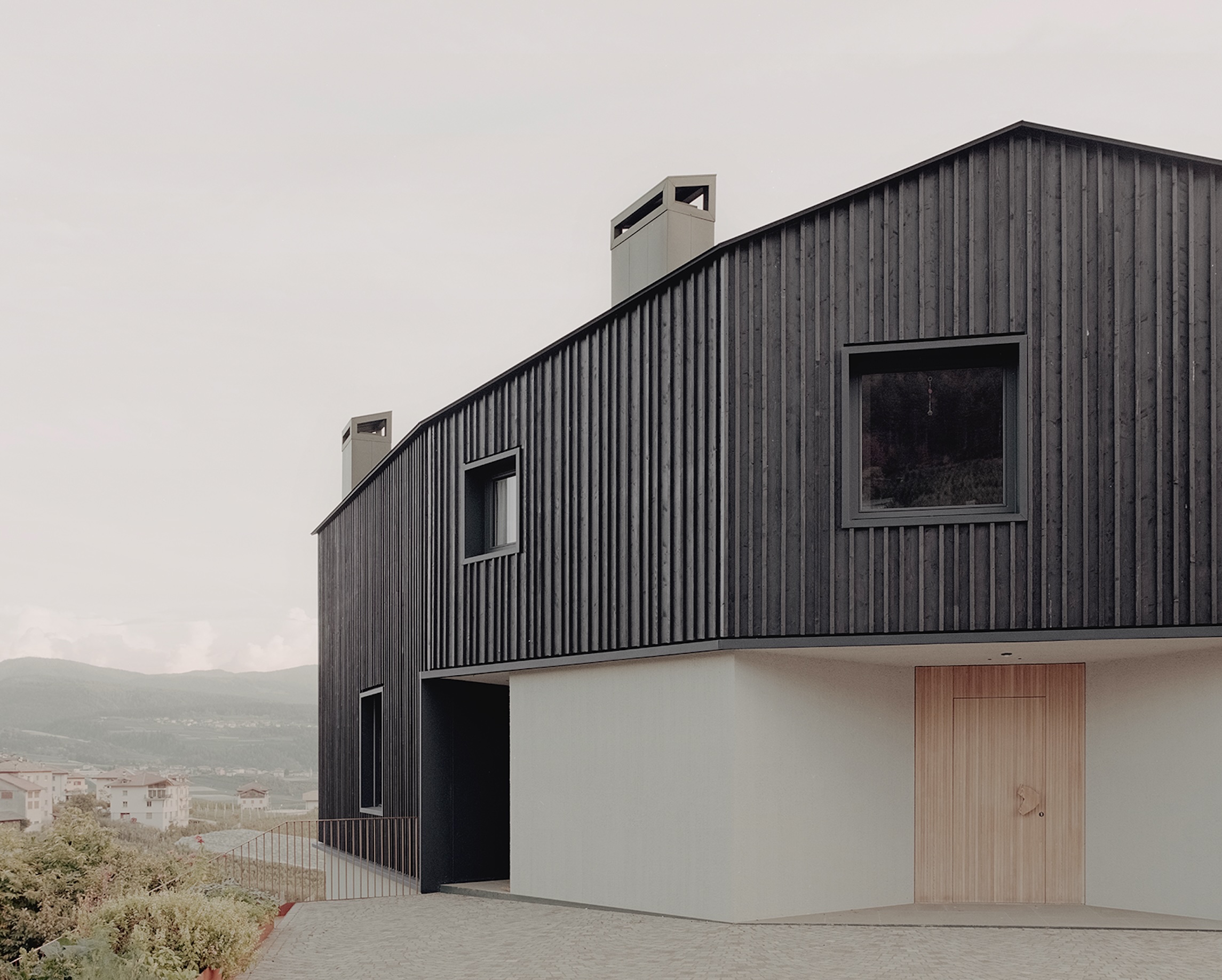
Set among the apple orchards of Val di Non, this private residence reimagines local traditions through the use of black-treated larch timber and a considered material palette, all framed by the breathtaking Brenta Dolomites
Photography by Simone Bossi
Words by Jessica-Christin Hametner
When it comes to location, it doesn’t get much better than South Tyrol. With its glacial peaks, hilly vineyard landscapes and picturesque towns where time seems to slows down, this northern Italian region perfectly blends old and new.
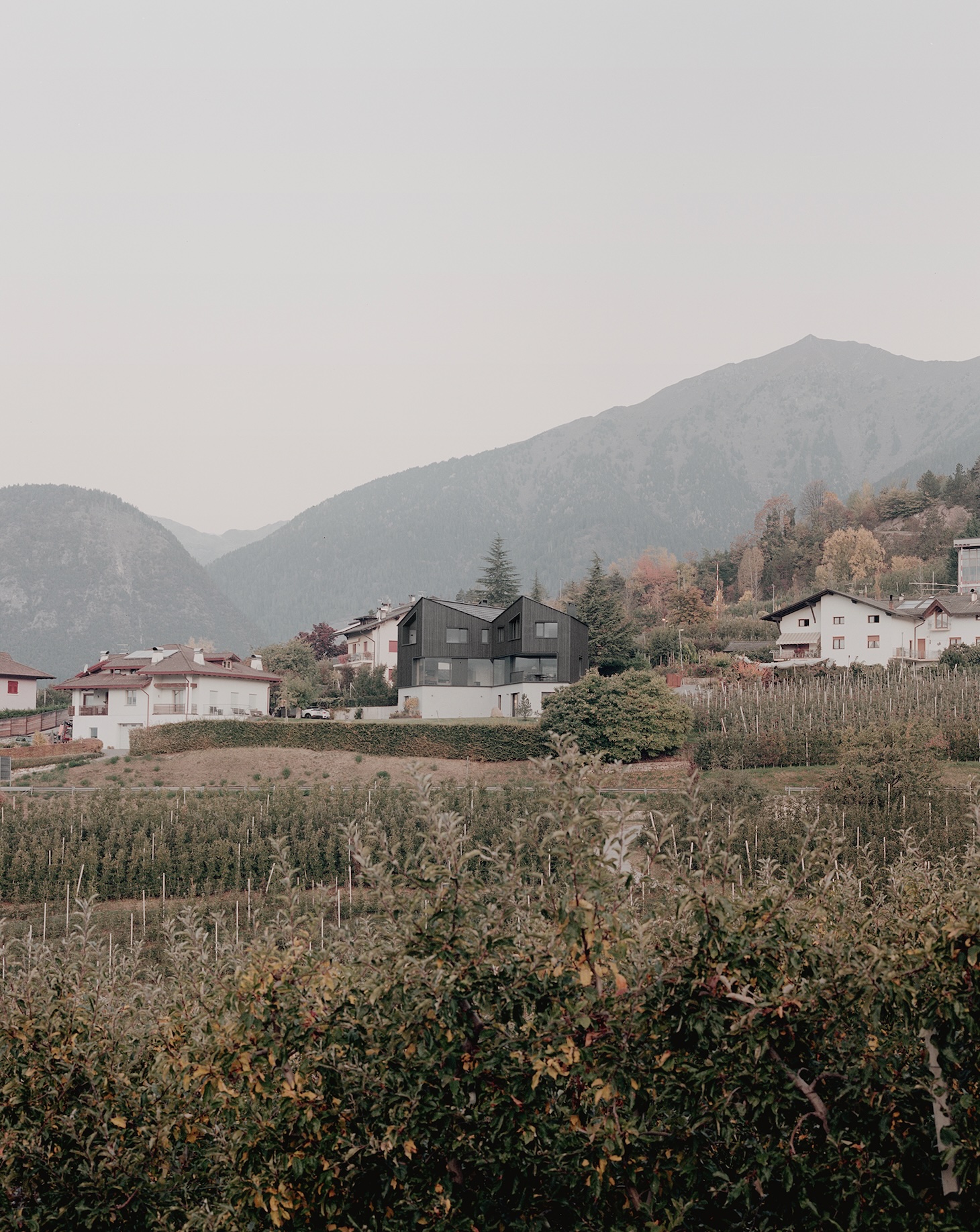
It is here in Val di Non, the northwestern region of Trentino, where MoDusArchitects has designed a minimalist house that juts out like a peak from its idyllic surroundings. Tucked within the region’s renowned apple orchards, Hometown House offers a modern sensibility and incomparable views from every angle.
MoDusArchitects has carved a distinct niche in South Tyrol’s architecture scene since its founding in 2000. From infrastructure to educational spaces, the practice’s diverse portfolio includes standout projects like the Novacella Abbey Museum Addition, set within the vineyard-draped Eisack Valley, and the Bressanone-Varna ring road. All projects integrate regional practices with innovative techniques.
Photography by Simone Bossi
Hometown House is no exception. Situated just steps from apple orchards that stretch across the hills surrounding Lake Santa Giustina, with views of the Brenta Dolomites, MoDusArchitects designed the home for a world-travelled client. After years abroad in Europe, Africa and the United States, a return to Italy offered the opportunity to reconnect with familiar roots.
Thoughtfully executed on the site of the client’s parents’ former home, the exterior is defined by a bold black larch facade, treated with water to accentuate its grainy texture. Vertical panels and 4x4cm profiles break only for expansive windows and the building’s angular lines, while the local porphyry cobblestone driveway sets the tone long before one steps inside.
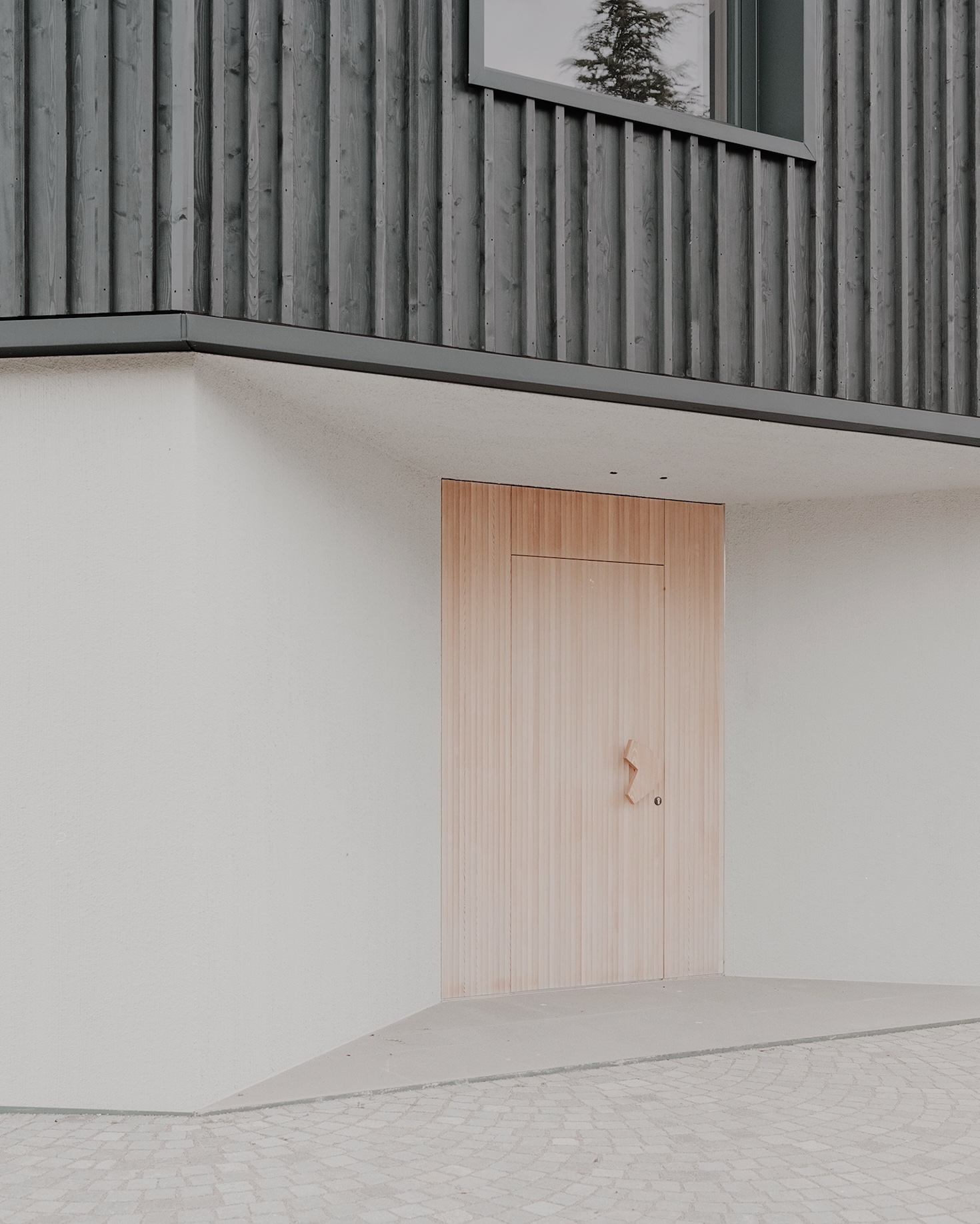
Beyond the entrance, vegetable and herb gardens nod to the property’s agricultural heritage. Approaching the house, a covered alcove with a solid larch door – a signature detail in all MoDusArchitects’ residential projects – is an example of how the practice’s designs often respect local traditions, but with a modern twist.
Photography by Simone Bossi
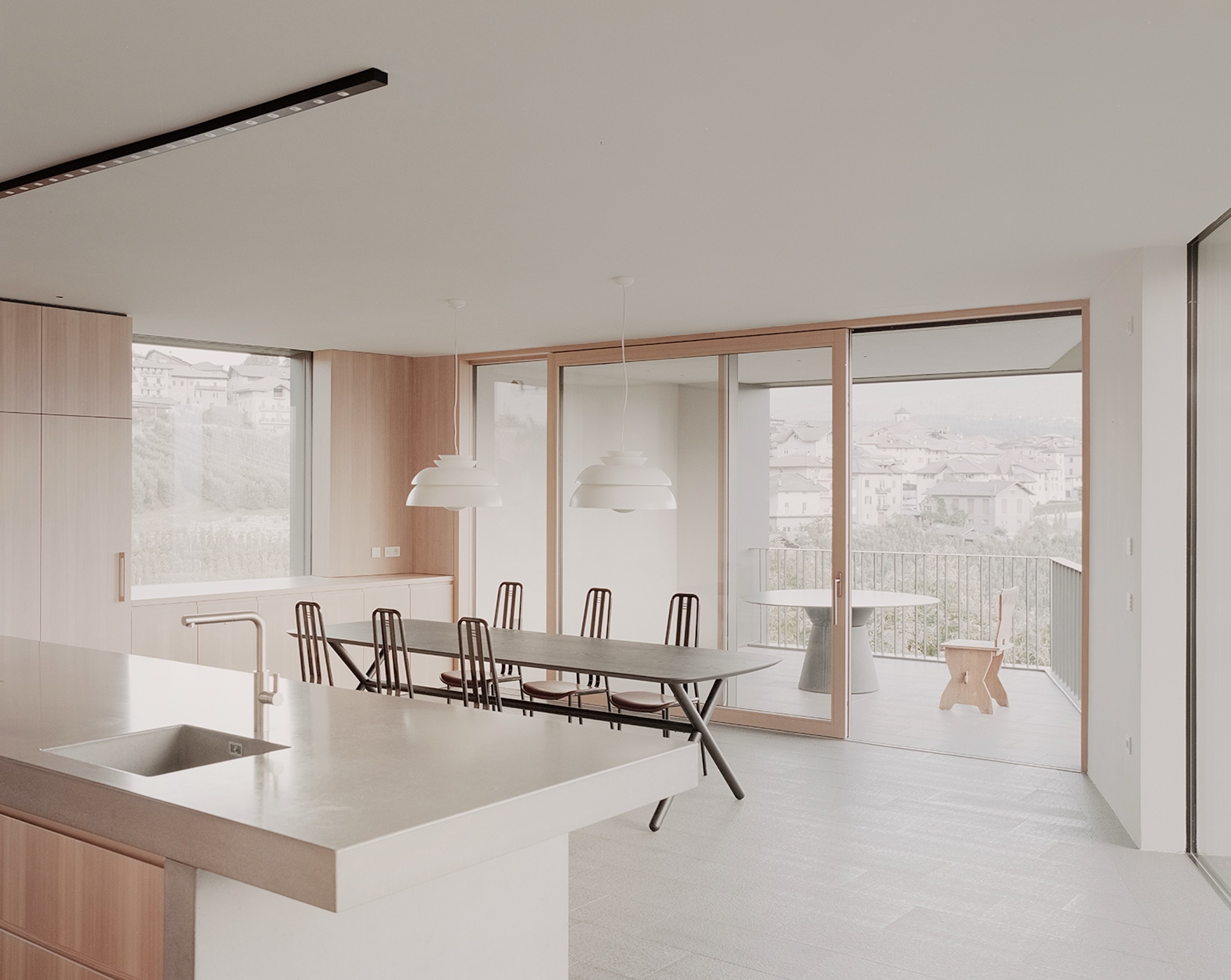
Inside, the v-shaped layout faces south, framing panoramic views of the valley and lake. An open-plan living area, flooded with natural light, is the hub of the home and serves as a space for family gatherings. Balancing effortless entertaining with intimate, private living, it creates a sense of cosiness.
With smooth porphyry-grey floors that extend throughout the home, the living room is slightly sunken to form a comfortable area to unwind after a long day outdoors or to provide endless opportunities for socialising.
‘It honours the house as a place of hospitality,’ say Sandy Attia and Matteo Scagnol, founders of MoDusArchitects. ‘A space where the family can unwind, cook together and share meals after a day of apple picking, hiking or skiing.’

Photography by Simone Bossi
In the kitchen, the architects used a mix of natural and industrial materials. Warm vertical-grain panels line the walls and contrast with the monolithic concrete island, while sleek stainless-steel countertops and a grey-tiled wall add a modern touch.
The Stube, a traditional Alpine wood-panelled family room, opens directly onto the leafy garden, designed to integrate the home with its surroundings and break down the lines between indoors and outdoors.
A light-filled guest room, laundry and exquisite wine cellar complete the lower floor of the property, with the wine cellar paying homage to both the region’s rich agricultural heritage and the owner’s ties to Val di Non.
Photography by Simone Bossi
On the upper floor, the bedrooms reflect MoDusArchitects’ signature blend of modern design and Alpine style. Four double bedrooms, including a master suite with a minimalist ensuite bathroom, are connected by an airy vestibule that doubles as a study.
A cedarwood ceiling adds texture and depth to the bedrooms, while its rich red-brown hue is a nod to the nearby forests. Skylights bathe the rooms in plenty of natural light, making the upper floor feel bright and airy, even on the darkest winter days.
Reflecting MoDusArchitects’ commitment to building with local materials and using typical construction methods, Hometown House is rooted in its landscape and beautifully honours the site’s unique character with great respect for nature.

Photography by Simone Bossi
Together with the traditional Alpine furniture, dotted throughout the home, each piece holds personal significance for the owner and connects to the region’s folklore. Celebrating South Tyrol’s customs and history, the property pays tribute to the owner’s roots.
Nestled in rugged surroundings, Hometown House embraces the nature of its setting, showcasing MoDusArchitects’ expertise in reviving local traditions with a contemporary approach. The result is a striking family home that embodies the warmth and genuine hospitality of this special corner of Italy.
Get a curated collection of design and architecture news in your inbox by signing up to our ICON Weekly newsletter