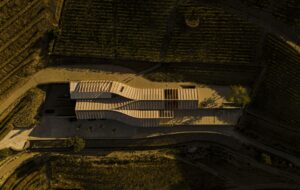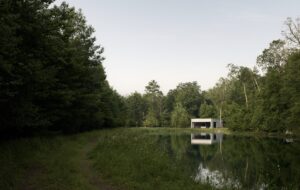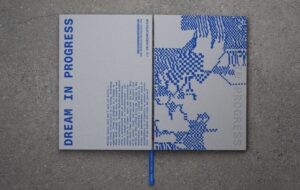
The seventh edition, held under the theme Fragments, took place earlier this month and proved to be one of the strongest to date. ICON travelled to Como to find out how this city is rewriting the rules of the design fair
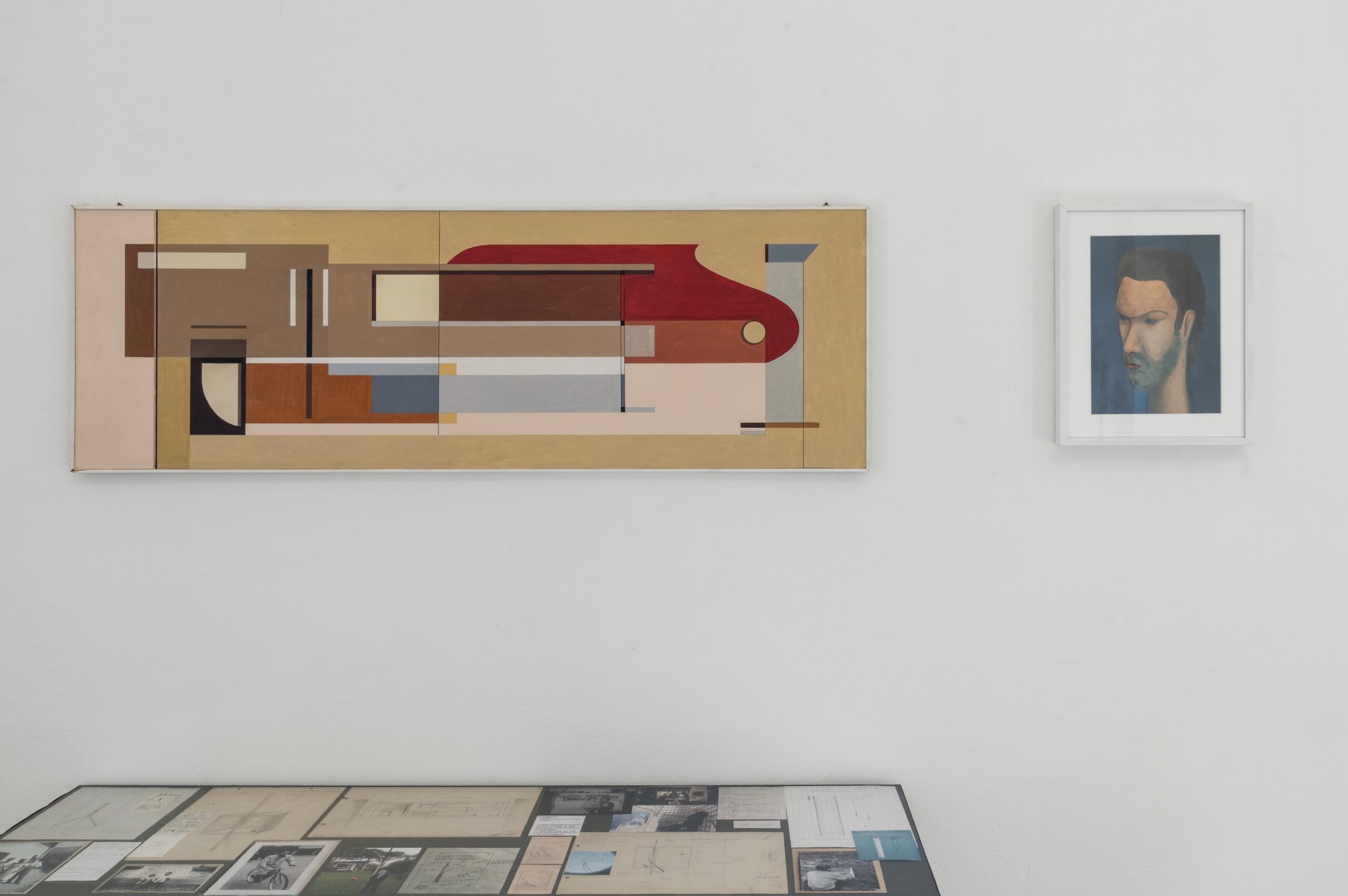
Photography by Alessandro Saletta, DSL Studio, courtesy of Lake Como Design Festival featuring Alvaro Molteni Sketches
Words by Jessica-Christin Hametner
Come September, the Lake Como Design Festival transforms the Lombardy region into a cultural and design powerhouse. With artistic roots that run deep – not least a silk-printing industry dating back to the 15th century – Como has long been a hub of craftsmanship. Yet, perhaps unbeknown to some, it also carries a radical design spirit, one that stands apart from the more traditional styles of its surroundings.
That modernist impulse is most evident in its rationalist heritage. Buildings like Giuseppe Terragni’s Asilo Sant’Elia and Cesare Cattaneo’s Archivio e Casa Cattaneo, embody a rigorously modern vision, marked by clean lines and geometric precision. Decades on, these architectural marvels continue to shape both the skyline and the city’s identity.
The Lake Como Design Festival honours this legacy while looking firmly to the future. Now in its seventh edition, the festival ran from 14-21 September, organised in partnership with Associazione Villa del Grumello and Fondazione Antonio Ratti. This year’s programme offered an ambitious mix of film screenings, explorations of material intelligence and limited-edition launches.

Photography courtesy of Archivio Mantero, Kite, Lake Como Design Festival
From Weaving Anni Albers, a project developed by Dedar in collaboration with the Josef & Anni Albers Foundation to the screening of Aldo Rossi Design, a documentary film directed by Francesca Molteni and Mattia Colombo, the city-wide celebrations took guests from the newly opened Archivio Design Ico Parisi to the former church of San Pietro in Atri and beyond.
As creatives increasingly seek more meaningful experiences, the festival has led by example, offering a slower, intentional alternative to the global circuit. In a city without major museums or dedicated studio spaces, it has brought design culture – and with it, international ideas and dialogue – right to Como’s doorstep. Rather than competing with the big players, the fair highlights why smaller, regional design gatherings like this are rapidly gaining significance.
‘The idea behind the Lake Como Design Festival is to bring culture to the city through design and architecture,’ says Giovanni Maria Sgrignuoli from the festival’s international press office. ‘But it’s also about drawing on the region’s heritage, particularly the rationalist architecture of the 1930s.’

Photography by Lorenzo Butti featuring Casa Del Fascio, one of the well-known rationalist buildings of Como
A welcome change from the often frantic pace of major trade fairs, Lake Como Design Festival has, in recent years, focused on thoughtful, thematic curation. This approach has fostered a strong connection to the local community and culture, while also attracting an engaged, design-conscious audience.
The festival was held under the theme Fragments this year, which Sgrignuoli described as a kind of ‘fragment of memory’, or something lost over time in the case of the fair’s newer locations. Among them was the Antica Nevera at Tennis Como dating back to the 1700s, which had never before been open to the public.
Here, a photographic narrative, entitled Fragments of History by Como-based Virginia Guiotto, and curated by Massimiliano Mondelli alongside Paolo Vanoli, presented ‘the many layers of Como’s history through photographs and memories,’ explains Sgrignuoli.
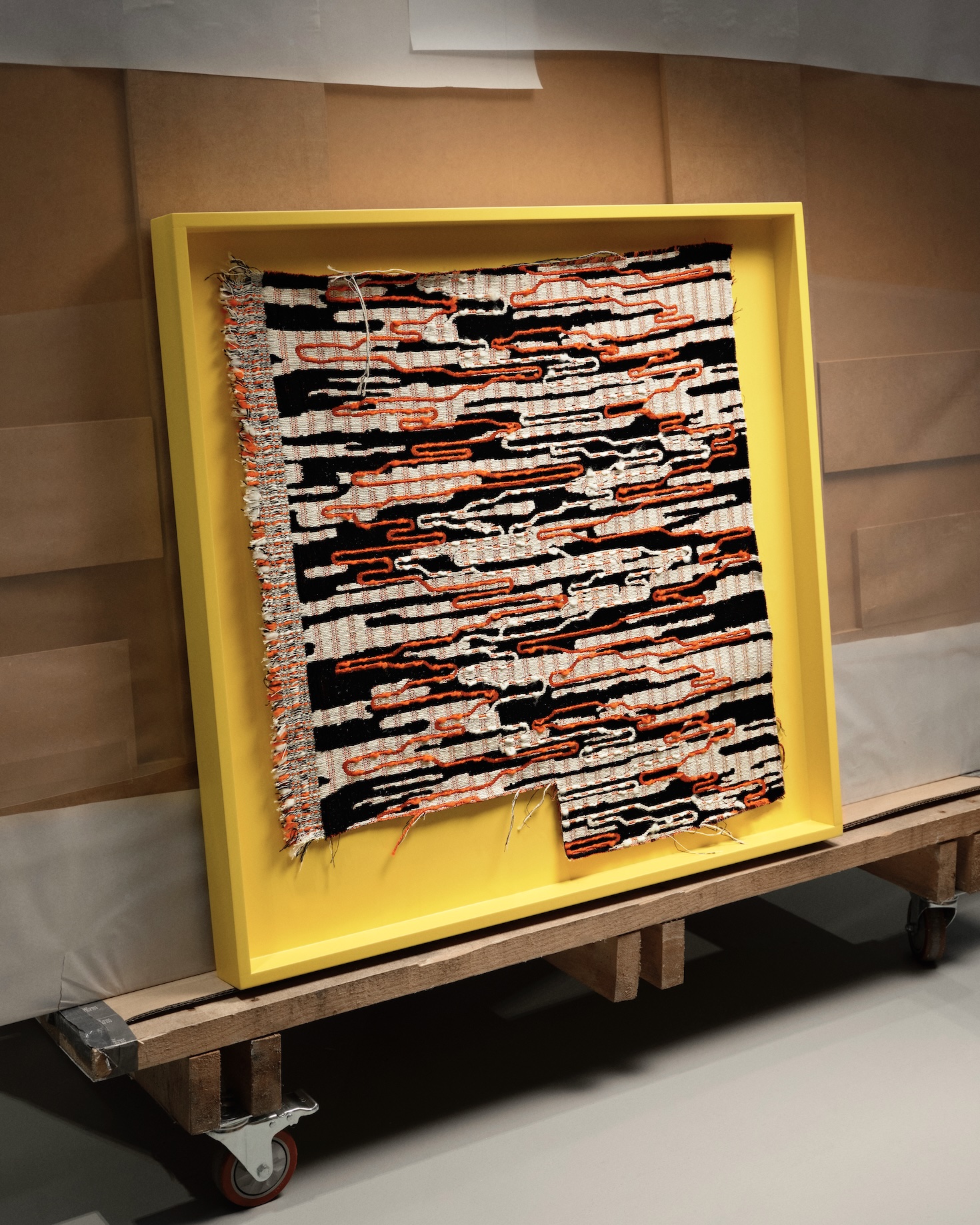
Photography by Ilaria Orsini, art direction by Carina Frey and Stefanie Barth featuring DEDAR, Weaving Anni Albers
In keeping with the theme, Villa del Grumello – the festival’s annual focal point – hosted Fragments of Memory, an exhibition showcasing a range of works. From bespoke installations by WonderGlass to Dayanita Singh’s Como Box, an unbound book composed of 30 offset-printed images housed within a wooden box, the show aimed to unearth forgotten objects and stories.
Upon entering, visitors were met by pieces from Italian painter Enzo Cucchi. Presented by the Milan-based Galleria ZERO, the sculptures reinterpret the fountains of Rome. ‘Here, the concept of fragmentation takes shape through the reimagining of something traditional,’ says Wonderlake Como, the organisation behind the festival. ‘In Italian culture, fountains are part of every piazza,’ Wonderlake Como continues. ‘They are landmarks of our culture and architecture.’
Next door, Campeggi presented its Vico collection, a re-edition project celebrating the modular designs that were originally born from the long collaboration and friendship between Claudio Campeggi and Vico Magistretti. Comprising 18 pieces created by Magistretti and produced by Campeggi between the mid-1990s and 2010s, each set will be reintroduced gradually over the coming years.

Photography courtesy of Fondazione Vico Magistretti, Campeggi, Vico collection, as featured in its book Tutto già c’è, è solo un po’ nascosto
The first release, centred on key living room typologies, includes the foldable coat rack Broomstick Uno, the mobile bookcase Moma, the sofa-beds Oblò and Ospite, as well as the foldable chair Piccy. ‘From 1968 onwards, Campeggi started experimenting with more radical objects and technologies for the domestic space from its base in Brianza,’ says Guglielmo Campeggi, the founder’s grandson.
In the 1990s, the Como-based brand began its collaboration with Magistretti. It was ‘a deeply personal and significant collaboration for Campeggi’, explains Guglielmo. ‘The pieces were conceived as a kind of total living room,’ he says.
‘At the time, the idea was to create a complete collection of furniture that Magistretti could pack into his car and take to London, where he taught at the Royal College of Art,’ he continues. ‘Campeggi was, in a way, a multifunctional [and forward-thinking] furniture house.’

Photography by Michele Foti featuring Campeggi’s Piccy and Torre al Parco chairs
Staying true to Como’s experimental spirit, the 2025 Contemporary Design Selection, curated by Brussels-based Giovanna Massoni for a third year in a row, and hosted at the Chilometro della Conoscenza, displayed a selection of collectible items that treated fragmentation not as a loss, but as a creative starting point.
This year’s open call invited designers, artisans, architects and artists to explore three design perspectives: “fragility”, which examined rupture and transformation; “the regenerative act” focused on recomposition and recovery, turning discarded materials into new objects to give them meaning; and “memory”, uncovering stories, techniques and cultures that are ancient or forgotten.
Compared with previous editions, this year’s exhibit took on more of a research-driven approach, bringing together ideas and designers that challenged the status quo. Its main aim was to give the designs, which range from Abreham Brioschi’s Ethiopian headrests to Justyna Szymanska’s carpets depicting geological fractures, a sense of continuity within the framework of the festival.

Photography by Francesca Artoè featuring Abreham Brioschi
‘I am trying to delve deeper in the presentation,’ adds Massoni about her curatorial process for this year’s edition. ‘It’s about allowing the designers to showcase research that highlights and champions preservation.’
When it came to selecting projects for the exhibition – which ranged from functional sculptures in resin and wood by the likes of Studio Högl Borowsky and lampshades created with cyanotype-dyed batik fabrics by Tobie Chevallier – she explained, the works had to go beyond mainstream trends or superficial interests.
‘We ask for an explanation on how they adhere to the theme, which already reveals a lot about the designer’s approach and attitude,’ Massoni says. ‘Of course, the depth and relevance of their research are crucial, particularly its ecological, social and political implications. We need to feel that they are serious – there must be evidence of a thoughtful, considered approach.’

Photography courtesy of Atelier Thomas Serruys featuring Rollmaster, who also exhibited as part of Giovanna Massoni’s Contemporary Design Selection
Among the projects responding to this theme beautifully was We Mediterranean, a lightweight shelter designed by Milan- and Brussels-based architecture studio Piovenefabi. Designer Caterina Frongia used scraps of Skaff and Dedar outdoor fabrics to create an inlaid drape that reflects on the meaning of hospitality and inclusion in an increasingly fragmented world.
‘This structure is a modular piece where the entire Mediterranean community can come together,’ says Paola Carimati, who runs We Mediterranean as an independent project alongside Italian artist Matilde Cassani, designer Francesca Lanzavecchia, Sex&the city, Piovenefabi and Studio Ossidiana. ‘We hope this can help educate people to think about how design and architecture can foster inclusion.’
Also tied to this year’s theme was Aldo Rossi. Architecture by Fragments, a thought-provoking display staged inside the city’s ex Chiesa di San Pietro in Atrio. Curated by art historian Chiara Spangaro in collaboration with Aldo Rossi Foundation, the show examined the idea of the fragment within Rossi’s theoretical and architectural work, a concept that runs through his practice from the 1960s onward.
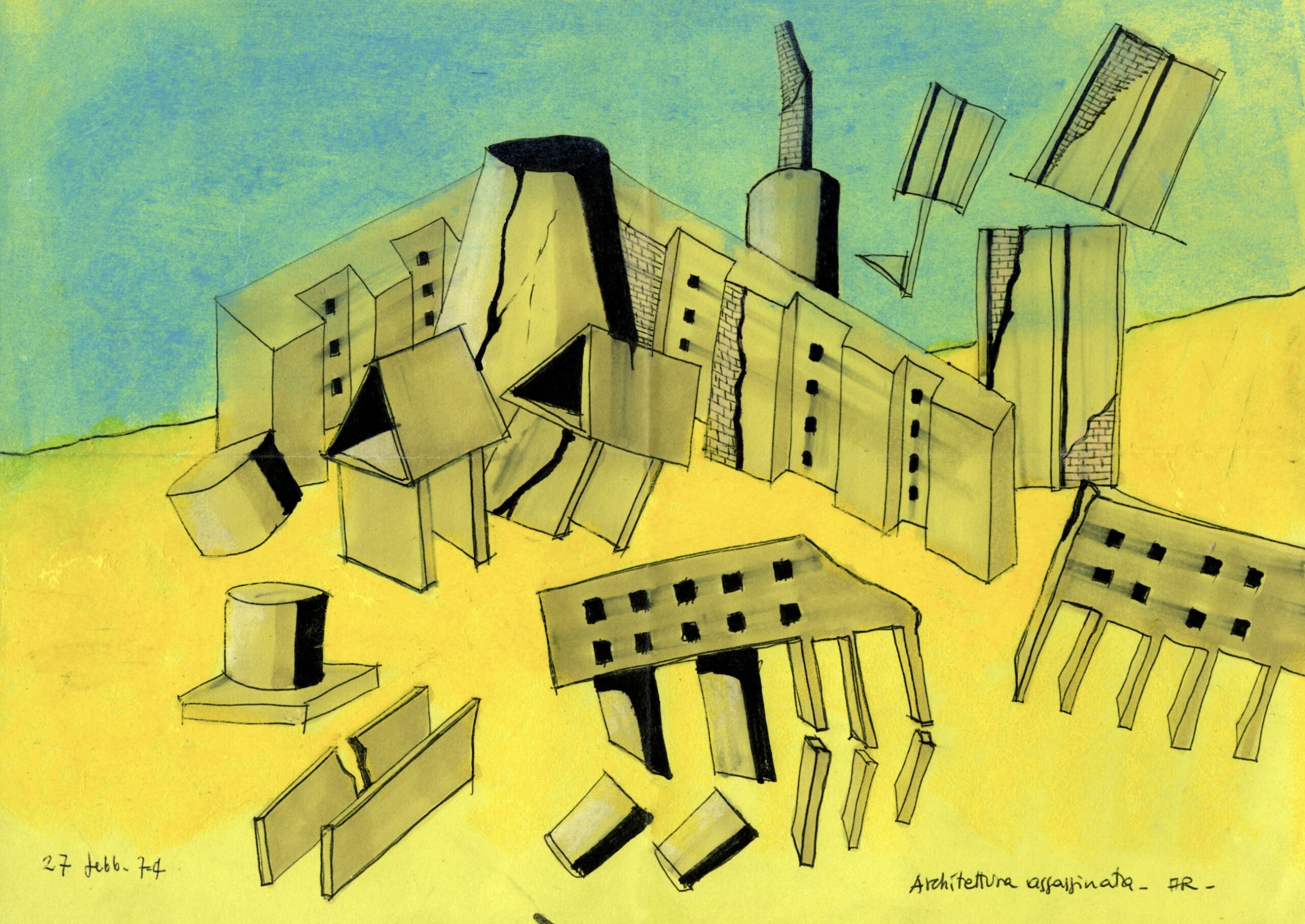
Photography courtesy of © Estate of Aldo Rossi. All rights reserved 2025, Bridgeman Images, Aldo Rossi, Architettura assassinata, 1974
‘The church dates back to the Middle Ages, so we’re opening spaces like this to the people of Como, places that haven’t been used for quite some time,’ says Sgrignuoli, explaining the festival’s mission to bring these almost-forgotten venues like the church and Antica Nevera back to life.
Featuring a selection of architectural drawings, photographs, texts and documents that trace Rossi’s oeuvre, Spangaro presented key projects across five different parts, from the design of Segrate’s Town Hall Square and its Monumento ai Partigiani (Monument to the Partisans) to the film Ornamento e delitto (Ornament and Crime), conceived with Gianni Braghieri and Franco Raggi, among others.
‘I was very happy to curate this exhibition because it brings together Rossi’s theory, practice and finished architectural works,’ explains Spangaro. ‘It’s interesting because, in the way he represents his own architecture, there’s always something a little crazy, something that is not reality at all, just his imagination,’ Spangaro continues.

Photography by Alessandro Saletta, DSL Studio, courtesy of Lake Como Design Festival featuring Aldo Rossi. Architecture by Fragments at San Pietro in Atrio
But showing Rossi’s drawings at Lake Como Design Festival was also a way to offer visitors a glimpse into his evolution over time. ‘We wanted to include this work table, for example, so people can sit, leaf through the books and read the texts. It makes the entire experience a lot more personal,’ adds Spangaro.
By placing exhibitions, film screenings and installations within the city’s historic spaces, Lake Como Design Festival showcases local design culture and architecture at its best. This meticulously curated approach highlights the value of smaller fairs like these, breathing life into abandoned buildings and inviting locals to discover their city through fresh eyes.
Design, at its best, connects people. It encourages dialogue, inspires creativity and opens new ways of seeing the world. At the Lake Como Design Festival, this ethos is rooted in locality yet informed by a global perspective, and it shows how a design fair can bring culture directly to a city and its people.
Get a curated collection of design and architecture news in your inbox by signing up to our ICON Weekly newsletter