Bas Smets’ Water Garden at the Vitra Campus in Weil am Rhein features a pond, flower gardens, micro-forests – and three sharks designed by Hella Jongerius
Photography by Julien Lanoo
Words by Jessica-Christin Hametner
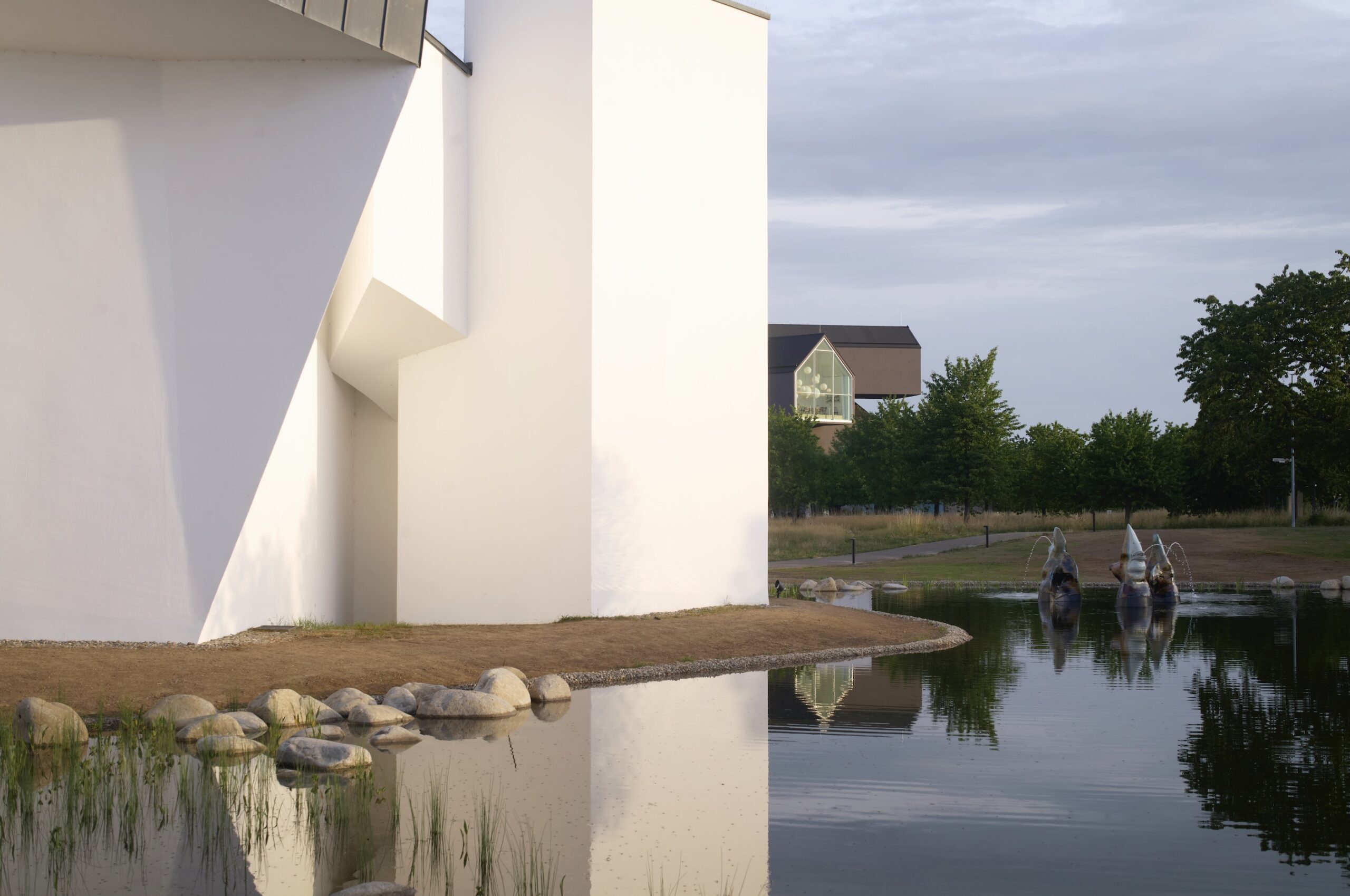
Visitors to the Vitra Campus in Weil am Rhein may notice three striking shark-head sculptures jutting out of a shallow pond alongside the facade of Frank Gehry’s Design Museum. The ceramic fountains, titled The Three Graces and realised by Dutch designer Hella Jongerius as part of her Angry Animals series, feature in the newly opened Water Garden, a project developed in collaboration with influential landscape architect and environmentalist Bas Smets.
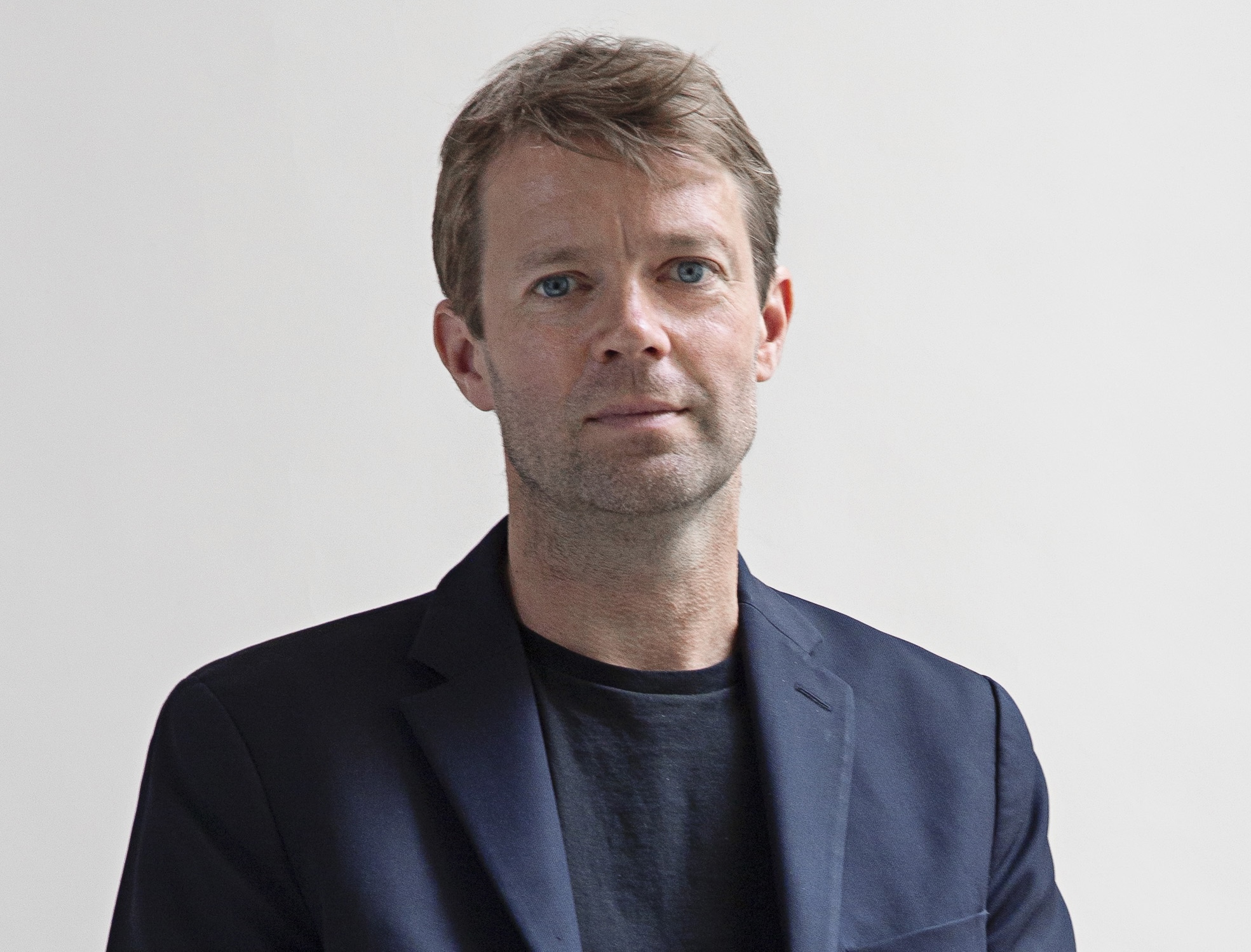
Widely known for pioneering ‘augmented landscapes’, Smets has designed urban microclimates that use ecological processes to help cities cool down and adapt to climate change ever since he founded his Brussels-based practice nearly 20 years ago. He has since realised more than 100 projects and his work includes the transformation of an industrial wasteland into a self-sustaining, biodiverse public park at LUMA, Parc des Ateliers in Arles, France, which began with experimental trials in 2017, as well as the ongoing re-vegetation of the public spaces surrounding the Notre‑Dame cathedral in Paris.
Impressed by Smets’ environmentally conscious approach, Rolf Fehlbaum, chairman emeritus and active member of the board of directors of Vitra, initiated the transformation of the Vitra Campus by enlisting the architect in 2022 to revitalise existing green spaces. Together, Fehlbaum and Smets began examining how an industrial site could become more climate-resilient, how landscape design could strengthen the relationship between the campus’s iconic buildings and how nature could create new experiences for visitors.
Photography by Julien Lanoo
‘The whole campus started with the destruction of nature,’ recalls Fehlbaum, referring to the orchards that once occupied the site before Vitra’s arrival. In 1950, his mother, Erika Fehlbaum, wife of Vitra founder Willi Fehlbaum, inaugurated a manufacturing facility in Weil am Rhein, just across the Swiss-German border, after Willi took over the shopfitting company Graeter in Basel.
As the business expanded, additional land was acquired from relatives and neighbouring property owners; by 1980, the site had evolved into what is now known as the Vitra Campus. ‘It was not until the 1990s that we developed a certain consciousness that we were doing harm to nature,’ shares Fehlbaum.
The new garden, unveiled in June to coincide with Art Basel, builds on the Oudolf Garten that opened in 2020 and introduced a first step towards a more ecological design strategy for the Vitra Campus. ‘We realised that we should look for cooperation with nature and thought: what could the Vitra Campus become in 50 years?’ says Fehlbaum.
Photography by Julien Lanoo
Work began in 2024 with the planting of 8,000 saplings to establish so-called ‘micro-forests’, dense, fast-growing native pocket woodlands based on the principles of Japanese botanist Akira Miyawaki.
‘We call it the Vitra Forest,’ says Smets. ‘The trees were planted very close together as a reworking of the Miyawaki method, so we refer to it as Miyawaki Plus because we used a mix of larger and smaller trees. They produce a new microclimate, creating an augmented landscape that changes the visible aspect.’
The pair spent two years first testing their approach, during which the saplings grew to 2–3 metres tall, while 3 hectares of empty lots were turned into a Blumenwiese, or flower meadow, planted with brightly coloured Cosmos to improve the quality of the soil. This autumn, they will plant a further 10,000 trees, comprising 35 native species.
Photography by Jade Quintin featuring Bas Smets
‘Vitra tests everything, right?’ adds Smets. ‘They test the table, the chair, but you don’t usually test a landscape. That’s why I like the idea of prototyping and testing new ideas on a smaller scale first. So, in a sense, we’ve been applying Vitra’s philosophy to the landscape, which made us wonder whether these ideas could be exported elsewhere too. It’s a bit ambitious, but perhaps what we learn here could become a way of transforming other industrial sites.’
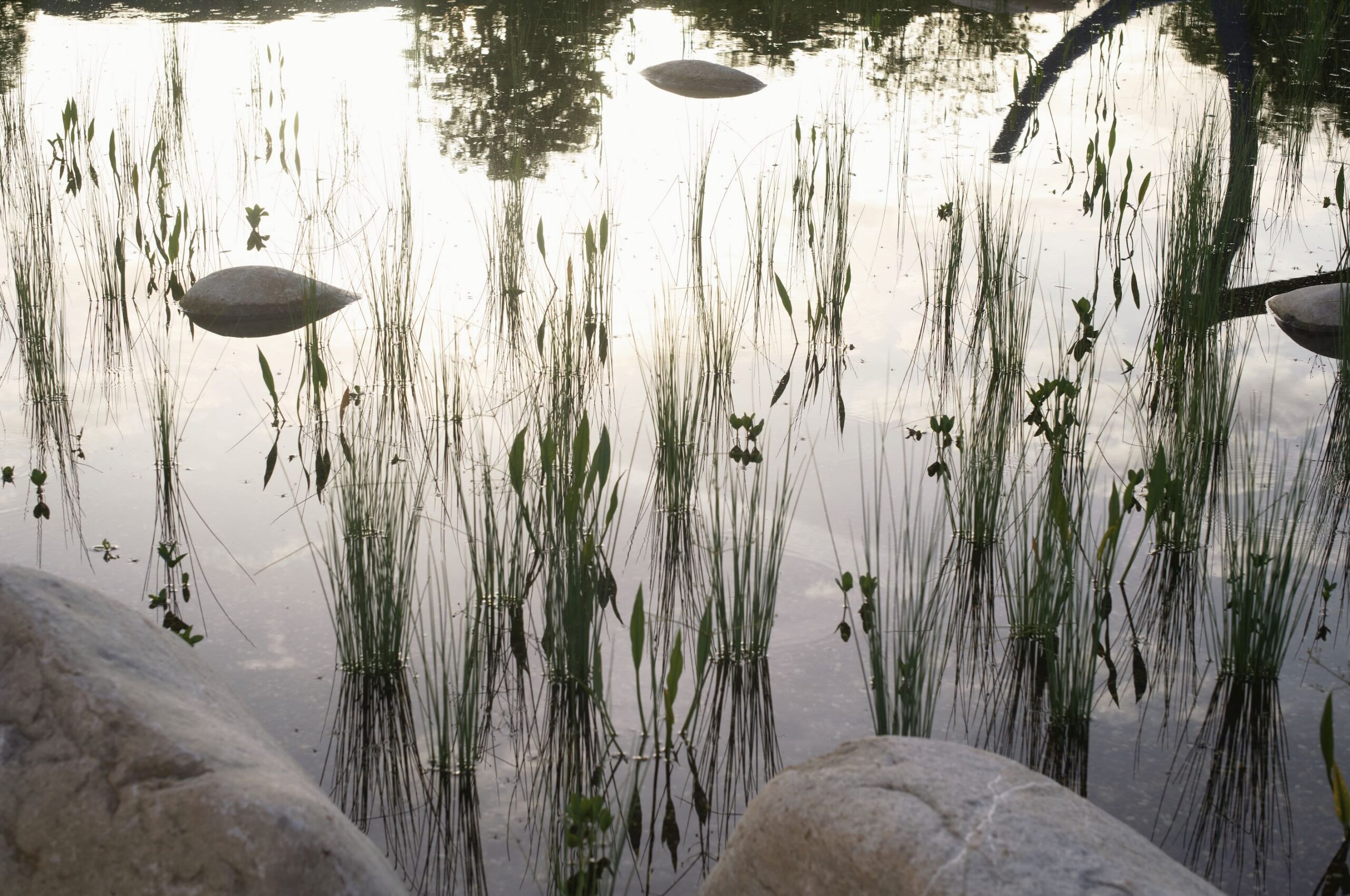
For the flower meadows, the pair looked to Marcel Duchamp, translating his interlocking circles into a small labyrinth as a playful nod to his space‑defying work. Around the pond, realised with the help of green construction company ecoworks, trees and aquatic vegetation create habitat for birds and fish, while 500 cubic metres of excavated soil have been used to create a berm shielding the garden from a busy road.
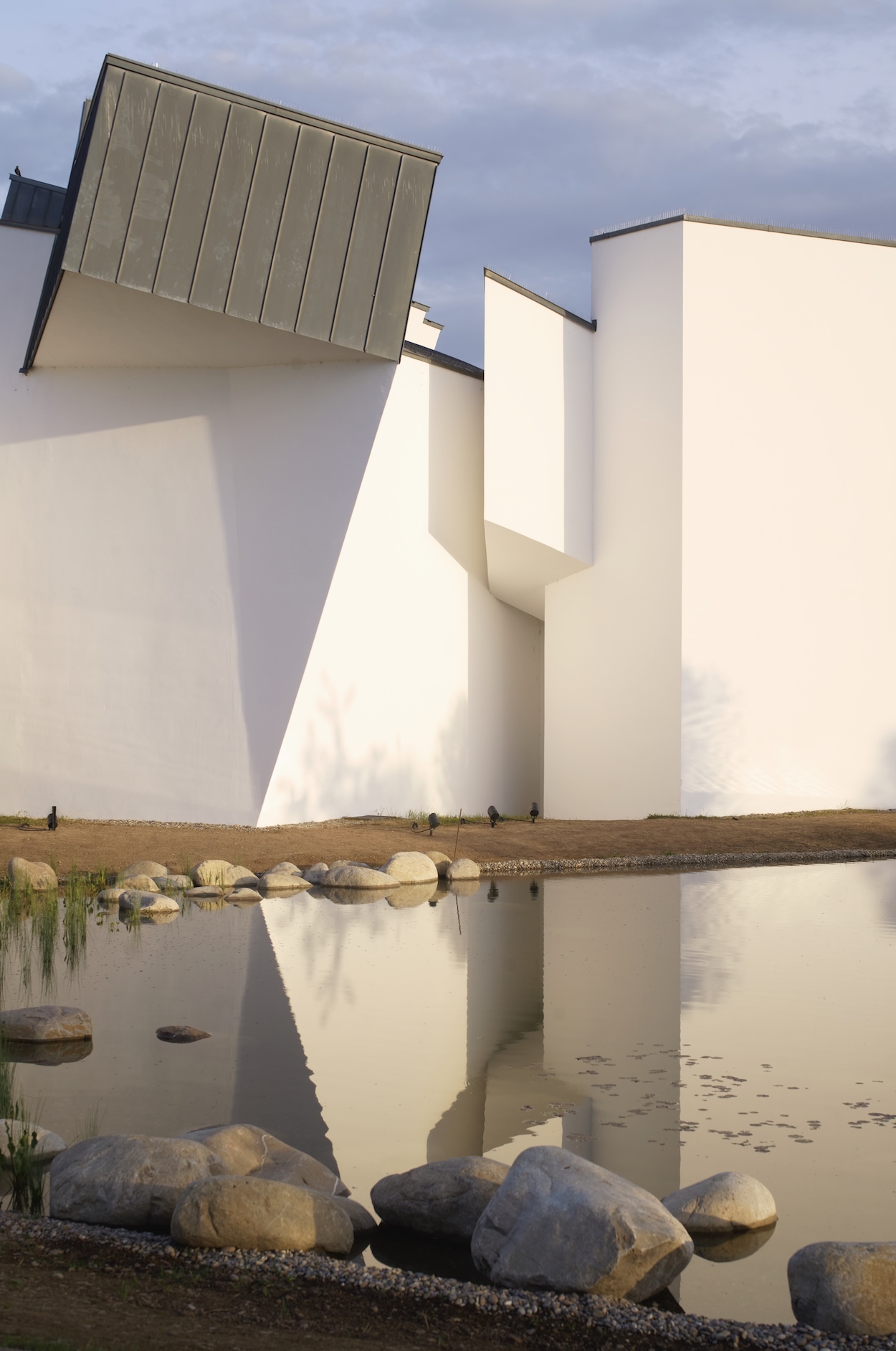
Sandwiched between the original heritage path by Tadao Ando – described by Smets as ‘holy’ – and Gehry’s sinuous museum building, the Water Garden is supplied with rain collected from the roof of an adjacent factory building, helping to restore and sustainably reuse water across the campus.

Photography by Julien Lanoo
‘I remember talking to Rolf, thinking of all these beautiful buildings as objects on a flattened plane,’ recalls Smets. ‘But there was no real landscape, because everything had been designed to be efficient and function as a factory. That made sense, of course, but as Vitra is evolving, we wanted to bring life back to the site.’
The Vitra Campus’s position on an alluvial plain along the Rhine was among the project’s major challenges. The highly permeable ground drains quickly, leaving little water in the soil during the warmer summer months and contributing to the site’s heat.
Smets explains this was one of the main motivations for conceiving the Water Garden. His previous work with Frank Gehry on the LUMA project also informed his thinking about the relationship between the garden and the museum’s white plaster cubes.
Photography by Julien Lanoo featuring Balancing Tools (1984) by Claes Oldenburg and Coosje van Bruggen
‘We wanted to make this pond, not as an artificial feature, but to blur the boundary between the natural and artificial,’ he says. ‘We imagined big boulders rolling down from the Alps along the Rhine to the pond, with their beautiful shapes responding directly to Gehry’s building.’
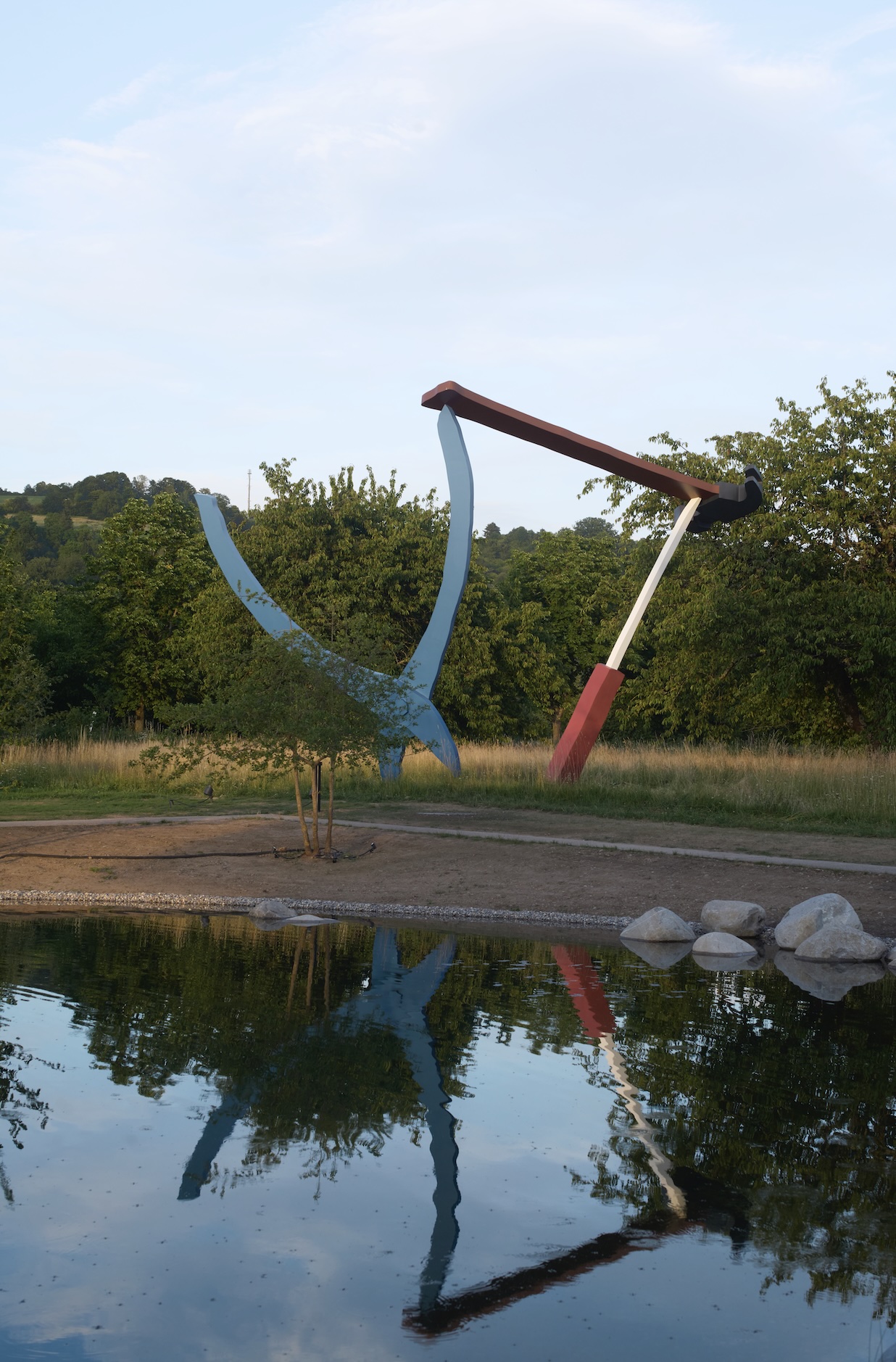
The Water Garden now provides a backdrop for a collection of architectural and design marvels, inviting people to discover new corners of the 250,000 sq metre Vitra Campus. A bench by Indian architect Balkrishna Doshi and a small, prefabricated house by architect and designer Jean Prouvé – an original Maison Démontable 4×4 – sit along the path around the pond. Together with Balancing Tools, by Swedish-American sculptor Claes Oldenburg and his wife Coosje van Bruggen, installed in 1984, they allow visitors to experience the museum’s collection beyond its walls.
‘We often put landscape in some kind of category of beautification,’ reflects Smets. ‘But we want to start with what it does and only then consider how it looks. That means bringing it back to its essence. What I really like here, on a more theoretical level, is that the landscape is created through framing.’

Photography courtesy of Vitra featuring Hella Jongerius
Among the new views created in the garden are three unexpected inhabitants: the three large ceramic sharks baring their teeth above the water. Jongerius, their designer, has long had a fascination for animals. ‘They’re such a rich topic,’ she says. ‘Animals trigger imagination and are vessels of information.’
Developed during the Covid-19 pandemic, the sharks reflect Jongerius’s response to the anger she witnessed in the world around her, pointing to the destruction of the planet and the rise of increasingly aggressive voices in politics.
She calls them the Three Graces, referencing the figures of Greek mythology associated with joy, beauty and abundance. ‘The sharks are the guardians of these soft powers,’ she says. ‘A shark is a predator, but the real predator is not visible in the object. I think it’s the economic forces and the speed of the world that swallow culture, art and different ways of thinking.’

Photography by Julien Lanoo featuring Three Graces
A triumph of craftsmanship, bringing the sculptures to life was no small feat. Jongerius returned to the European Ceramic Work Centre (EKWC) in the Netherlands, where she built the sharks by hand with a team of four. The process took eight weeks, followed by two months of careful drying to prevent the large forms from cracking. They were then fired at 1,280C, with a reduction-firing technique used to achieve the vivid green glaze.
As the garden continues to bloom, it brings together the passion and craft of Smets, Jongerius and Vitra in a joint expression of creativity and environmental responsibility. Together, they demonstrate how a culture of experimentation often blossoms into innovative ways of designing. More than a blueprint for greening an industrial site, the Water Garden offers a glimpse of how such places might find new life by going back to their roots.
‘We have a moral obligation to experiment and take risks,’ concludes Smets. ‘But you also need courageous clients who allow you to prototype, push the frontier and not simply repeat what we already know, but produce new knowledge.’
Read the full story on Vitra’s new Water Garden in ICON 220 out now
Get a curated collection of design and architecture news in your inbox by signing up to our ICON Weekly newsletter