Curated by TILT, Tarkett explores the possibilities of circular design through new commissions by Yinka Ilori, Laurids Gallée and Christian + Jade

Photography courtesy of Tarkett
Circularity has become one of design’s most urgent talking points. Yet despite growing awareness, much of the industry remains structured around linear systems of production and consumption. For flooring manufacturer Tarkett, the challenge is how circularity can be meaningfully implemented.
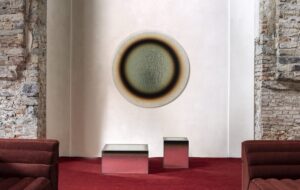
That question forms the basis of Beginnings & Endings, a new exhibition presented during this year’s 3daysofdesign and curated by design futures consultancy TILT. Installed at Galleri Susanne Ottesen in Copenhagen, the show brings together newly commissioned works by Yinka Ilori, Laurids Gallée and Christian + Jade, each demonstrating how Tarkett might approach materials in new ways.
‘We believe we have a key role to play,’ says Thomas Leneveu, vice president at Tarkett. ‘We have challenged ourselves to move away from producing more and instead focus on constantly producing better.’
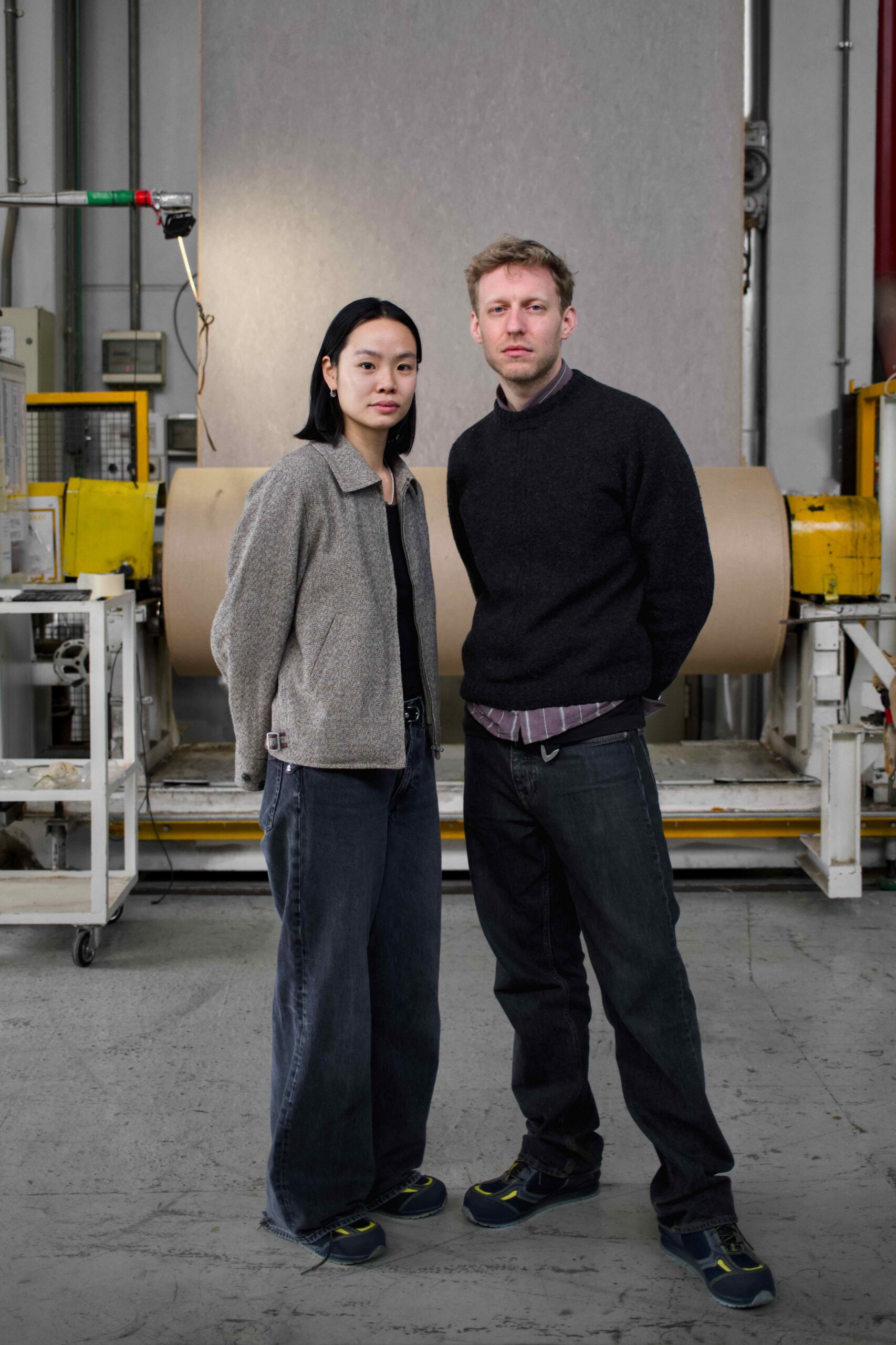
Photography courtesy of Tarkett featuring Christian + Jade
For Leneveu, achieving this requires more than technological innovation. It demands a complete rethink of the systems surrounding products, from material sourcing and manufacturing to installation, use and end-of-life recovery. ‘Circularity cannot succeed in isolation,’ he says. ‘It relies on a functioning ecosystem of customers, suppliers, regulators and partners all moving in the same direction.’
The exhibition’s title reflects a shared vision between both Tarkett and TILT, focusing on showcasing materials not as finished flooring products, but as creative starting points. As such, Beginnings & Endings invites visitors to see carpet, homogeneous vinyl and linoleum as materials in continuous circulation, capable of entering new lifecycles long after their initial use.
‘Tarkett believes circularity begins with design,’ adds Caroline Till, founder and CEO of TILT. ‘Design defines what something is made of, how long it will last and what will happen at the end of its life. When we design for circularity, products and materials are created with their next life in mind.’
Photography courtesy of Tarkett
Till argues that the conversation has moved beyond environmental responsibility alone. With rising material costs, increasing regulation and mounting pressure on resources, circularity is also becoming an economic and cultural imperative.
More philosophically, she sees the exhibition as an invitation to reconsider society’s relationship with endings themselves. ‘We’re very good at starting new and making more,’ she says. ‘But we need to equally focus on where things go next, that there is no “away” in throwing away. We cannot keep creating linear systems that generate huge volumes of waste while racing through our natural resources as if they are infinite.’
That idea informed the curatorial approach. Rather than selecting designers known primarily for sustainability-led practices, TILT sought out creatives whose work is rooted in material exploration. The result is a deliberately diverse trio of perspectives, each responding to circularity through their own design language.
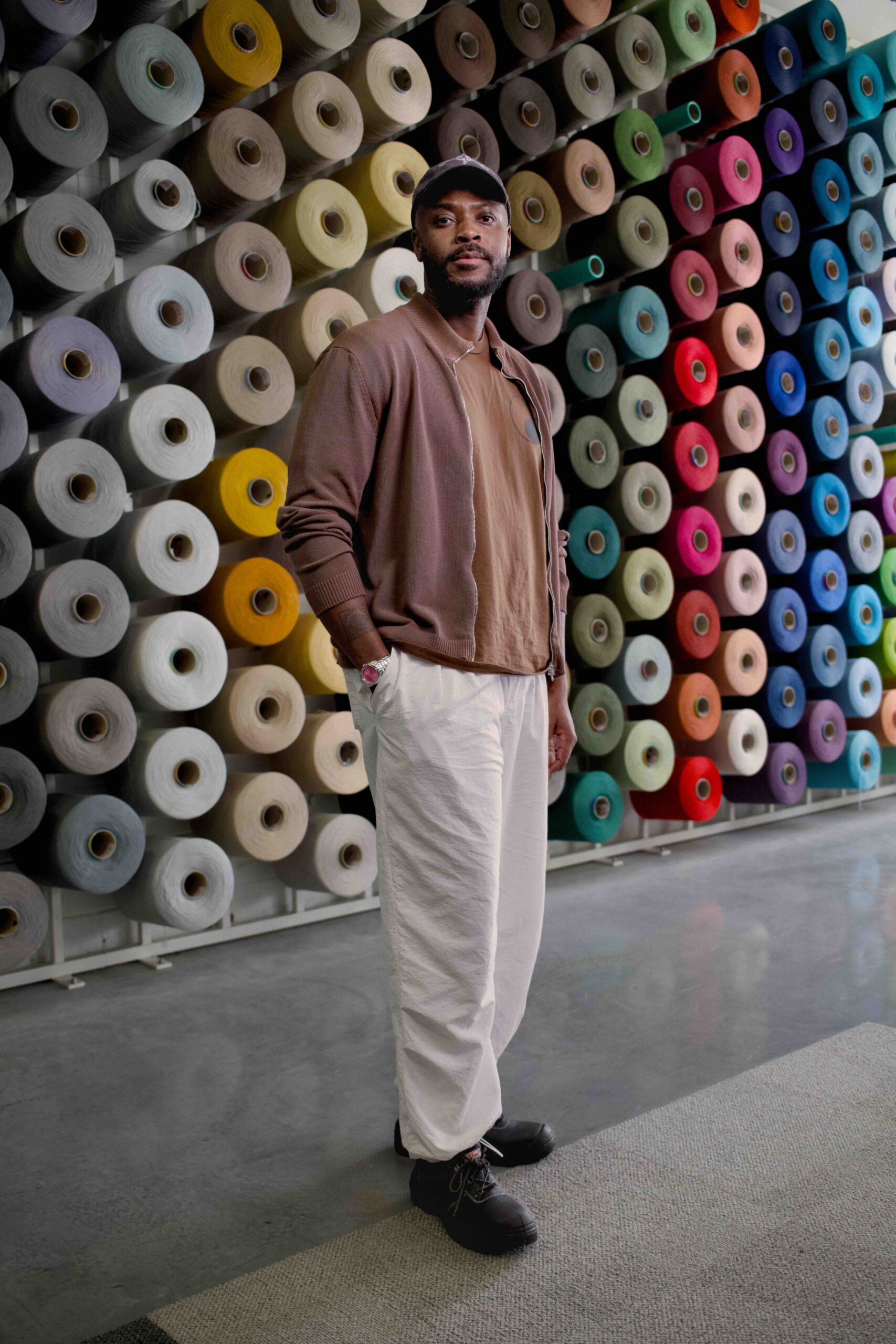
Photography courtesy of Tarkett featuring Yinka Ilori
‘We wanted to approach designers for whom materials play a central role in their work, but who are not usually squarely focused on circularity,’ says Till. ‘Circularity can feel abstract to many designers, which feels far removed from their everyday practice. Even brilliant, experienced designers often tell us they don’t feel confident engaging with these ideas and it’s frequently not part of how they were trained.’
The exhibition demonstrates how each of the designers took the brief somewhere distinct. British-Nigerian artist and designer Yinka Ilori, for example, transforms carpet by demonstrating how circular design and materials can transform a space, enhancing wellbeing, reflection and joy through tactility, colour and ritual.
Gallée’s installation explores permanence and craftsmanship, with the belief that every material deserves to be elevated. Meanwhile, Danish-Singaporean duo Christian + Jade investigate circularity as a continuous state, dissolving distinctions between floor, wall and furniture while making the process of disassembly visible and beautiful.

Photography courtesy of Tarkett
Each project emerged from extensive engagement with Tarkett’s manufacturing processes. As part of the collaboration, the designers visited the company’s factories, gaining insight into how materials move through recycling and recovery systems before translating those observations into spatial and material narratives.
‘The designers came in as curious outsiders,’ says Till. ‘None of the designers did the obvious thing and I think that’s because they weren’t asked to. Tarkett brought decades of technical knowledge. Bridging those two worlds challenged assumptions on both sides.’
The resulting works suggest that circularity need not be understood solely as a technical framework. Instead, it can become a source of creative expression. Themes of memory, ritual, craft, permanence and joy run throughout the exhibition, expanding the conversation beyond performance metrics and material specifications.

Photography courtesy of Tarkett
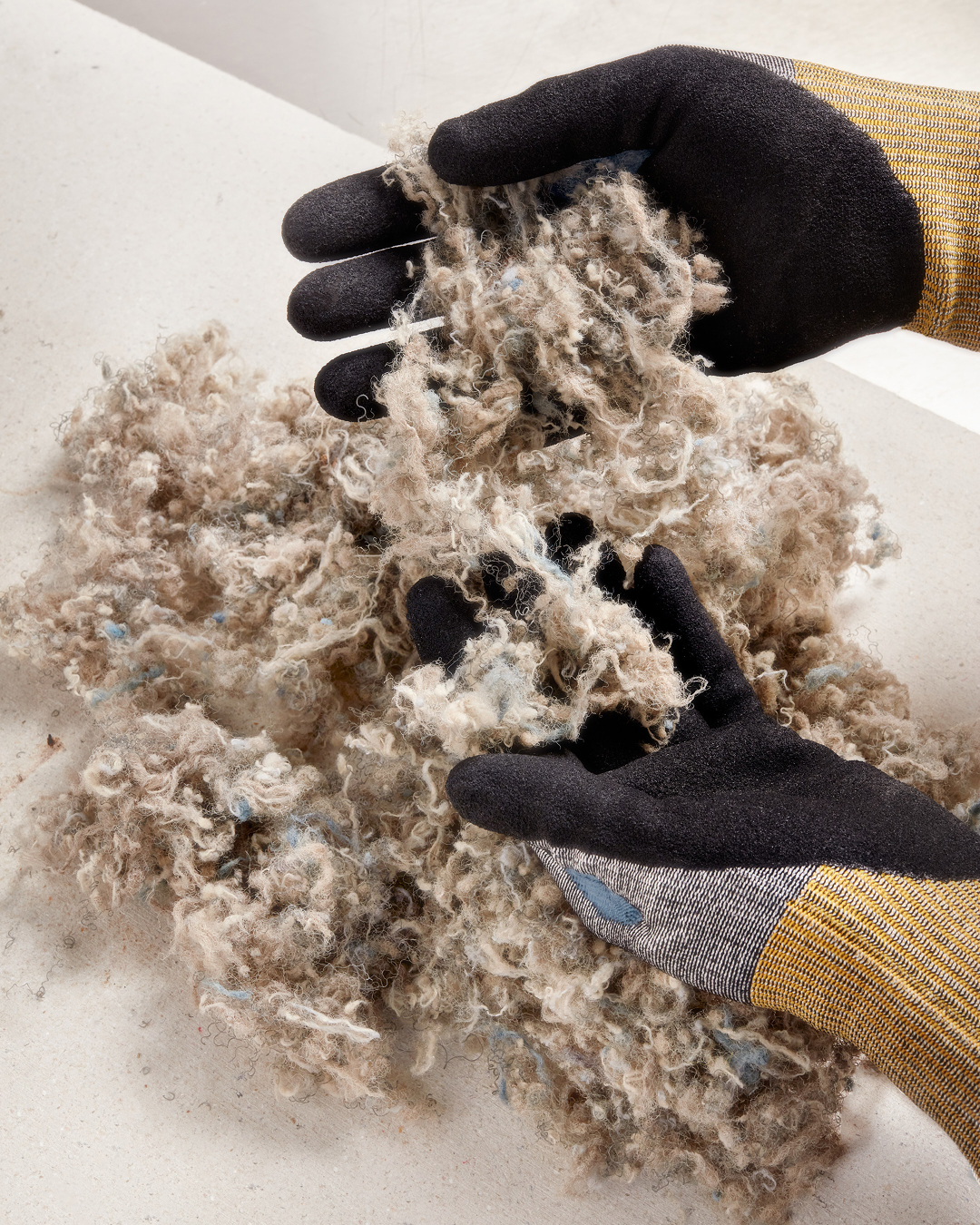
That shift in perspective is central to Tarkett’s wider ambition. The company describes itself as a custodian of its materials, taking responsibility not only for how products are manufactured but also for what happens after they leave the factory. Through initiatives such as its ReStart take-back and recycling programme, materials can be recovered after use and reintegrated into future production cycles.
‘We believe in making beautiful, design-driven products that never compromise on circularity,’ says Leneveu. ‘We achieve this through continuous innovation in design and manufacturing, and a commitment to work with our customers to create more sustainable and healthier spaces for people and the environment.’
For both Tarkett and TILT, design festivals such as 3daysofdesign offer a unique opportunity to communicate these ideas, challenge assumptions and share new approaches. Unlike a traditional product presentation, an exhibition allows circularity to be experienced emotionally as well as intellectually.
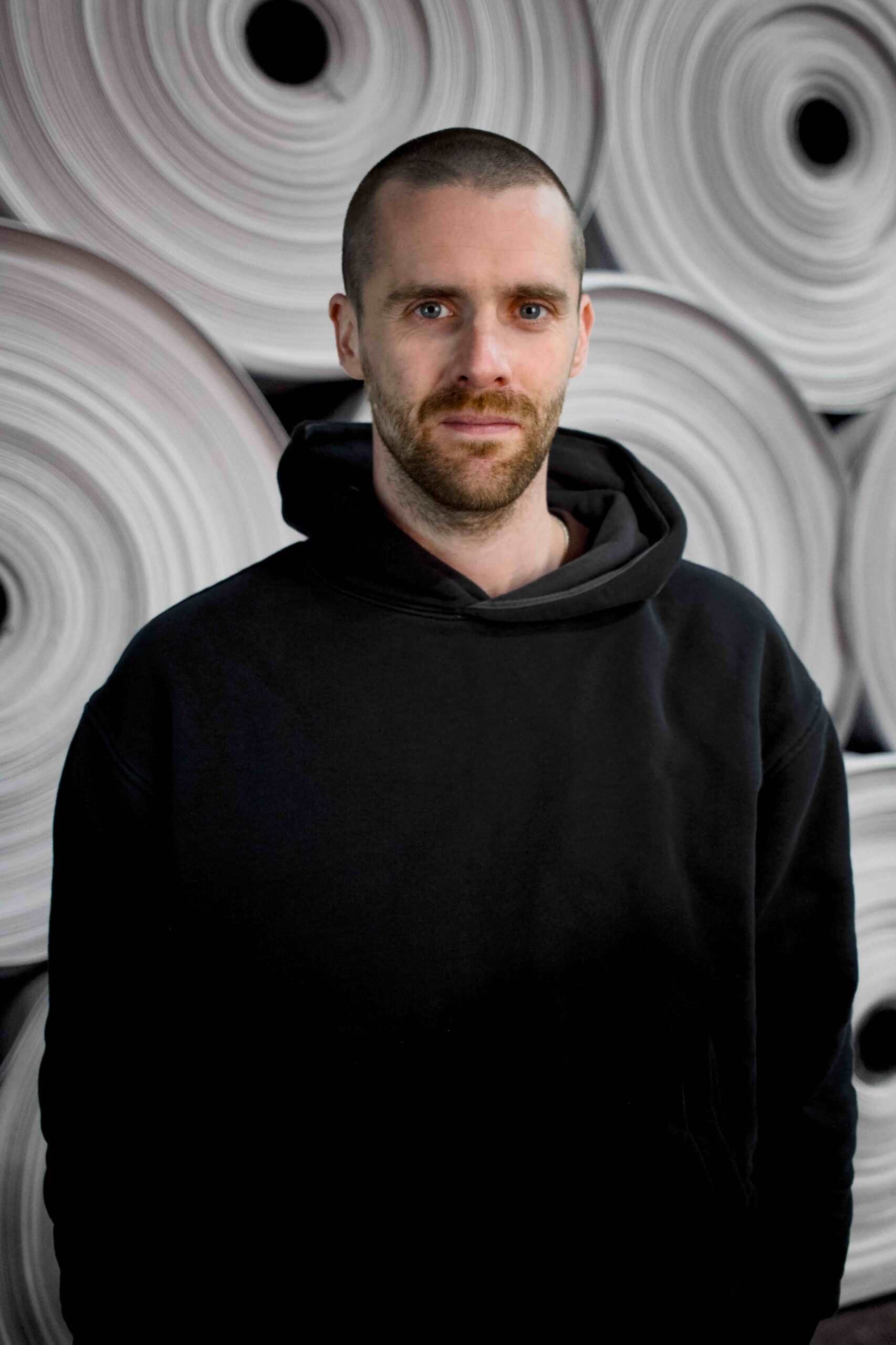
Photography courtesy of Tarkett featuring Laurids Gallée
‘3daysofdesign brings together an audience of designers and creative professionals, exactly the people we need to bring along with us on this journey,’ says Till. ‘If someone leaves thinking differently about the objects around them – why they were made, what they’re made of, what happens to them next, then we’ve done something useful.’
Ultimately, Beginnings & Endings asks visitors to reconsider the materials that surround them every day. Not simply where they come from, but where they might go next. ‘We’d love visitors to leave asking questions about the objects around them,’ ponders Till.
‘What we hoped would emerge – and what did – is the sense that circularity doesn’t have to be a compromise or a constraint,’ concludes Till. ‘It can be a creative starting point. When designers begin to think about a material’s next life as part of the design process itself, something changes. The possibilities open up rather than close down.’
As the design industry grapples with finite resources and mounting environmental pressures, the exhibition suggests a more expansive way of thinking about circularity. ‘Ultimately, we want people to understand that there is no “away”, says Till. ‘The materials we live with have a life before us and a life after us, and the most exciting design thinking happening right now is work that takes that seriously.’
Beginnings & Endings is on view from 10–12 June 2026 at Galleri Susanne Ottesen during 3daysofdesign
Get a curated collection of design and architecture news in your inbox by signing up to our ICON Weekly newsletter