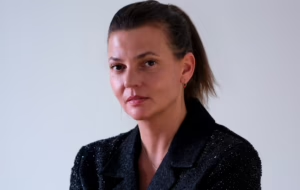

Yahvi, founder of Peel studio, idea behind the thoughtful approach to weaving, where kitchen waste and reclaimed fibres become emotionally layered contemporary textile installations
In a design landscape increasingly saturated with polished sustainability narratives, Yahvi’s work feels refreshingly unresolved. The London based textile artist works with reclaimed wool, kitchen waste, natural dyes, banana fibre, silk waste, and biomaterials, yet her installations avoid turning these materials into visual slogans about ecological responsibility. Instead, they remain deeply tactile, emotionally restrained, and materially honest.
Photography courtesy of Peel Studio
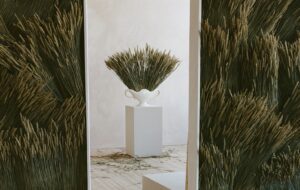
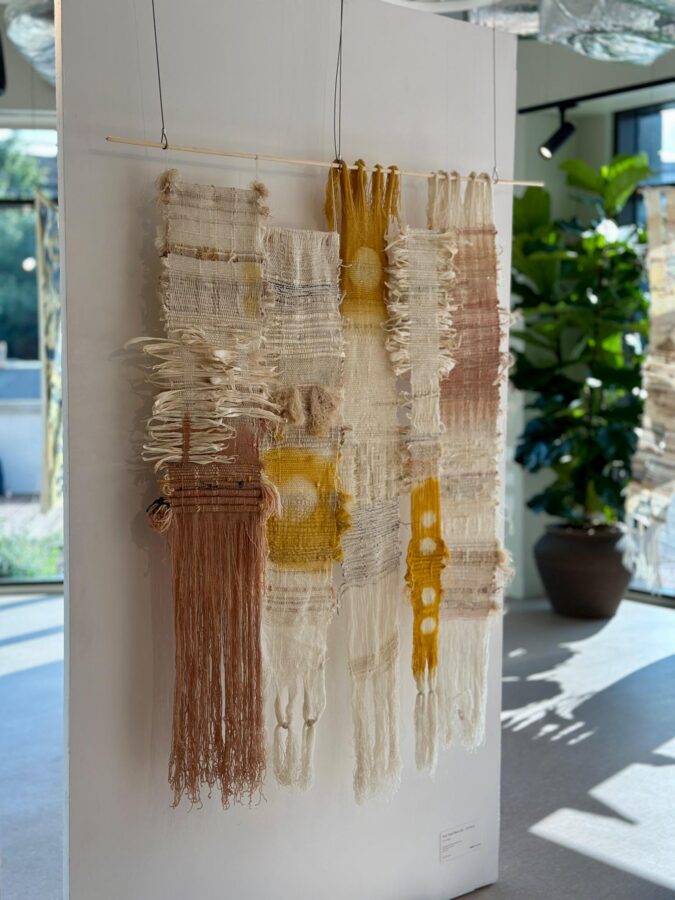
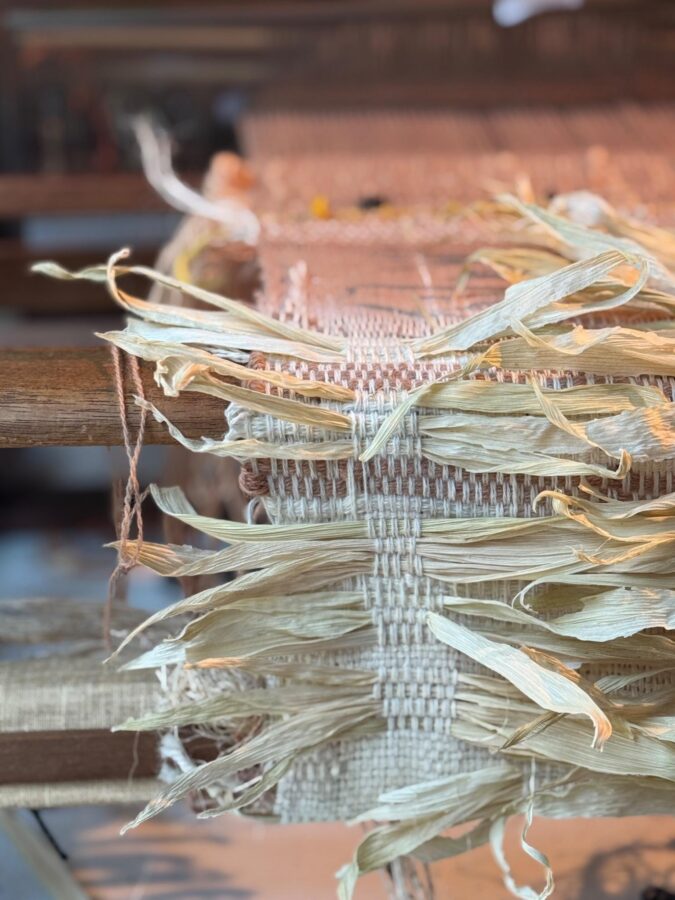
This sensitivity is particularly visible in First There Was a Dot, a woven installation created during the Dazed x Mason & Fifth residency in London. Rooted in the idea of the Bindu, the first point of energy in Indian philosophy, the installation explores beginnings through rhythm, interruption, and tension rather than direct symbolism.
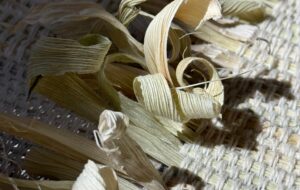
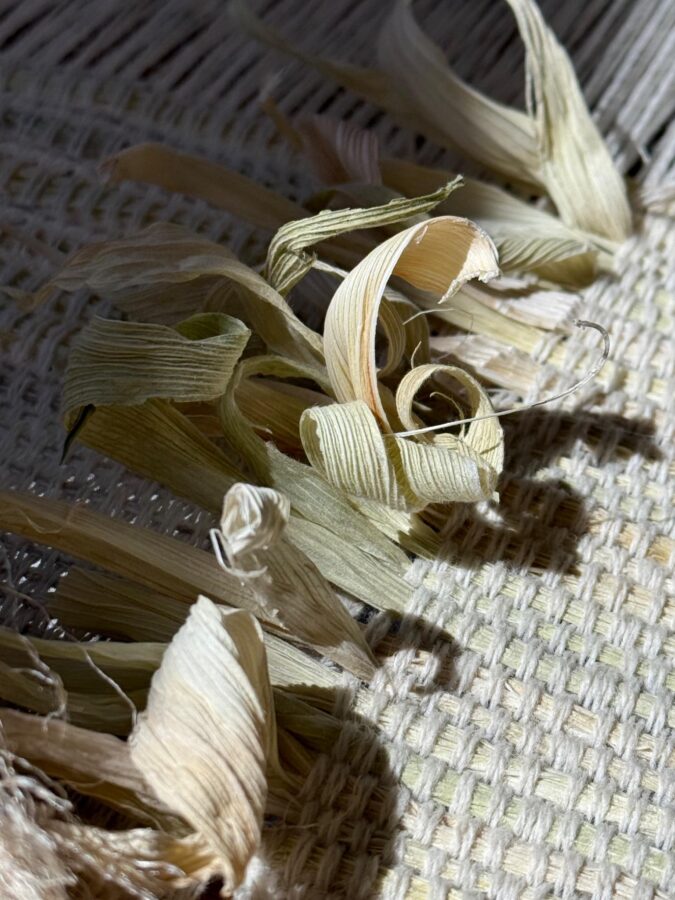
Suspended across a horizontal structure, the work is made up of multiple woven sections that shift constantly in density and pacing. Certain areas appear tightly held together while others soften and loosen towards the edges. Corn husk woven into the surface creates repeated interruptions across the softer wool structures, while hanging strands of banana fibre and silk waste extend below the installation like unfinished thoughts.
Importantly, these gestures never feel forced.
Photography courtesy of Peel Studio
One of the strongest aspects of Yahvi’s practice is her ability to let material behaviour shape the emotional atmosphere of the work itself. The uneven tensions, softened edges, loose fibres, and naturally shifting dyes are not corrected or hidden. Instead, they become central to the installation’s visual language. The reclaimed wool dyed with onion skins carries warmth and density, while the softer avocado dyed sections introduce quieter tonal pauses throughout the structure.
The installation succeeds because it resists perfection.
Contemporary sustainable design often relies on refinement and visual control to communicate value. Yahvi moves in the opposite direction. Her work embraces incompletion, fragility, and slowness, allowing traces of labour and unpredictability to remain visible. In First There Was a Dot, the hanging fibres become particularly effective because they create a sense that the installation continues beyond its woven structure, as though parts of it are still forming or quietly unravelling.
Photography courtesy of Peel Studio
There is also a strong spatial awareness throughout the piece. While rooted in weaving, the installation functions beyond textile presentation alone. The suspended arrangement encourages viewers to move around the work slowly, noticing subtle changes in texture, tension, and shadow. The installation does not demand attention loudly, yet it holds presence remarkably well.
What ultimately distinguishes Yahvi’s work is the consistency between material, concept, and process. Her installations are not simply about sustainability, nor are they purely material experiments. Instead, they reflect on transformation itself, the pauses between collection and creation, tension and release, completion and incompletion.
Photography courtesy of Peel Studio
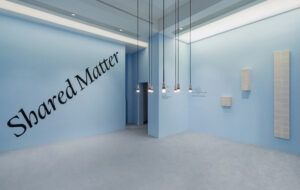
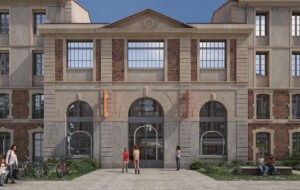
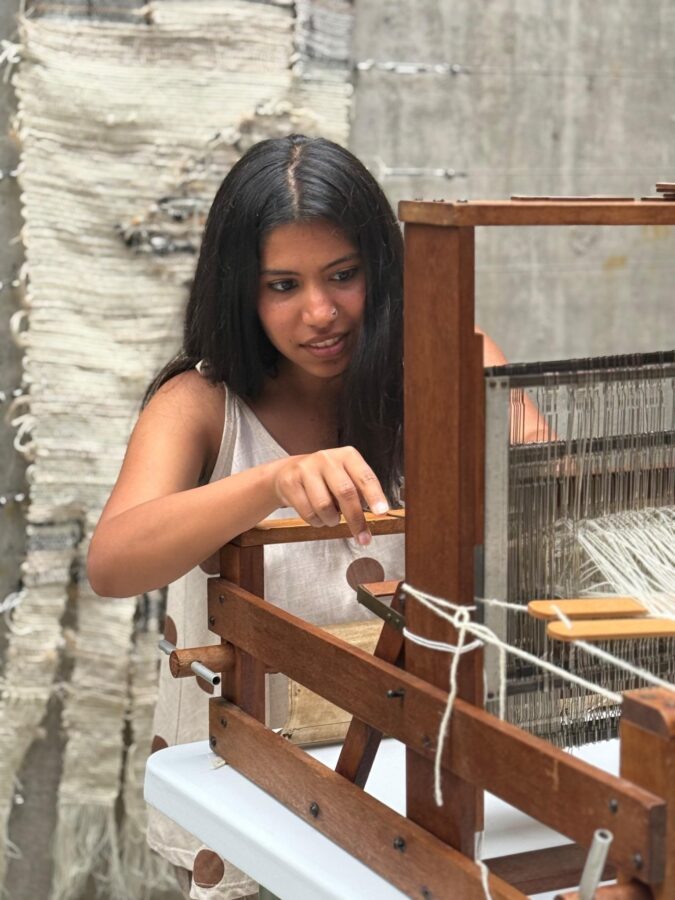
That same sensitivity extends into Yahvi’s wider practice. In less than a year of her practice, she has completed two residencies, the first being in collaboration with Dazed Magazine and Mason and Fifth. She kickstarted her 20206 with a residency at art’otel while also facilitating workshops and educational programmes with organisations including the Craft Council, Kew Gardens, and South London Gallery. She also exhibited as a Future Talent at Clerkenwell Design Week in collaboration with Freeweaver Studio, where live weaving demonstrations on Saori looms drew visitors unexpectedly into the rhythm and patience of slow making.
What makes this trajectory particularly impressive is that the public engagement never feels separate from the studio work. The same attention to material, pacing, and care present within Yahvi’s installations carries directly into the way she approaches weaving as a shared experience.
At a time when contemporary craft can often feel pressured to explain itself immediately, Yahvi’s work offers something quieter. Her installations trust texture, material, and rhythm enough to allow meaning to unfold slowly. That restraint is precisely what gives the work its strength.