Ahead of her participation in London’s Food Art Fair, photographer Stefania Zanetti discusses her intensely personal photographic practice, which explores food, desire and the body
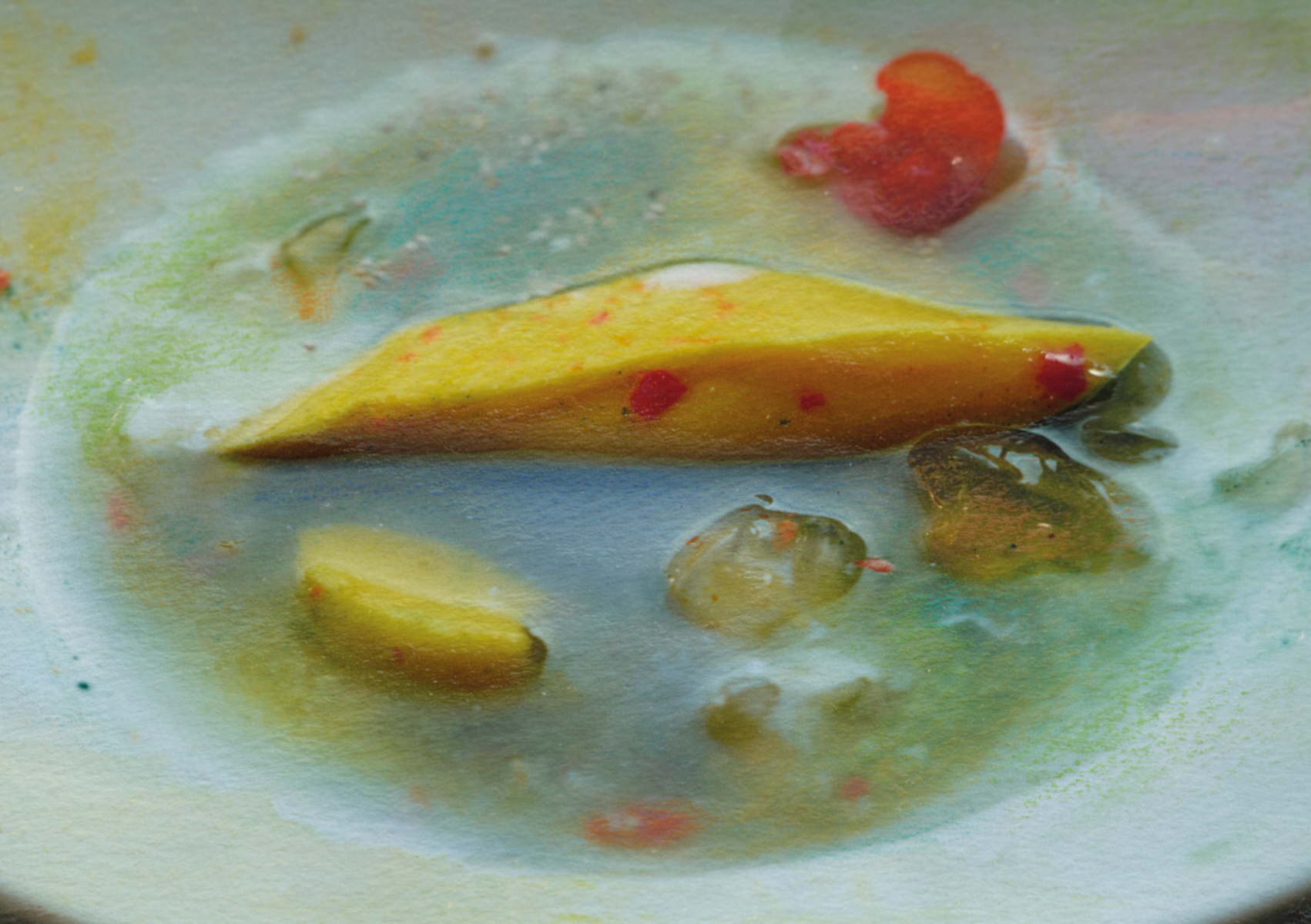
Photography by Stefania Zanetti featuring Pulse, Hunger, Pleasure
For photographer Stefania Zanetti, getting close-up is part of the job. Her work, which spans editorial, lifestyle, hospitality and food photography, beautifully captures texture, light and the small details that can easily go unnoticed. Increasingly, she has also turned the camera towards the body, exploring the relationship between food, sensation and pleasure.
Photography has been a constant in Zanetti’s life since she bought her first camera as a teenager, initially using it to record moments and emotions she was afraid of losing. It later became a way to work through a difficult period in her life and, eventually, a medium through which to explore her own interests and ideas.
Her latest project, Pulse, Hunger, Pleasure, brings many of these topics together. The series comprises 12 photographic works and three silk textiles, using food and abstract forms to consider touch, nourishment and desire. Zanetti describes the process as a ritual of connection, one that begins with intuition and often ends with images in which scale and recognition fall away. Here, ICON speaks to Zanetti about developing her visual language, the role food continues to play in her work and why, for her, photography is ultimately about getting closer.

Photography by Stefania Zanetti featuring Pulse, Hunger, Pleasure
ICON: How did photography first become part of your life?
Stefania Zanetti: Despite having always been fully drawn to photography, I wasn’t born into a family with grandparents who gifted me cameras or parents who raised me around photography. The only creative figure in my family was my grandfather, who worked as a metal chaser.
What I do remember is finding myself dreaming about having a camera, wanting to portray things, to save memories, not in a nostalgic way, but to save emotions I was afraid I would otherwise lose. I eventually bought my first camera with money I earned working as a lifeguard and swimming instructor on the lake every summer.
When I was around sixteen, my mum paid for a course I took at the local photography village, and shortly after that, I started assisting another photographer, mostly on wedding jobs. From there, it slowly became a medium of expression for me. It got to a point where I needed it: if I went out without a camera, I often felt I might lose something.

Photography by Stefania Zanetti featuring Pulse, Hunger, Pleasure
During a very hard year, when food became my enemy along with everything else, and I lost track of who I was, I started using photography as a way to pull my thoughts out of myself. A couple of years later, I used it as my biggest weapon to build my own remedy and finally get out of my eating disorder. That process is contained in my university master’s thesis, and it eventually became a manual of editorial recipes, developed together with a centre for eating disorder prevention.
Photography has also always given me a reason to enter certain situations, almost like a way of hiding myself when I needed to, or of overcoming my shyness, as if having a role could help me. In recent years, I have found it powerful in a new way too, as it keeps leading me into new situations, shifting how I work and which fields I move through, often while connecting with people who share many of my same principles.
ICON: What usually catches your attention when you’re out with your camera?
SZ: The small things, always, and the light that catches them, along with the way they change and develop when their initial shape is lost, whether that’s because they pair with something else or because they are caught mid-process. I am never looking for stillness; I look for the energy that shapes things.
Food keeps being what attracts me the most. It carries so much intrinsic meaning for me, with all its potential and the connection we build with it, a connection that can be so fragile and powerful at the same time. Food attracts me for its texture, its consistency, and for the way it is constantly changing.
For example, it can be fresh or rotten; it changes through cooking or simply over time, and there is nothing you can do to stop it from being that way. It gets into our bodies and carries all the meaning it contains within it, from the way it was harvested to the nutrients it holds, to the value we give it and the moment we nourish ourselves with it. I never stop being amazed by all the shades food can take on, and by how much even its simple consistency and the way it reflects light can evoke. It always stimulates something inside me.
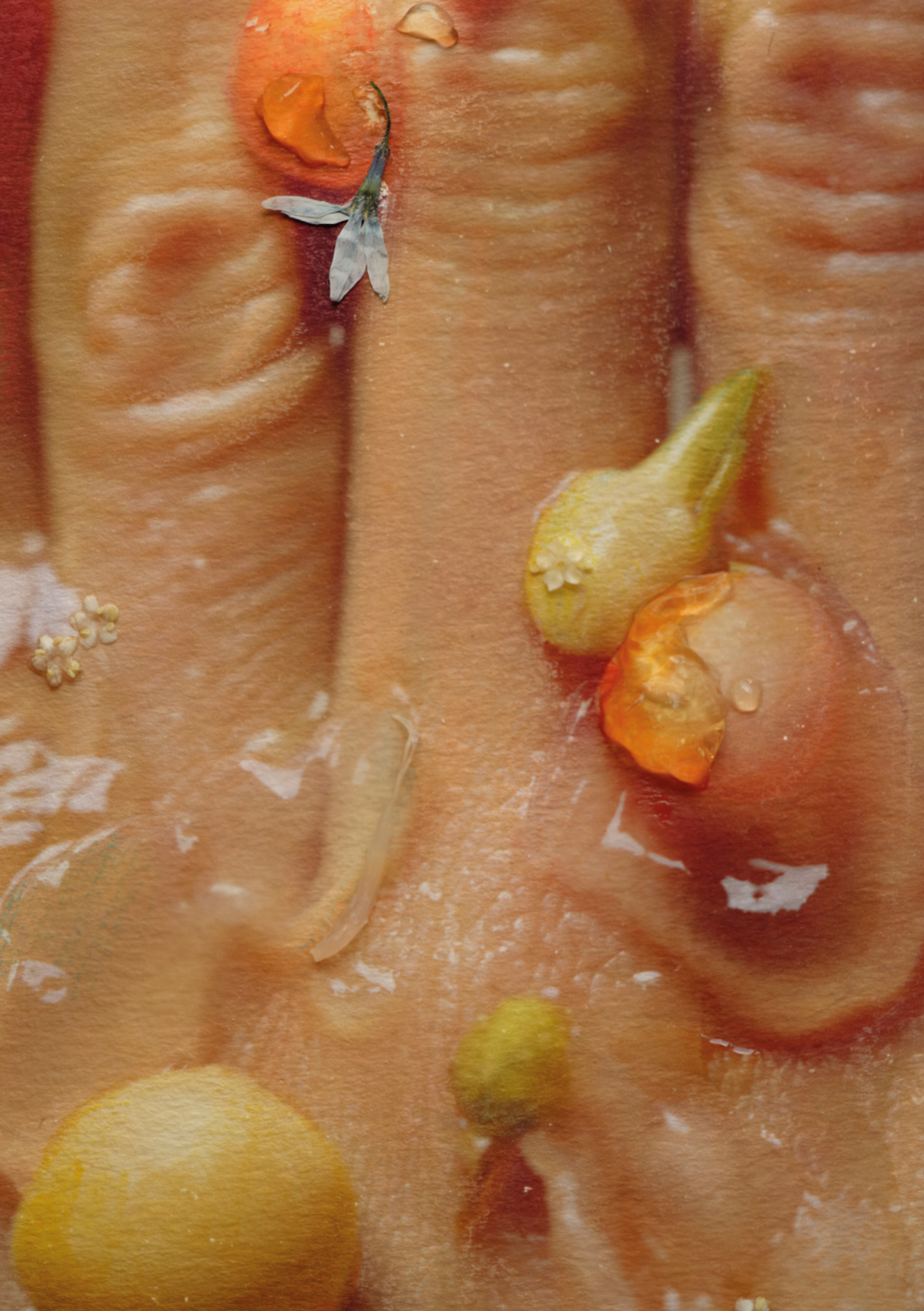
Photography by Stefania Zanetti featuring Pulse, Hunger, Pleasure
Lately, I find myself connecting that same fascination to the body, which somehow shares similar characteristics to food, with all its textures and shapes, and the way they can vary in colour and consistency, and to nature, seen very close up. I find so much power in all the energy that can move through a body through an aware touch.
Moreover, I love to shoot stories of women involved in acts of care, starting with nutrition and extending to body treatments and phytotherapy. I love supporting their businesses and making them look as they deserve to be seen.
ICON: When you’re taking photos, are you trying to capture a certain feeling or mood, or do you discover that feeling later when you’re editing?
SZ: I mostly discover it right after, and I am probably looking for it without being rationally aware of it while I shoot. Light isn’t always perfect for what I want to say when I find it rather than build it.
Photography is, most of the time, a matter of choices made in the body before the mind catches up. When it’s for me, it is not rational at all; I just have to follow myself.

Photography by Stefania Zanetti featuring Pulse, Hunger, Pleasure
Photography also became my job (even though I studied design and eco-social design), but it has always remained a form of communication that moves from the inside out. The editing is an essential part, but so is the pre-production – or better to say, the creation or allowing of a meaningful moment to exist: predisposing certain elements to support it, or letting thoughts or things be left behind rather than simply shooting at the right time of day or in the right light. Photography is, for me, the medium I use to look for pleasure, and I translate the path to get there in an abstract way, however it unfolds.
ICON: How has your style of photographing changed or evolved over the years?
SZ: I started out very moody, wanting to tell my own unwellness through my images. That developed into a brief phase where I wanted to show the unseeable, so things like stars shining or the sea crashing violently on rocks – and I mostly did this during a very early trip to Australia.
Slowly, I became more courageous, and I began flashing everything, almost trying to provoke a reaction in people and in whatever I was shooting. It was powerful, and it was a tool that, by erasing shadows, created the opposite of what I was first searching for: it helped me see more clearly, leaving very limited space for interpretation or mood. As I started working as a photographer, I began smoothing out my technique and paying much more attention to light, as a vehicle that says so much and sets the right mood.
Over time, photography became my job. I shoot editorial and lifestyle stories, as well as hospitality and food with my partner, and in my free time, I develop my own work as an artistic project and a ritual of connection with myself. When I shoot something deeply personal, I love to picture things that are not meant to be recognised, but to be felt.
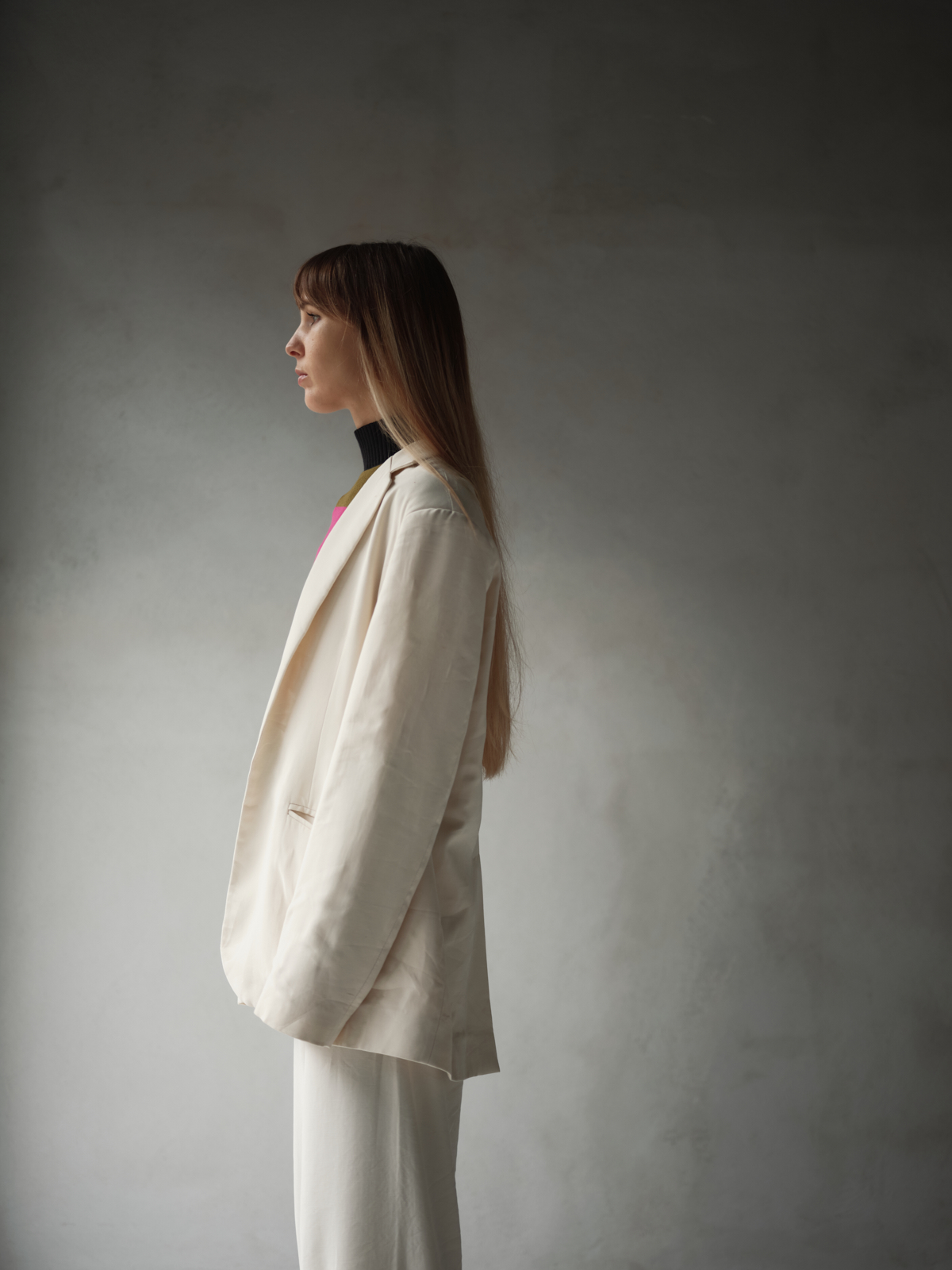
Photography by Stefania Zanetti featuring the photographer herself
I love when I am able to lose the boundaries of things; I believe it says more, and more transversally, by moving away from the limitations of shape. When I shoot editorial, I love to feel close to whoever is in front of me, even though I always feel I need more time and a longer-term project.
ICON: Your recent photo series Pulse, Hunger, Pleasure was a deeply personal project. Can you tell us about the creative process behind this latest photo series? How did the idea develop from the initial concept to the final images?
SZ: Pulse, Hunger, Pleasure is a personal project of 12 art pieces, consisting of prints with wooden frames, plus three silk textiles. All the prints are produced in editions of three, while the textiles are unique pieces. I think the title already says a lot. The images are abstract and ask to be felt.
The series was born from the body, from my secret little rituals, while I was craving contact with myself, my mind, my sensations and emotions, from which I felt detached because of work and routine overload. I choose the food I work with purely by gut feeling, giving it meaning based on the sensations it gives me, not as a subject but as a language, a material through which I listen to myself while translating what’s moving inside me. Texture is crucial to this: food speaks to me enormously through its consistency.
My approach is intimate. I make space for meaningful encounters and for exploring what I hold inside, and eventually what surrounds me too, however small it may be. That’s where my need to photograph and research in the small comes from, being drawn to detail almost obsessively, as a metaphor for looking at a single thing to understand its power and how it fits into the wider system.

Photography by Stefania Zanetti featuring Pulse, Hunger, Pleasure
The process itself is a ritual of touch: so, composing, tasting, getting so close that the sense of scale disappears. It takes a certain tenderness to fully notice the nuances of texture and flavour.
While I shoot, my thinking kind of stops, in a way that reminds me of yoga, or of making love. In that closeness, the matter transforms. It becomes flesh, and the flesh becomes material, warmth, a silent heartbeat. What nourishes me and what I want to receive start to blur into one another, until they become desire.
Those are the moments I truly meet myself. When I follow this process closely enough, something shifts. The outline of things stops mattering. I feel the need to sense what lies beneath the surface. The series grew slowly over time, in moments of need, wherever I happened to be.

Photography by Stefania Zanetti featuring Pulse, Hunger, Pleasure
ICON: Is there a subject or theme that you find yourself returning to again and again in your work? What inspires you creatively?
SZ: Pleasure, in every direction it moves, inward and outward, and the whole journey and every stage it takes to get there, even when they are controversial. Everything that serves to reach it, to let it in and to see it. I keep returning to the space between sensation and thought, where experience exists before it becomes language or interpretation, and to the parts of myself that usually stay in the shadows. I crave that, because I don’t think it’s easy to find in daily life.
Nutrition has an important role too, for the meaning it holds and for the effect it has on the body. Lately, I’ve started studying holistic nutrition, and it feels like a natural way to keep adding layers, although this time more conceptual ones. I would love to learn Chinese medicine and meditation, and I would actually like to spend months somewhere these practices are integrated into daily life, like I saw happening in Eastern Asia.
I like the idea of my visual language being informed by other fields too, like beauty, and by the body as a system, seeing how things connect together rather than as isolated elements. It’s less about illustrating those themes directly and more about letting them inform how I look at matter and the body.
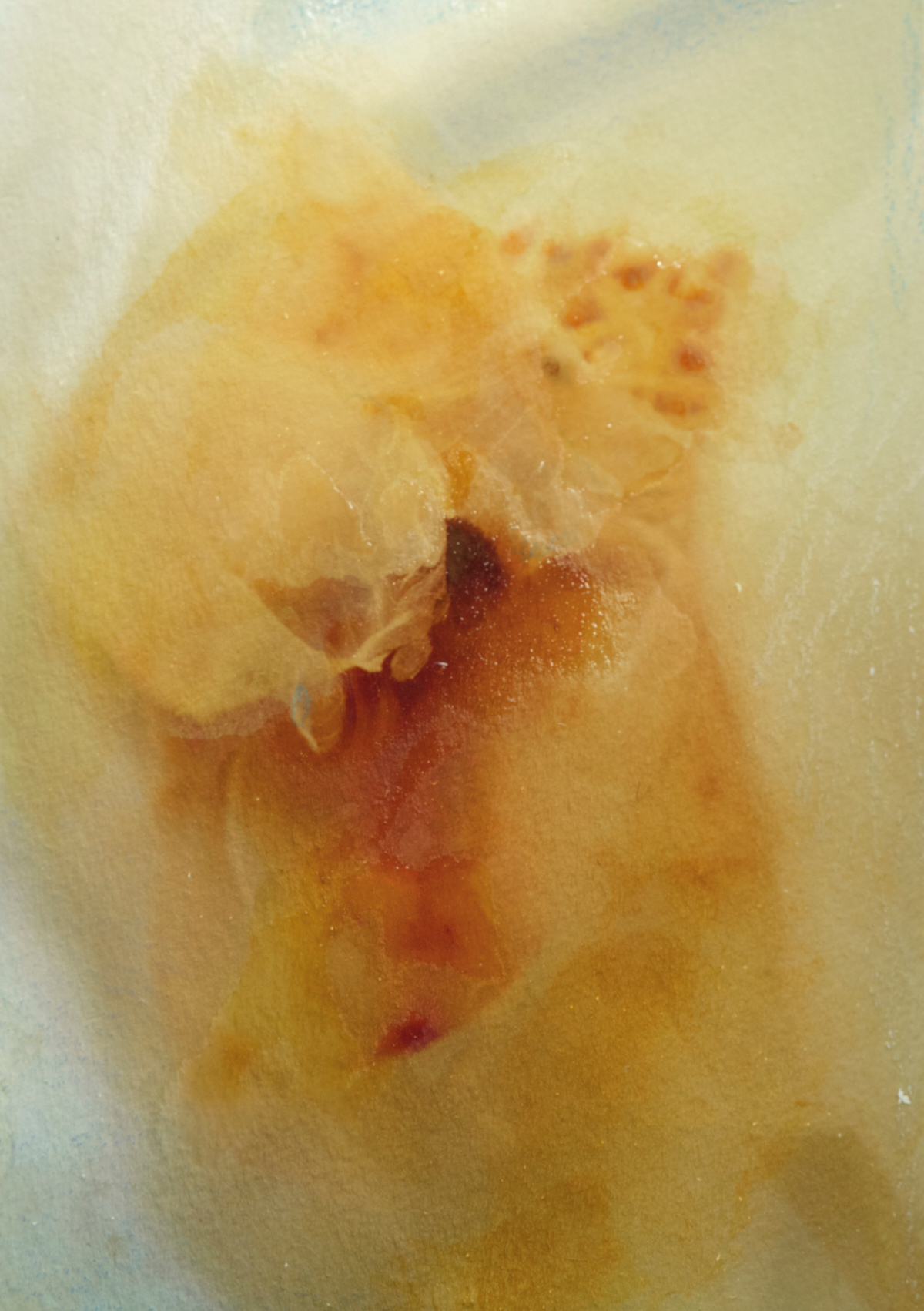
Photography by Stefania Zanetti featuring Pulse, Hunger, Pleasure
ICON: Where can we follow you?
SZ: I’m rebuilding my website (stefaniazanetti.it), and I hope it will be ready soon. In the meantime, Instagram is the place: @steynesthesia, even if I’m not always the best at talking about myself there.
I’m also about to start an artist residency at a Villa Imperiale in Pesaro, with the final restitution of the project planned for March. It’s a project I am doing to be able to listen closely to my own values and to stay coherent with who I am.
What I’d really love is the chance to meet people in person, and for them to encounter my work face to face. So please, come find me wherever I’ll be.
Stefania Zanetti will be taking part in Food Art Fair (FAF), a two-day celebration of food as a language for creativity, communication and cultural exchange in London from 5-6 September. For more information, visit ladbrokehall.com
Get a curated collection of design and architecture news in your inbox by signing up to our ICON Weekly newsletter