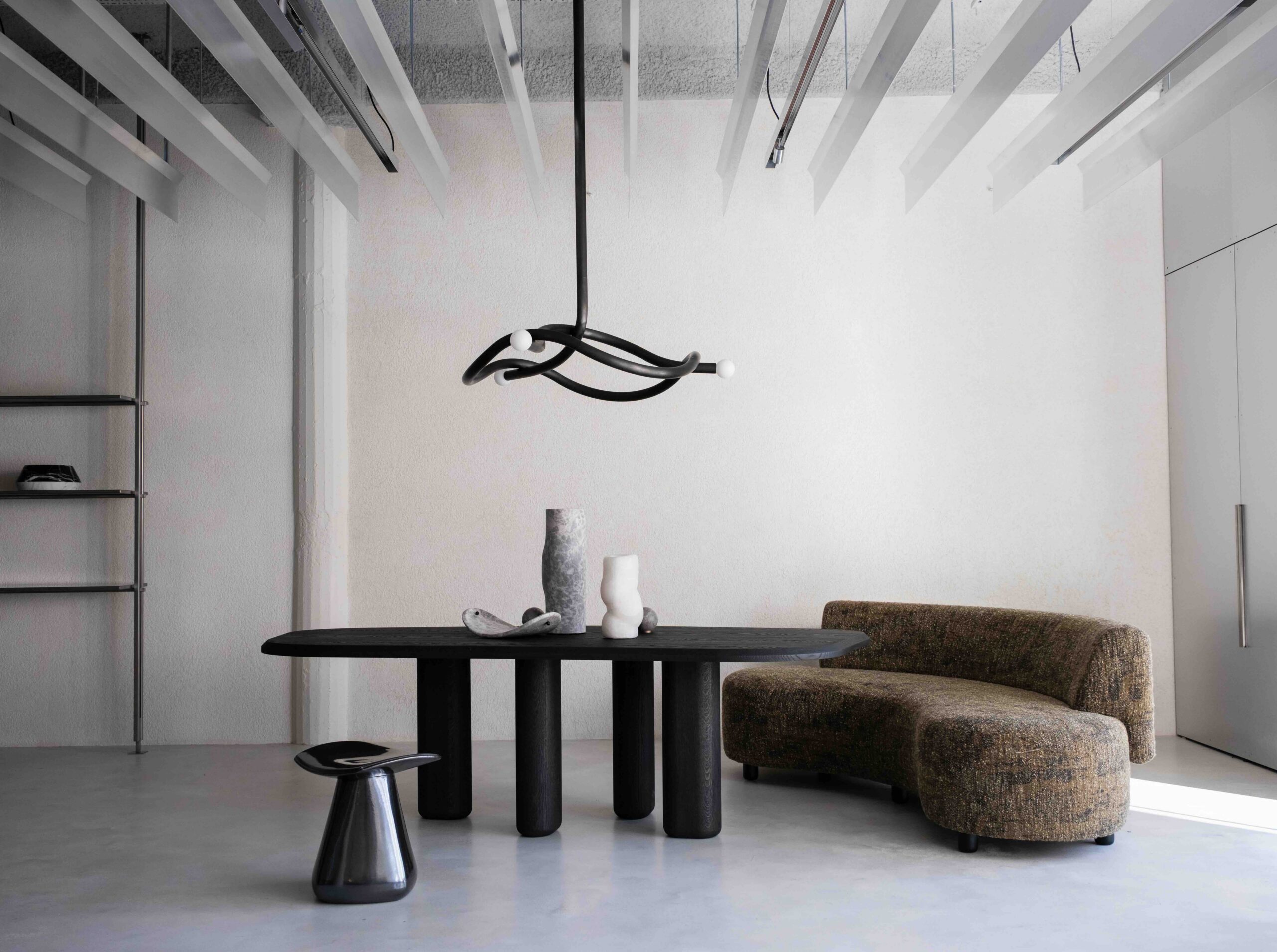
Pavel Klimczak, founder of Monologue, discusses Paraforma’s new showroom design and the thinking behind its calm, atmospheric approach to curation
Photography by AXIIS Studio
ICON: You describe the new showroom as ‘architecturally grounded’ and ‘editorially strong’. How did you translate Monologue’s curatorial philosophy into the physical space with Paraforma?
Pavel Klimczak: For us, the showroom was never just about displaying products; it was about creating a spatial experience that reflects the way we curate at Monologue. We have always approached design in an editorial way, bringing together different brands, materials and disciplines to create an atmosphere rather than simply presenting collections.
When I met with the Paraforma team, my brief was very clear: to create a showroom that feels aspirational, immersive and flexible. So, calm and welcoming during the day, yet more theatrical and atmospheric in the evening. The space was designed as a canvas for the brands and designers we represent, while still allowing us to continuously evolve the visual narrative through changing compositions and curated sets.
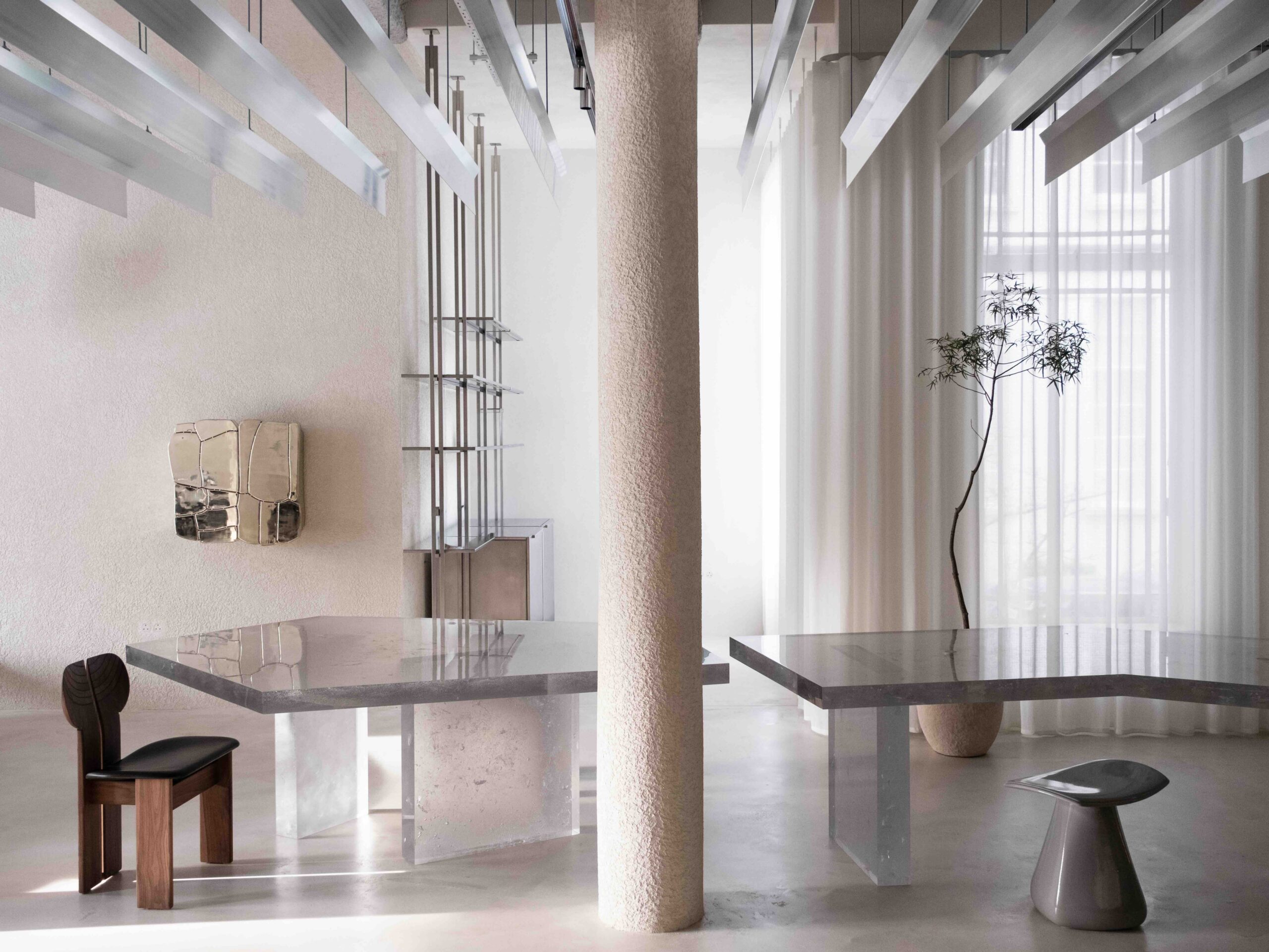
The architecture itself is intentionally restrained, with carefully considered materials, textures and proportions that create a grounded backdrop where the furniture and objects remain the focus. The ‘editorially strong’ aspect comes from treating the showroom almost like a gallery, so something layered and adaptable rather than a fixed retail display.
Photography by AXIIS Studio
ICON: Monologue has always balanced established names with emerging designers. In an industry often driven by recognisable brands and fast-moving trends, what does ‘good curation’ mean to you today?
PK: For me, good curation means timelessness and longevity. It is about creating the right balance between established brands and emerging designers in a way that feels natural and layered rather than trend-driven. At Monologue, it has always been important to curate pieces that have character, designs that can subtly challenge or surprise you while remaining functional and beautifully made. Good curation is not about filling a space with statement objects, but about creating atmosphere, emotion and coherence through strong craftsmanship and thoughtful selection.
ICON: The showroom’s design – microcement, brushed steel and resin – feels restrained and contemporary. Were there particular emotional or sensory responses you wanted visitors to experience as they walk into the space?
PK: I think after entering our new showroom, you immediately feel a sense of calmness and relaxation. Coming in from the busy streets and noise of London, we wanted the space to feel safe, welcoming and almost like a home rather than a typical retail environment.
The idea was to create a place where people naturally want to stay a little longer, not just visit briefly. Through the different furniture layouts, layered textures, lighting, scent and integrated sound system, the atmosphere subtly changes as you move through the space, creating a more immersive experience.
Photography by niyadre featuring Pavel Klimczak
ICON: How do you imagine people interacting differently with design in this environment compared to a traditional showroom or retail setting?
PK: I think our new space feels much more personal and lived in than a traditional showroom. Rather than moving quickly from product to product, visitors experience the pieces within a complete setting and can better imagine living with them.
We wanted guests to slow down, touch materials, listen to the music and spend time in the space. It gives us the opportunity to share the story, craftsmanship and thinking behind each piece in a more relaxed and welcoming way.
ICON: Opening in Portman Square marks a big change for Monologue. Beyond commerce, what role do you hope the new space will play for London’s design community?
PK: I see the Portman Square space becoming a destination for London’s design community for designers, architects and furniture lovers alike. I see it as a place for conversation, exchange and discovery of new talent and the latest novelties. Ultimately, we hope it becomes somewhere that contributes to the wider creative ecosystem in London and feels like a cultural point of reference.
Read the full story on Monologue in ICON 220 out on 3 September
Get a curated collection of design and architecture news in your inbox by signing up to our ICON Weekly newsletter
KitchenAid introduces Luminaire, the latest expression of its Design Series, where an enduring kitchen icon becomes a study in light, material and texture
KitchenAid introduces Luminaire, the latest expression of its Design Series, where an enduring kitchen icon becomes a study in light, material and texture