Drawing on Bruce McLaren’s unrealised vision for the M6GT, the new McL 6GT translates a piece of the brand’s design history through carbon fibre, tactile craftsmanship and a determinedly analogue driving experience.
McLaren has unveiled the McL 6GT, a new supercar concept that looks back to one of the earliest chapters in the brand’s history – producing a modern design with strikingly nostalgic echoes.
Presented at Monterey Car Week in California, the McL 6GT is a contemporary interpretation of the M6GT, the road-going supercar envisioned by company founder Bruce McLaren in the late 1960s, that reinterprets racing-inspired styling in a modern-day finish.
The original never reached series production – but its combination of racing tech and road-car usability helped to establish the thinking behind McLaren’s later road cars.
The McL 6GT translates the M6GT’s heritage, proportions and philosophy into a distinctly contemporary object.

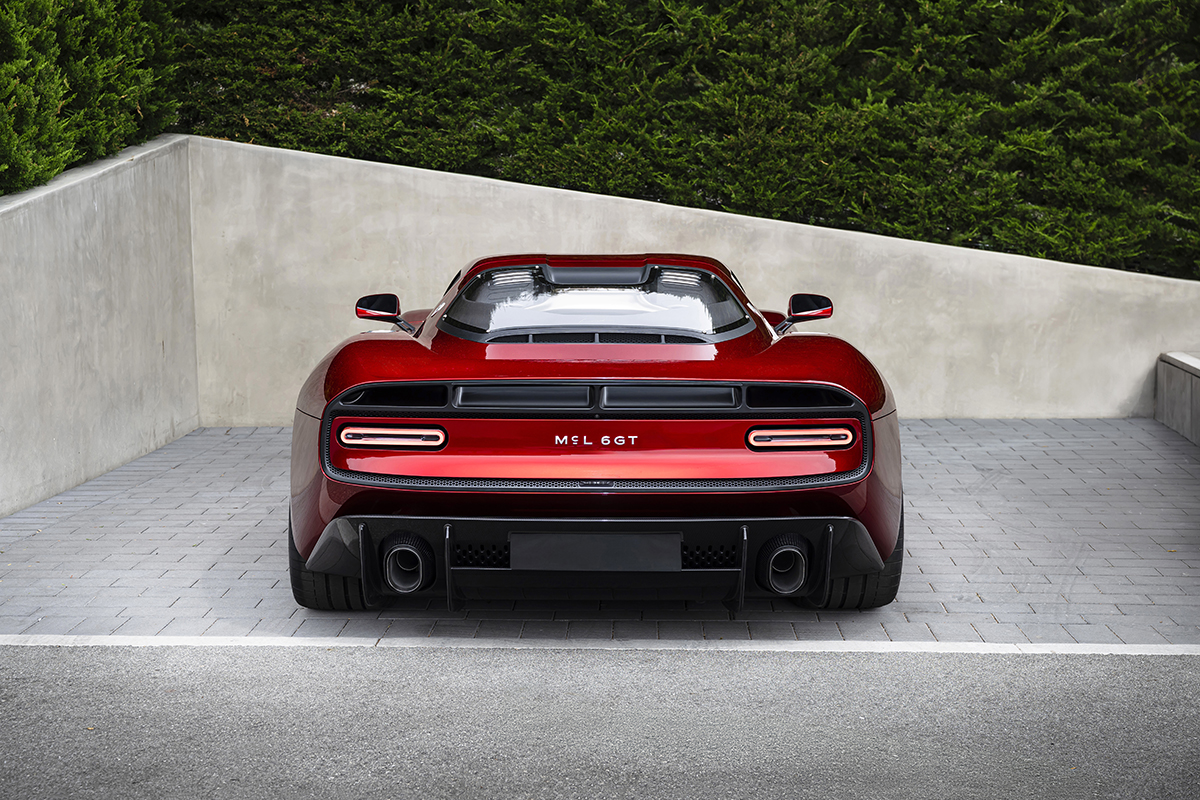
Sitting exceptionally low and wide, its body flows from the nose through the roof and into a sharply resolved Kammback rear.
The result is unusually restrained for a modern supercar: aerodynamic performance is integrated into the overall form rather than expressed through an abundance of wings and appendages – it is startlingly, beautifully simple.
Material choices reinforce this sense of functional simplicity and there’s a layered quality at points around the vehicle, making the engineering part of both its design and visual identity.
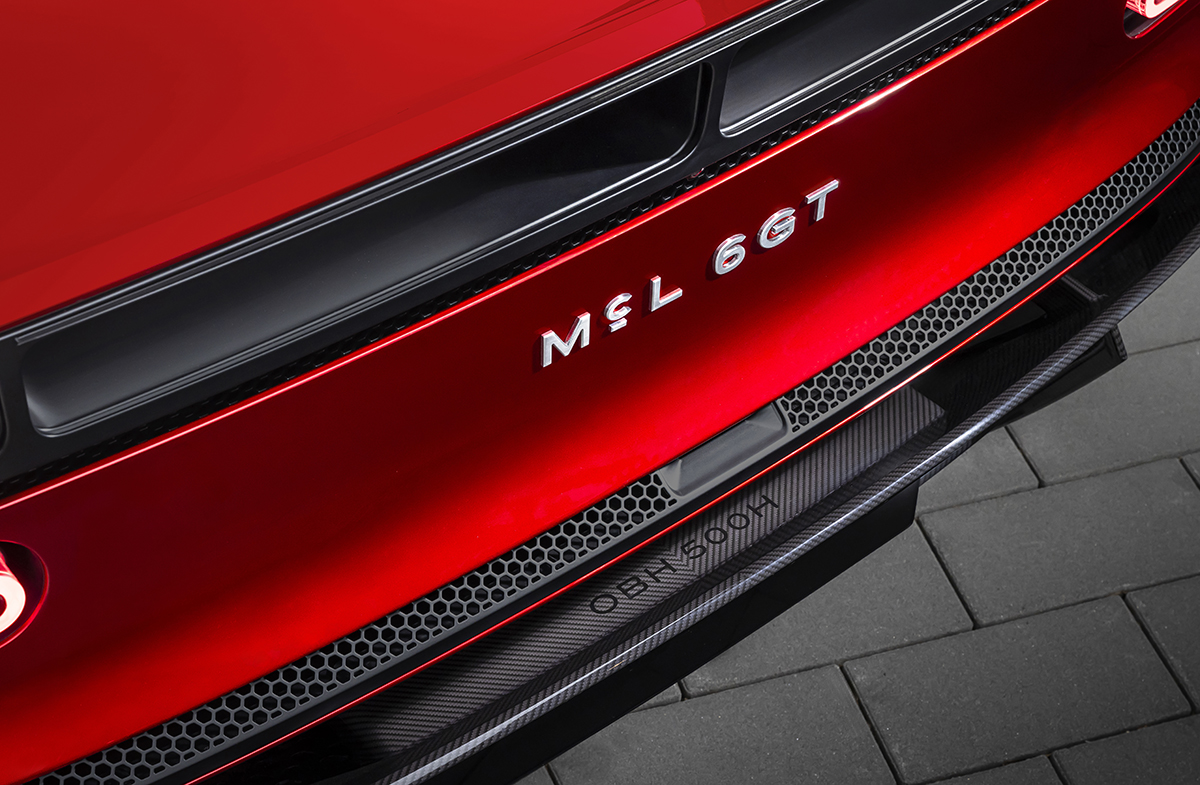
Other details reinterpret elements of the heritage vehicle – with the concept’s deep, rich red finish referencing Bruce McLaren’s own M6GT using contemporary metallic paint.
It is inside, however, that the McL 6GT’s interest in physical interaction becomes most apparent.
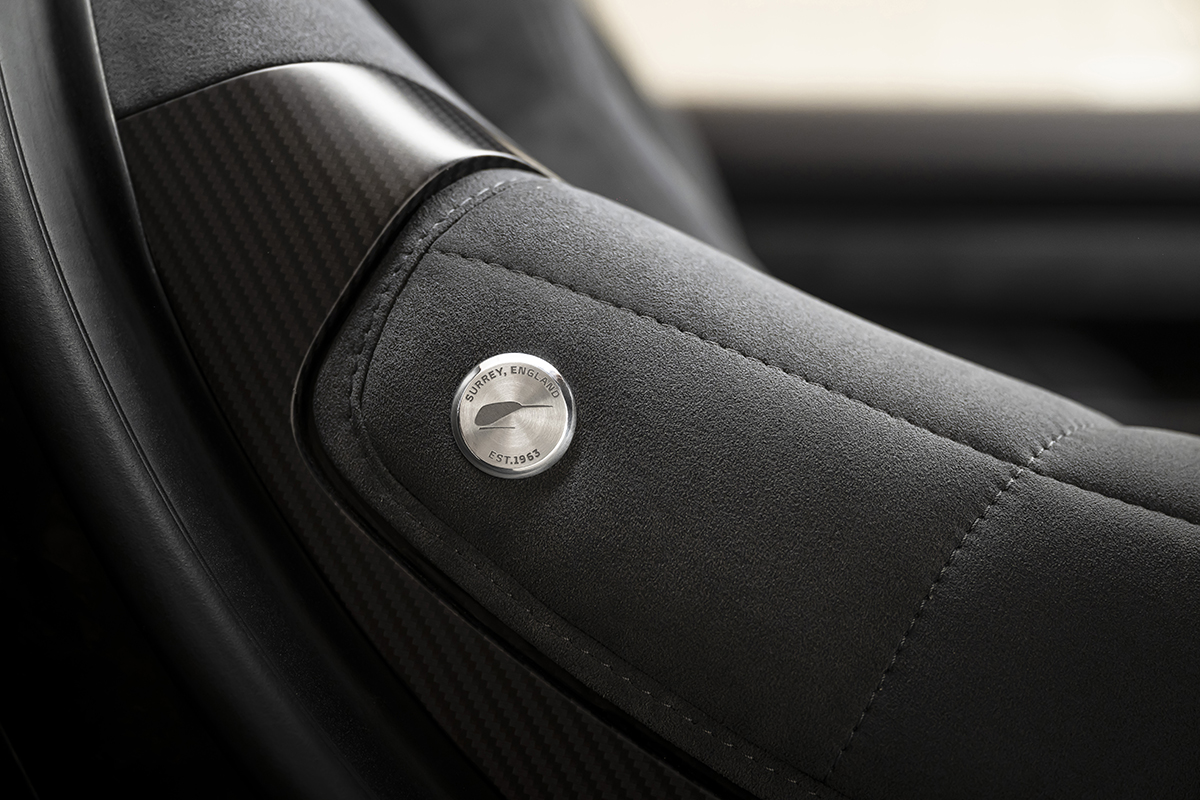
At a moment when increasingly digitised car interiors are dominated by screens and software, the cabin incorporates knurled aluminium controls, tactile switchgear and visible engineering details – as well as a plush boxed quilting throughout the interiors.
The gearstick itself has been designed not simply as a control but as a tactile object and is a form of artwork within itself – including a heritage detail viewable within the stick, the Speedy Kiwi, McLaren’s early emblem.
The base of the shift reveals an exposed, open-work mechanical gear linkage, with the physical shift rods visibly moving as you change gear – certainly a visual treat for any car design enthusiast.
Kemal Curić, Chief Design Officer at McLaren Automotive, responsible for shaping the design vision and creative direction of the brand’s portfolio, explained to us: “The manual shifter really exposes the functional elements, there’s something very intriguing about it. It’s like celebrating the analogue watch.
“We were obsessed with the execution of the shifter, with the glass and where you can see the Speedy Kiwi through – a little Easter egg, a little bit of a celebration. We really wanted to celebrate the analogue.”
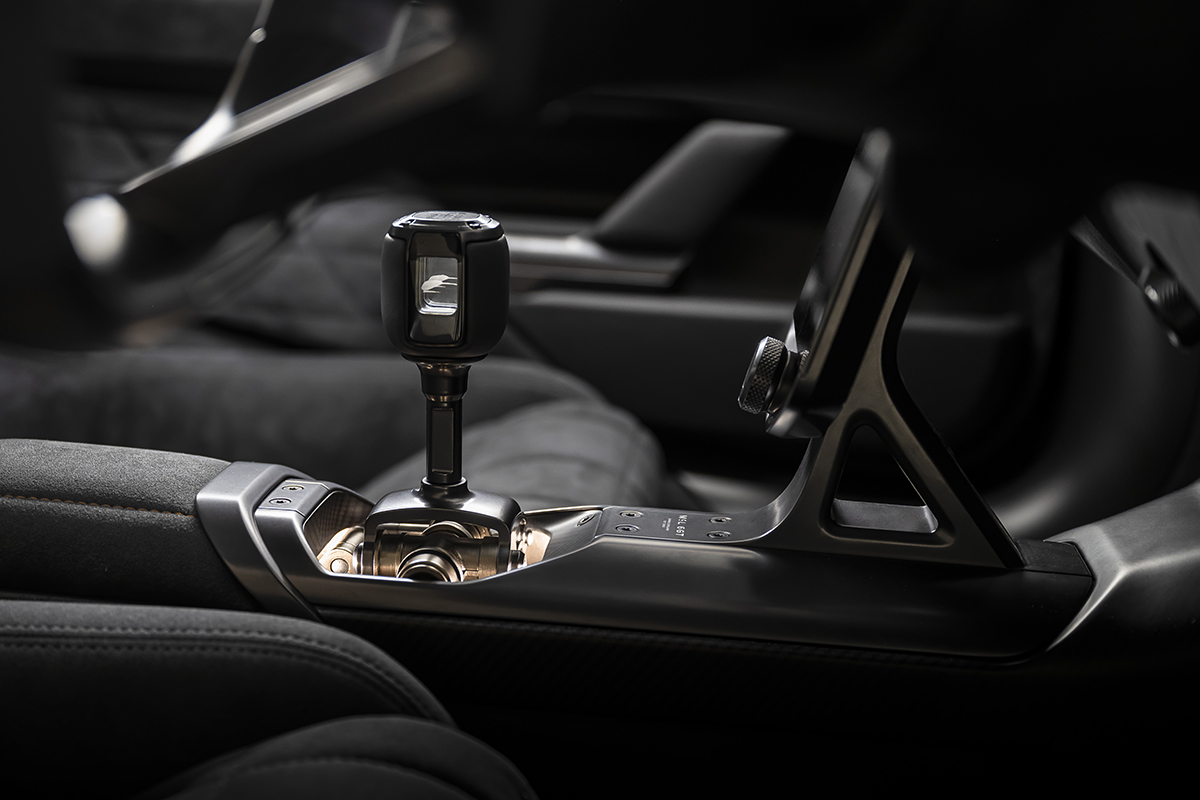
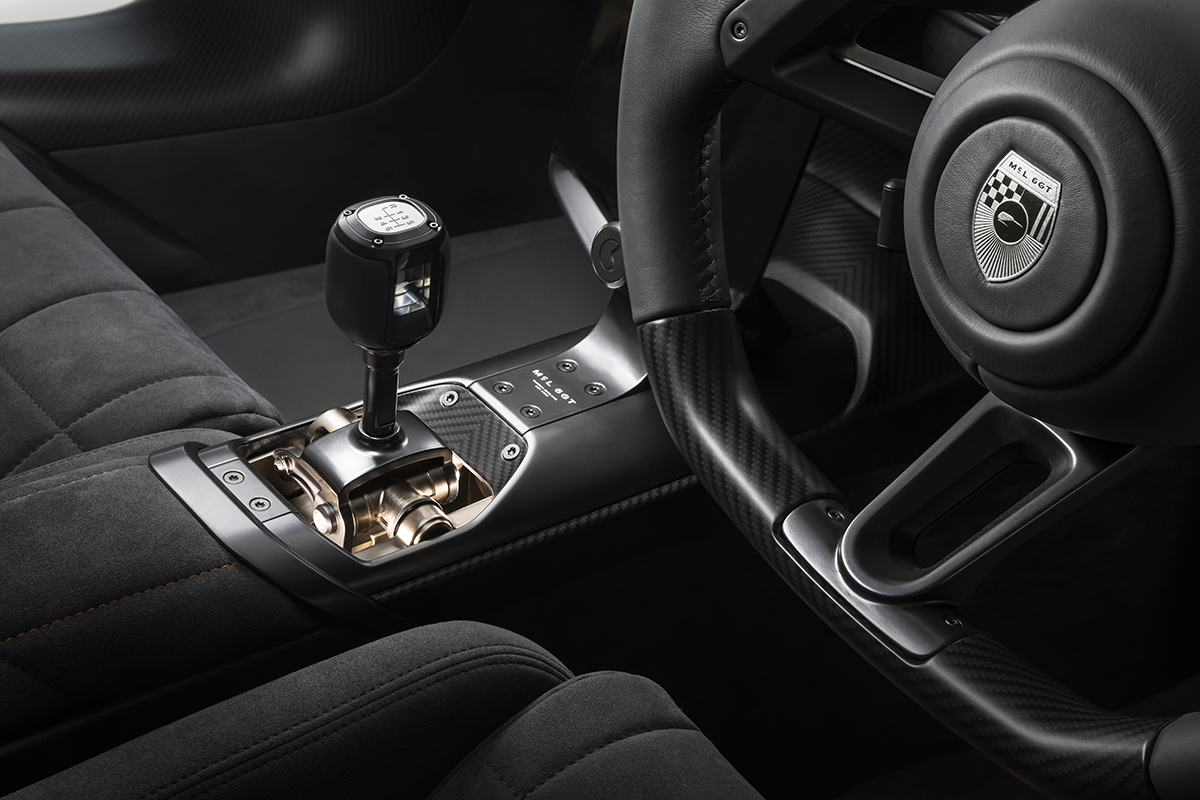
At its centre is perhaps the car’s most conspicuously analogue feature: a six-speed manual gearbox – the first McLaren equipped with an authentic manual transmission since the F1 of 1992.
The McL 6GT is an intriguing and nostalgic juxtaposition to the current trajectory of automotive design – rather than turning to bigger screens and more digital controls, McLaren is showcasing progress rooted in touch, materiality and the visible workings of the car.
Kemal, who leads all aspects of design, including exterior, interior, colour and materials, added: “When I talk about the tactile approach, you can see even with the engaging buttons, you feel like you’re in charge of the machine. The orange button, how you start the car, it’s very special – it becomes a celebration of firing up the motor and the engine.”
More than six decades after Bruce McLaren’s original imagining, the McL 6GT feels less like a retro revival and more like an unfinished idea recreated for today.
By returning to physical controls, exposed materials and an unusually pure silhouette, McLaren suggests that the future of the supercar may be rooted in ‘less is more’ – and how much of the machine its driver can see, touch and feel.
WORDS: Natalie Keegan